



Agrograde builds machines that sort onions and potatoes by quality, not just size
The Pune-based company makes AI-powered optical grading equipment for packhouses, designed around Indian crop varieties that imported sorters have struggled with.

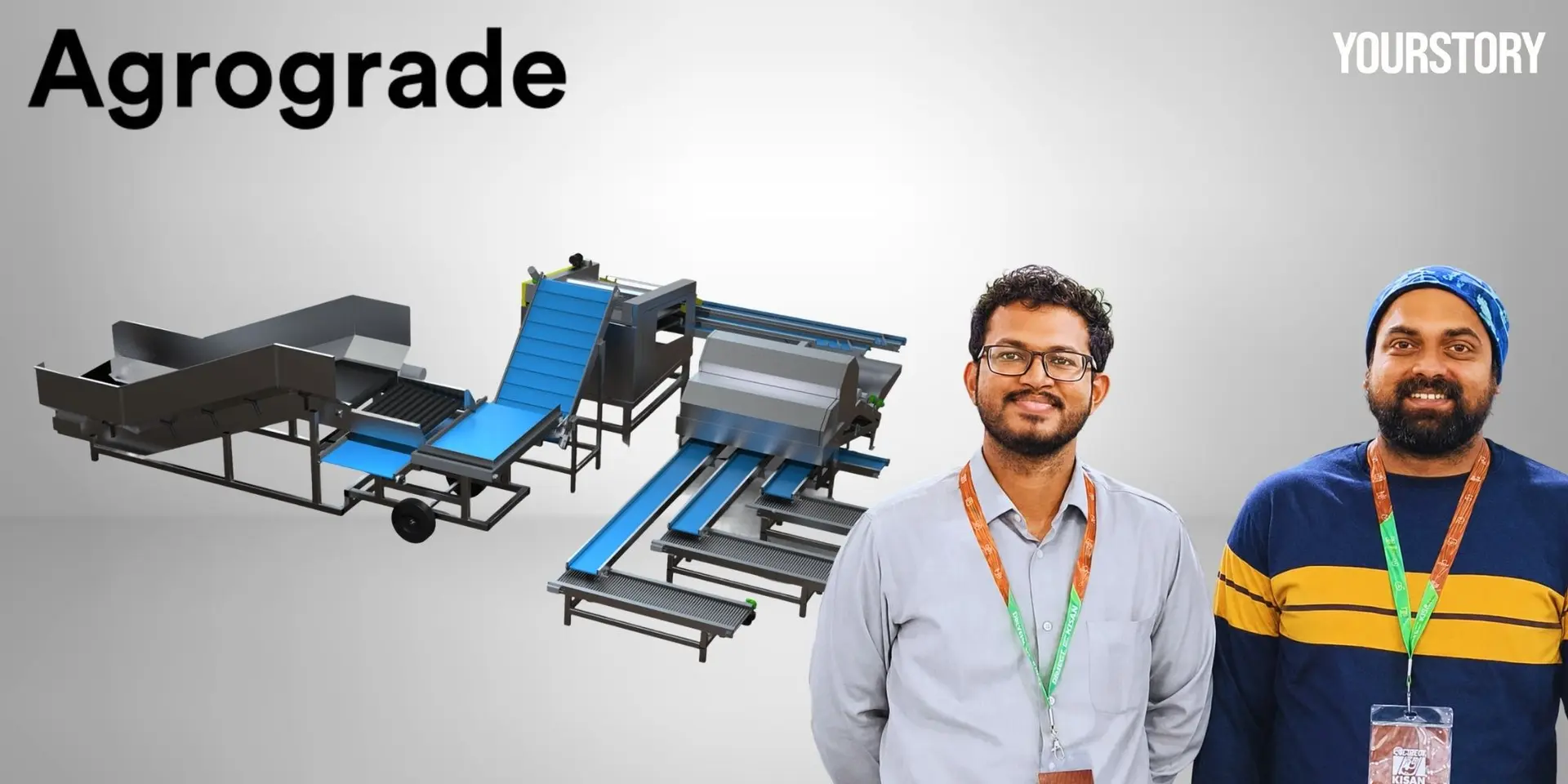

A sack of onions is worth different amounts depending on what is inside it, and in most of India nobody measures that precisely. Sorting happens by hand, by eye, on a warehouse floor, with two workers not agreeing on the quality of the same lot. When quality determines price, that inconsistency turns into arguments, rejected consignments and debit notes travelling back down the chain.
builds machines to settle those arguments. Operating as Occipital Technologies, it was founded in 2017 by Kshitij Thakur, the CEO, and Rakeshkumar Barai. It is headquartered in Pune with manufacturing at Chakan, the industrial belt north of the city.
Thakur has said more than 99% of Indian packhouses still do quality checks, grading, sorting, weighing and packing by hand, and that the workforce doing it is ageing, with the average age across packhouses past 45. He argues that the post-harvest chain was built for a different era and cannot meet current demands for scale and consistency.
Built around the crop, not the camera
Thakur has said systems from global manufacturers failed in Indian packhouses because they were not designed for this level of variation or for Indian crop varieties. Onions are his example: imported machines damaged the delicate outer skin.
Agrograde's answer is machinery tuned to each crop's physical behaviour, with rotation matched to the shape of a potato, a wave motion for loose-skinned onions, and roller geometry that will not snap elongated varieties. The onion system is branded WaveMotion, and the company says it grades without damaging the skin.
The inspection layer is called Vector. Rather than sorting by colour, the models analyse texture, boundaries and context to tell a defect apart from natural variation, which is what conventional colour sorters struggle with on unwashed, mixed-variety produce.
Thakur says the series sorts unwashed, field-fresh onion and potato at up to 96% defect detection accuracy, and switches between potato varieties without recalibration.
Getting there took time. The company describes four years and six product iterations on the grading technology, and says its models are trained on eight years of data. Its stated destination is the autonomous packhouse, with grading as the first stage because it is where quality decisions are made.

Small rounds, and a long build
Agrograde has raised about $170,000 across three rounds, the first in 2019 and the most recent in July 2022. Its backers are development-oriented rather than conventional venture funds: Social Alpha, Villgro, CIIE.CO at IIM Ahmedabad, and Aligned Partners Venture Services. It is now raising a pre-Series A to expand manufacturing and develop autonomous packhouse operations, starting with the onion and potato chains where its machines already run.
That is a modest amount for nine years in a hardware business, and the company has built accordingly, selling machines from the start. Its manufacturing listing records annual turnover in the range of Rs 1.5 crore to Rs 5 crore and a team of 11 to 25 people.
The company has been named among the top agritech startups in Mahindra's Startup Leap in 2023, included in NITI Aayog's compendium of 75 agricultural innovators, and placed as national runner-up in the MANAGE Samunnati awards in 2022.
The company has 130 machines deployed across 14 states and four crops.
Thakur has said wider adoption of post-harvest automation will need grading capacity closer to farm gates, smarter storage intake systems and better financing for the farmer-producer organisations and mid-sized packhouses that cannot buy a machine outright.
(This story has been researched and compiled using publicly available information.)