



Airbound raises $37M to scale autonomous drone delivery in India
Bengaluru-based Airbound will use its Series A funding to expand aircraft engineering, manufacturing and commercial operations as drone delivery moves towards wider adoption in India.

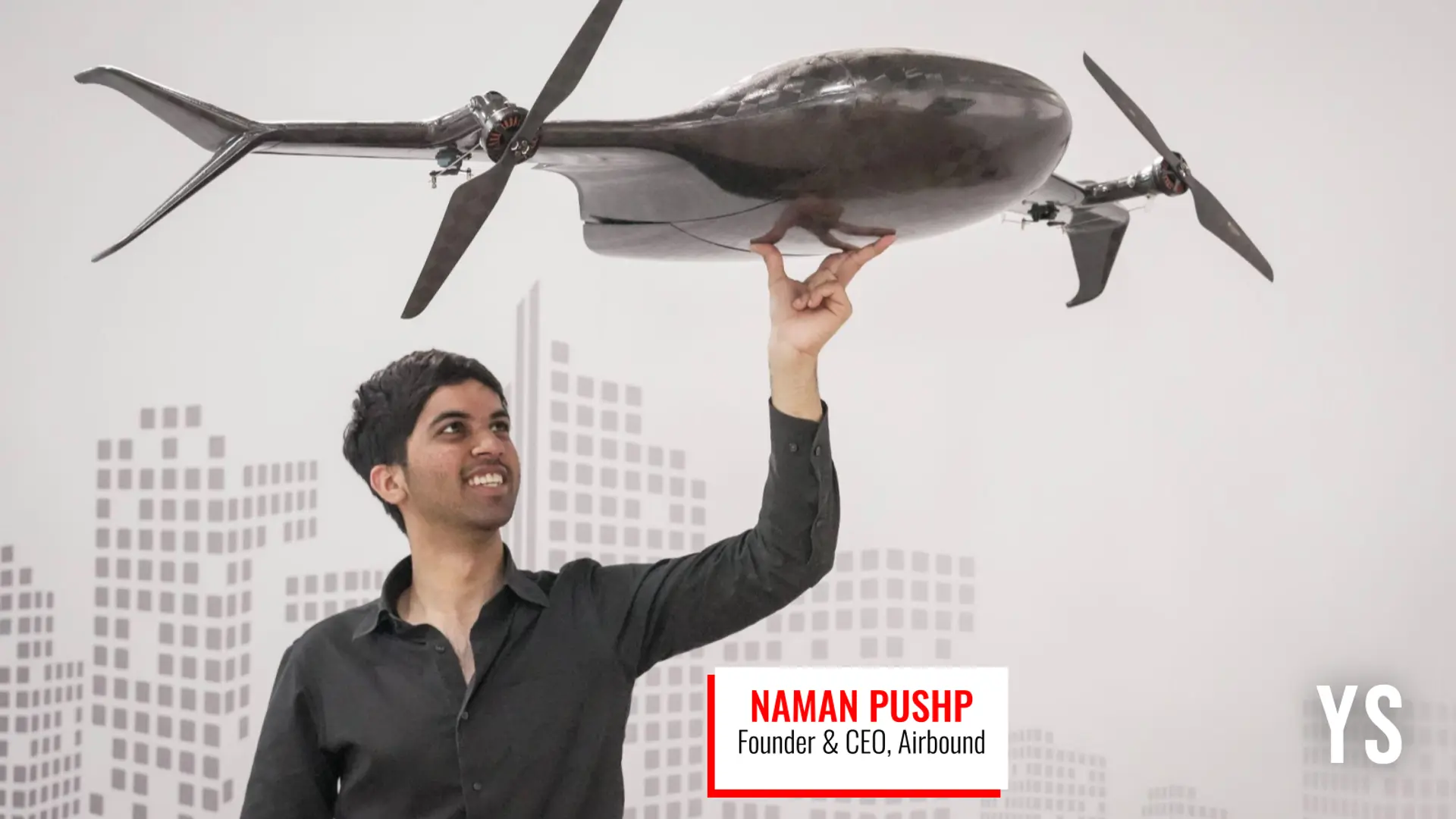

Airbound, a Bengaluru-based aerospace startup developing lightweight autonomous aircraft for deliveries, has raised $37 million in a Series A round led by Greenoaks. The round also includes existing and new investors including DoorDash, Lachy Groom, Lightspeed, and Humba Ventures.
Airbound said the latest financing takes its total capital raised since its 2023 launch to nearly $50 million, including a $8.65 million seed funding round in October.
The company plans to use the money to accelerate engineering, commercial-scale manufacturing and its go-to-market efforts. That marks a shift from demonstrating the technology towards building the capacity and commercial infrastructure needed for larger-scale operations.
The startup said its aircraft have already completed more than 1,000 autonomous flights with Narayana Health, carrying diagnostic samples between healthcare facilities and cutting delivery times from hours to minutes, with no mission failures reported in those flights.
Airbound’s central argument is that conventional aircraft are inefficient for small payloads because much of their weight is devoted to carrying the aircraft itself. The company is designing an aircraft architecture that seeks to reverse that balance, so that a greater share of the weight in flight is the material being transported. Its current aircraft uses a blended wing body tailsitter design, combining the vertical take-off capability of a drone with the efficiency of a fixed-wing aircraft.
The commercial test now underway is in Andhra Pradesh. Under an agreement announced earlier this year by the company, Airbound plans to build a drone delivery network connecting three cities and eventually scale to 10,000 flights a day across retail, e-commerce and healthcare. The company believes the project is a potential model for wider aerial delivery in India.
“The bar for delivery in India is high. The benchmark is 10 minutes to your doorstep, at an extremely low cost. That’s the complexity here,” said Founder and chief executive officer Naman Pushp. “If you can build something that works in India, it tends to work anywhere.”
Pushp noted the underlying ambition is to alter the economics of moving goods, arguing that “better physics leads to better economics”. He has explained the longer-term objective even more broadly, with Airbound expecting the same technology could eventually support passenger transport. The company sees a future where a 300-kilometre journey is being completed in about 20 minutes.
The funding comes as drone logistics moves from pilot projects towards larger commercial networks. Delhi-based Skye Air Mobility raised $9 million in a Series B round in March, led by IAN Alpha Fund, to expand beyond Delhi-NCR, and to strengthen its drone operations, airspace-management and autonomous logistics systems.
Neil Shah, Partner at Greenoak said Airbound could overcome the longstanding trade-off between the speed of air freight and the low cost of road transport. “When one autonomous aircraft can move a single package with the cost efficiency of a fully loaded 20-ton truck, fast delivery and cheap delivery are no longer in tension, and roads stop being the default,” Shah added.
The regulatory environment has also been developing. India’s Drone Rules 2021 reduced several approval requirements and laid the groundwork for a more digital regulatory system, while the government said drone corridors would be developed for cargo deliveries. Last September, the government also reduced GST on drones to 5%, a move intended to support the wider drone ecosystem.
Recent activity suggests the opportunity is not limited to India. In April, FedEx and IIT Madras completed intra-city drone delivery trials in Bengaluru, using an aerial route that cut a typical road journey of about 60 minutes to roughly 21 minutes. In the US, Zipline raised more than $600 million in January to expand autonomous deliveries, while DoorDash received FAA certification in July to operate its own commercial drone service.
Edited by Megha Reddy