



Altmin is building India's first factory to manufacture the cathodes inside lithium batteries
The Hyderabad-based company makes lithium iron phosphate cathode active material, the single most expensive component in a battery cell, which India currently imports almost entirely.


A lithium-ion cell is mostly cathode. The material accounts for a large share of what the cell costs; it determines how much energy the battery holds and how long it lasts, and India makes almost none of it. Cell assembly plants have been announced across the country; the powder that goes into them arrives from abroad.
Lithium iron phosphate, known as LFP, is the chemistry that has taken over the volume end of the market. It holds less energy than the nickel-based alternatives, but it is cheaper, safer and longer-lived, which suits electric two-wheelers, buses and grid storage, the segments where India's demand actually sits.
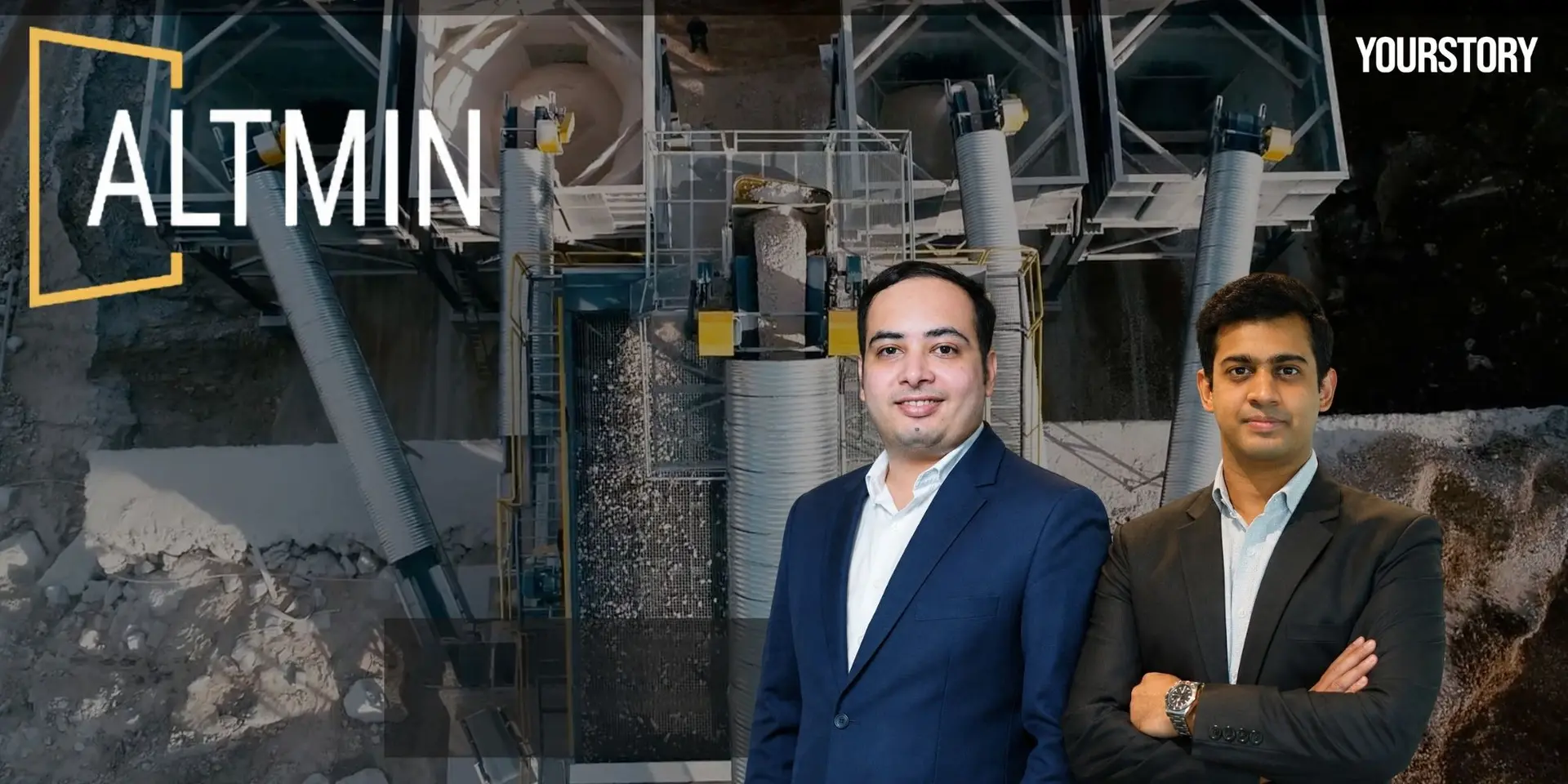
was founded in Hyderabad in 2023 by Anjani Sri Mourya Sunkavalli and Kiriti Varma to make it here. The company describes itself as supply-chain integrated, meaning it intends to work from refining the ore through to the finished cathode powder rather than buying refined lithium and converting it.
From a pilot plant to a giga-factory
The starting point was a partnership with ARCI, the International Advanced Research Centre for Powder Metallurgy and New Materials, an autonomous centre under the Department of Science and Technology. In 2023, the two set up a 10-megawatt pilot plant on ARCI's campus at Balapur in Hyderabad, producing around 100 kilograms of LFP a day.
In March 2025, the company laid the foundation stone for a much larger facility at Divitipally in Telangana, a Rs 750 crore project spanning 20 acres with an initial capacity of 8 gigawatt-hours. Its stated plan is to reach 100,000 tonnes a year by 2030. The company said in June 2025 that it was targeting the last quarter of 2026 for the launch.
Raw material has been the other half of the problem. Altmin signed a sourcing partnership with YLB, Bolivia's state lithium company, and has a research agreement with the University of Warwick. It has also been reported to have acquired a lithium refinery in Brazil, with technology collaboration from the Brazilian miner Companhia Brasileira de Litio.
In September 2025, it became the first Indian project listed with the Minerals Security Partnership, a US-led alliance of fourteen countries and the European Commission that works on diversifying critical mineral supply chains. The listed project is a refinery to convert spodumene ore into 32,000 tonnes of lithium carbonate.

A state partner, and a factory still to open
In December 2025, the company announced a joint venture with Singareni Collieries, the coal miner owned jointly by the Telangana and central governments, to build a battery-grade lithium refinery in the state at a reported investment of Rs 2,250 crores.
That is a striking partner for a three-year-old company. Singareni employs more than 40,000 people and has been mining coal since 1920, and the venture points to what Indian state-owned enterprises are trying to do as coal demand plateaus.
The funding record is more modest than the project numbers suggest. Company databases record about $3.61 million raised in a single round, from an Indian family office that manufactures iron phosphate and took a 22% stake. The $100 million figure that appears across coverage is a stated investment outlay over five years, not money raised.
Sunkavalli has said the refinery would be commissioned within two years of groundbreaking, and has described the aim as reducing India's dependence on a supply chain concentrated in a small number of countries. Neither the giga-factory nor the refinery is yet producing.
(This story has been researched and compiled using publicly available information.)