




Myntra
View Brand PublisherBeyond hiring: How Myntra is building longer-term careers for women in tech
In an exclusive interview, Govindraj MK, CHRO, Myntra, discusses returnships, mentorship, and leadership pathways for women in technology.


As technology reshapes how Myntra builds products and serves millions of customers, the company is looking beyond hiring to build longer-term careers in tech. From returnships and mentorship to leadership pathways, the company is creating opportunities for women across different stages of their careers.
In this conversation, Govindraj MK, CHRO, Myntra, discusses how inclusion, diverse perspectives, and stronger communities can shape the future of technology and innovation.
YourStory: Myntra describes itself as a technology-first organization. What does that mean today, particularly as AI reshapes roles and skill requirements?
Govindraj MK: At Myntra, technology is a core business capability that shapes how we understand customers, build experiences, enable our ecosystem and operate at scale. Our engineering, product, and data teams are central to the company’s next phase of growth, particularly as AI becomes embedded across product development, decision-making and business operations.
AI isn’t reducing the value of technology talent; it is shifting the focus from routine execution to problem-solving, product judgement and domain expertise. As AI takes on more tasks, the ability to use it responsibly, assess its outputs, and turn its capabilities into meaningful business and customer outcomes will matter more.
Our talent approach is focused on helping employees build relevant capabilities and continuously navigate evolving career paths. Through Mynverse, employees can access technical, functional, behavioral, and leadership learning, while role-specific skills are supported through proficiency assessments, development plans, live projects, and mentorship. This brings our employee value proposition, ‘Empowering You to Fashion the Future’, to life by enabling employees to continuously learn, adapt and ‘Innovate to Lead’ in an AI-led environment.
YS: Women account for nearly 40% of Myntra’s overall workforce. How does the company see the opportunity to increase representation across technology and leadership?
Govindraj MK: The opportunity now is to translate the strong representation of women across Myntra—nearly 40% of our overall workforce—into greater depth across technology functions and senior leadership.
Our focus is on strengthening the pipeline across engineering, product, data, and emerging AI-led roles, while enabling more women to progress into senior technical, product, and enterprise leadership.
YS: How is Myntra supporting women in engineering, product and data to build long-term careers rather than focusing only on hiring?
Govindraj MK: Long-term careers are built when employees have clarity on how to grow, access to opportunities that broaden their experience, and support through pivotal career and life stages. At Myntra, we therefore approach career progression as an integrated system rather than a series of standalone interventions.
For women moving into leadership, Ascend supports associate director-level employees through mentoring, leadership exposure and live projects, while Ascend X helps director-level women transition from functional to enterprise leadership. Circle of Strength builds peer support and shared accountability by bringing together women leaders and male allies.
This is complemented by support across different life stages, including maternity, paternity, adoption and surrogacy support, pregnancy and postpartum care, crèche and daycare facilities, lactation rooms and structured return-to-work assistance.
YS: What has Myntra learnt from Phoenix, which has supported more than 100 women in relaunching their careers, with nearly 60% transitioning into full-time roles?
Govindraj MK: Our women returnship programme, Phoenix, has reinforced our belief that women returning after a career break need a structured bridge back into the workforce rather than a conventional hiring process alone.
The six-to-seven-month returnship combines onboarding, learning, mentorship, and hands-on exposure to live projects. This allows participants to rebuild familiarity with the workplace, refresh relevant capabilities, and demonstrate their potential in a supportive environment.
We have also expanded Phoenix to include opportunities across engineering, product, and data, creating a more deliberate pathway for women seeking to return to technology careers.
One of the most important learnings has been that successful reintegration depends on combining capability building with meaningful work, manager support and a clear route to sustained employment. It is equally important to recognize the experience and perspective participants already bring, rather than viewing the career break as a limitation.
YS: What role do mentorship, sponsorship, and women role models play in helping women progress into senior technology and business leadership?
Govindraj MK: Mentorship, sponsorship, and access to accomplished leaders play complementary roles in helping talent progress into senior technology and business leadership.
Mentors offer perspective, strengthen judgement, and support readiness for larger mandates, while sponsors help create visibility for strong performance and open access to opportunities of greater scale and complexity.
At Myntra, this is supported through programs across the career journey, from early capability-building and mentoring to leadership exposure, cross-functional assignments, and enterprise-level development. These interventions help employees broaden their experience, build confidence, and prepare for roles of greater responsibility.
YS: How does Myntra measure the effectiveness of its diversity and inclusion initiatives beyond representation?
Govindraj MK: We assess the effectiveness of inclusion by looking at the breadth of opportunities it creates across the employee journey. Alongside representation, we track capability-building, participation in development programmes, internal mobility, returnship conversion, leadership-pipeline strength, employee sentiment, and retention.
Program outcomes provide an important view of this progress. For instance, Phoenix has supported more than 100 women returning after a career break, with nearly 60% transitioning into full-time roles. This reflects the value of structured pathways that combine learning, meaningful work and long-term opportunity.
At an organizational level, approximately 25% of Myntraites have been with the company for more than five years. In MyPulse 9.0, Myntra’s internal employee listening survey conducted in November 2025, nearly 80% of employees expressed an intent to remain with Myntra for the next two to three years. Gen Z constitutes nearly 40% of our workforce, and close to 80% of this cohort expressed the same intent to stay.
These outcomes give us a holistic view of Myntra as a workplace where employees can continue learning, progressing, and building meaningful careers.
YS: What prompted Myntra to create its Women in Tech platform, and what longer-term impact do you hope it will have?
Govindraj MK: The future of technology will be shaped not only by the sophistication of what we build, but also by the breadth of perspectives, experiences, and ideas that inform it.
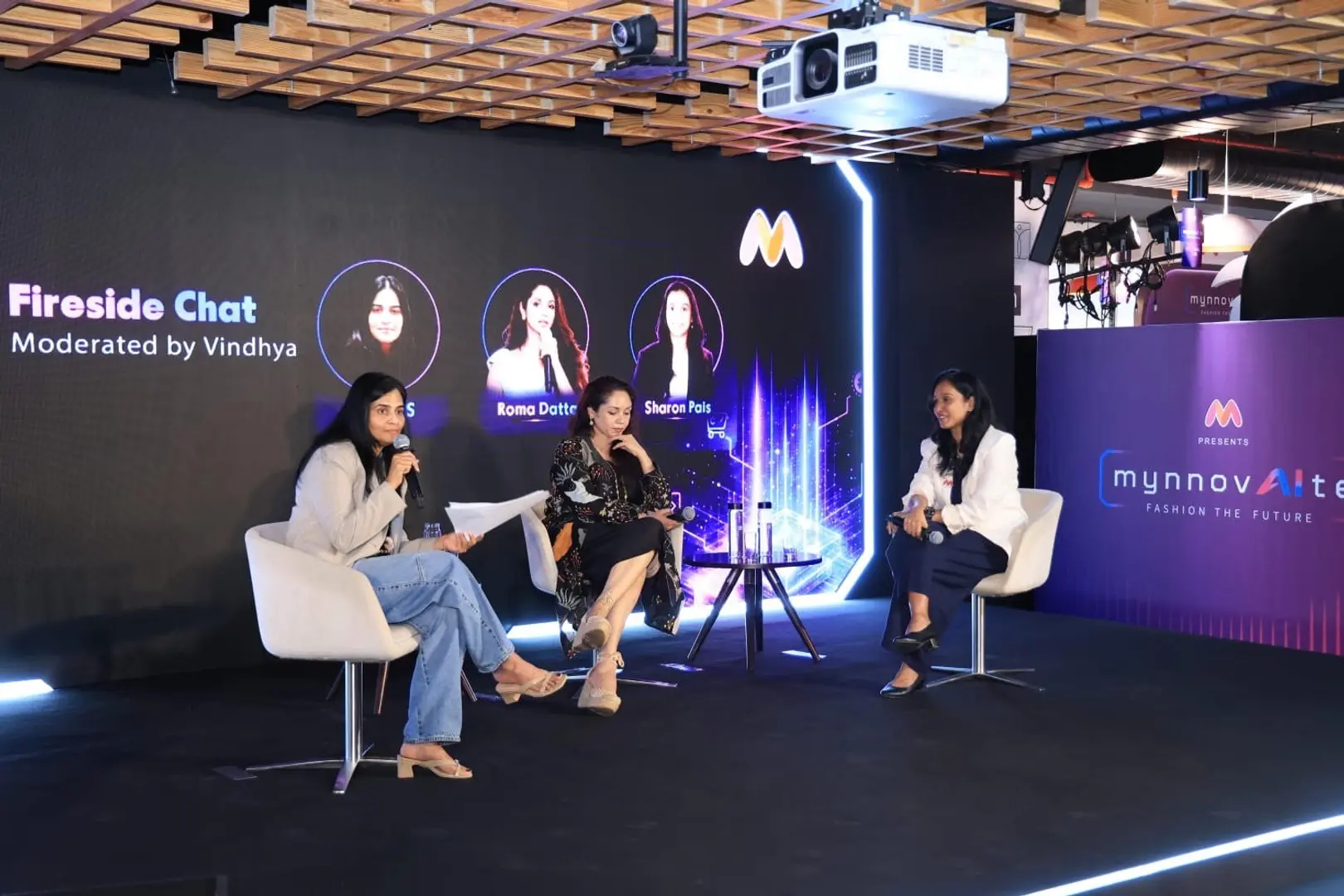
Women in Tech was created to enable meaningful dialogue on this shift and bring together leaders, AI practitioners, and engineering experts for practical conversations on building, scaling, and leading technology in an AI-led environment.
The latest edition featured participants from organisations including Google India, NVIDIA, Thomson Reuters, and Anthropic, with discussions spanning customer experience, product development, engineering, responsible innovation, and future leadership capabilities.
Our longer-term ambition is to build a stronger community of women technologists through shared learning, professional networks, and continued industry exchange. By bringing together diverse technical perspectives and career journeys, the platform can encourage collaboration, expand access to knowledge, and create stronger pathways for growth across the ecosystem.
For technology professionals considering Myntra, the event reflects a culture that values curiosity, continuous learning, open dialogue, and diverse thinking. We want Myntra to be a place where women can build, innovate, take on larger mandates, and shape long-term careers in technology.