



The upcoming 6G will use frequencies that this Chennai-based company is building
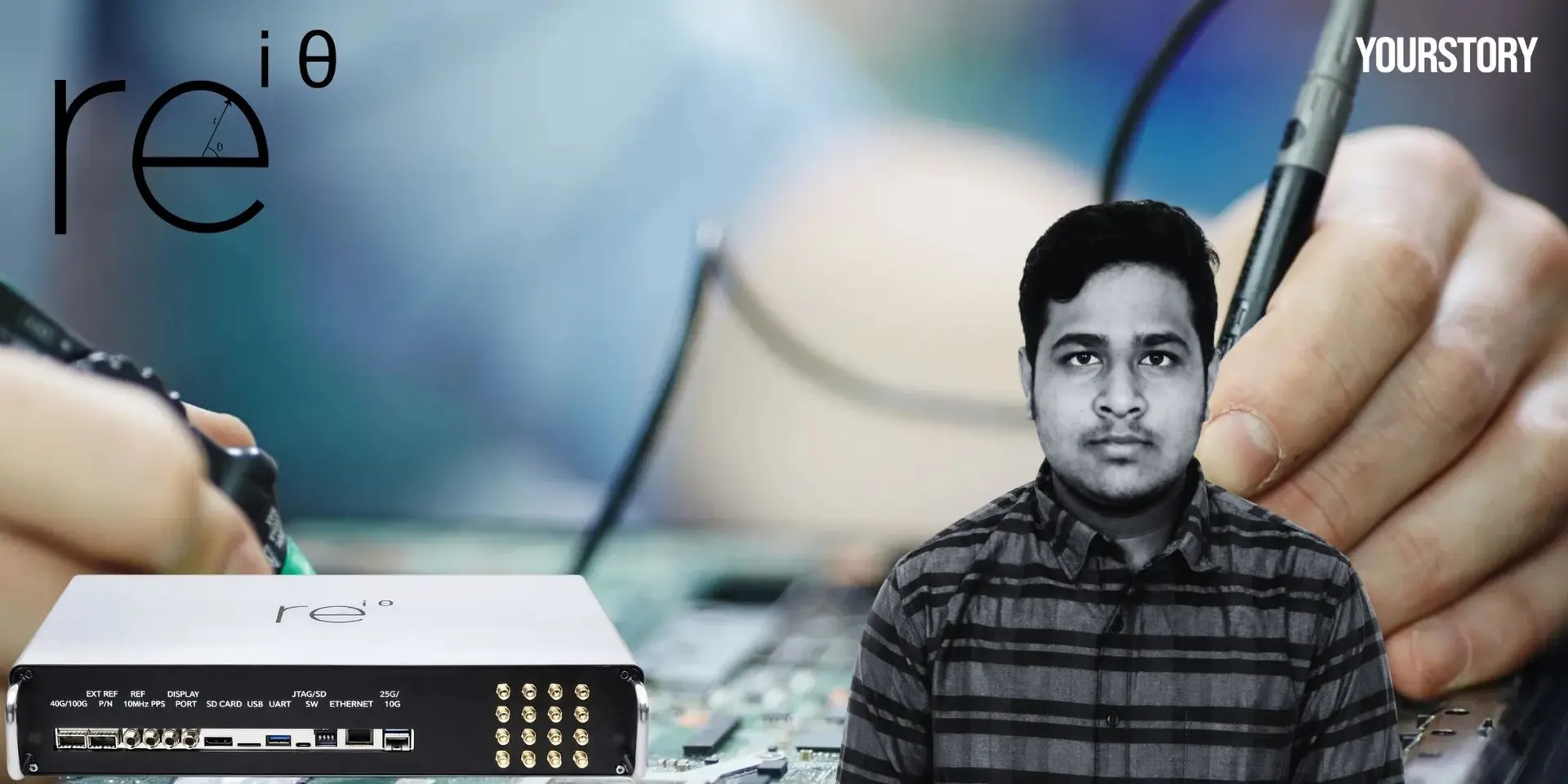
REIO Systems has developed a software-defined radio platform covering 7 to 24 GHz, aimed at 6G research groups, defence electronics firms and drone manufacturers.


Every generation of mobile network moves into new frequencies, and the equipment to work in them arrives before the standard is settled. Researchers designing for 6G need radios that can transmit and receive across bands that current hardware does not reach, and they need them now, years before anything is deployed.
The band in question is the awkward one. FR3, roughly 7 to 24 gigahertz, sits between the frequencies today's networks use and the very high millimetre-wave bands, and it is where much of the 6G work is expected to concentrate because it offers more bandwidth than the low bands without the range problems of the high ones.
was incorporated in Chennai in July 2023 to build equipment to solve this problem. Its directors are Lakshman Bhaskaran and Ravi Teja Devara, and the company describes its roots in the research ecosystem around IIT Madras.
The equipment it competes with comes almost entirely from abroad, and a research group in India buying a software-defined radio for a new band is usually buying an American or European instrument.
A radio defined by its software
A software-defined radio moves as much of the radio as possible into software. Rather than fixed circuits tuned to a particular band, the hardware digitises a wide slice of spectrum and lets code decide what to do with it, which means one box can be reconfigured for different standards and experiments.
The company's platform covers the FR3 range and puts processing on the board itself. It describes field-programmable gate arrays handling beamforming, spectrum sensing and signal conditioning in real time without needing external graphics processors, which for a laboratory means less equipment around the radio.
The architecture is modular and synchronisable, which matters for the experiments these customers run. Massive MIMO, the technique of using many antennas together, cannot be tested on a single radio; it needs several kept in step, and the company says its platform scales from one unit to multi-node testbeds.
Its customers include research groups, telecom equipment makers, defence electronics companies and drone manufacturers, and the company positions itself on cost and an open architecture.

Early revenue, and no outside money
REIO Systems has revenue and very little outside money. Corporate filings record turnover under Rs 10 crore for the year ended March 2025, and the company reports seed funding of about $52,000, with paid-up capital of Rs 1 lakh.
For a hardware company three years old, selling before raising is an unusual order. Test and measurement equipment is bought by institutions with budgets rather than consumers, which makes early revenue more achievable than in most hardware categories.
It was among the companies selected for Bharat Innovates 2026 and shown in Nice in June, where it described looking for European research institutions to work with on FR3 and massive MIMO testbeds. European universities and telecom research groups are among the heaviest users of this equipment, and a cheaper platform is an easier sale to a laboratory than to a network operator.
What is not public is a customer name, an order value or the number of units sold. The company's own site refers to defence research groups and wireless startups among its users without naming any of them.
(This story has been researched and compiled using publicly available information.)