



How East Ocyon Bio is building an off-the-shelf cancer cell therapy in Gurugram
The Gurugram-based company is developing allogeneic CAR-NK cell therapies made from healthy donor cells, backed by a $4.2 million seed round and a government grant covering both resistant tumours and leishmaniasis.

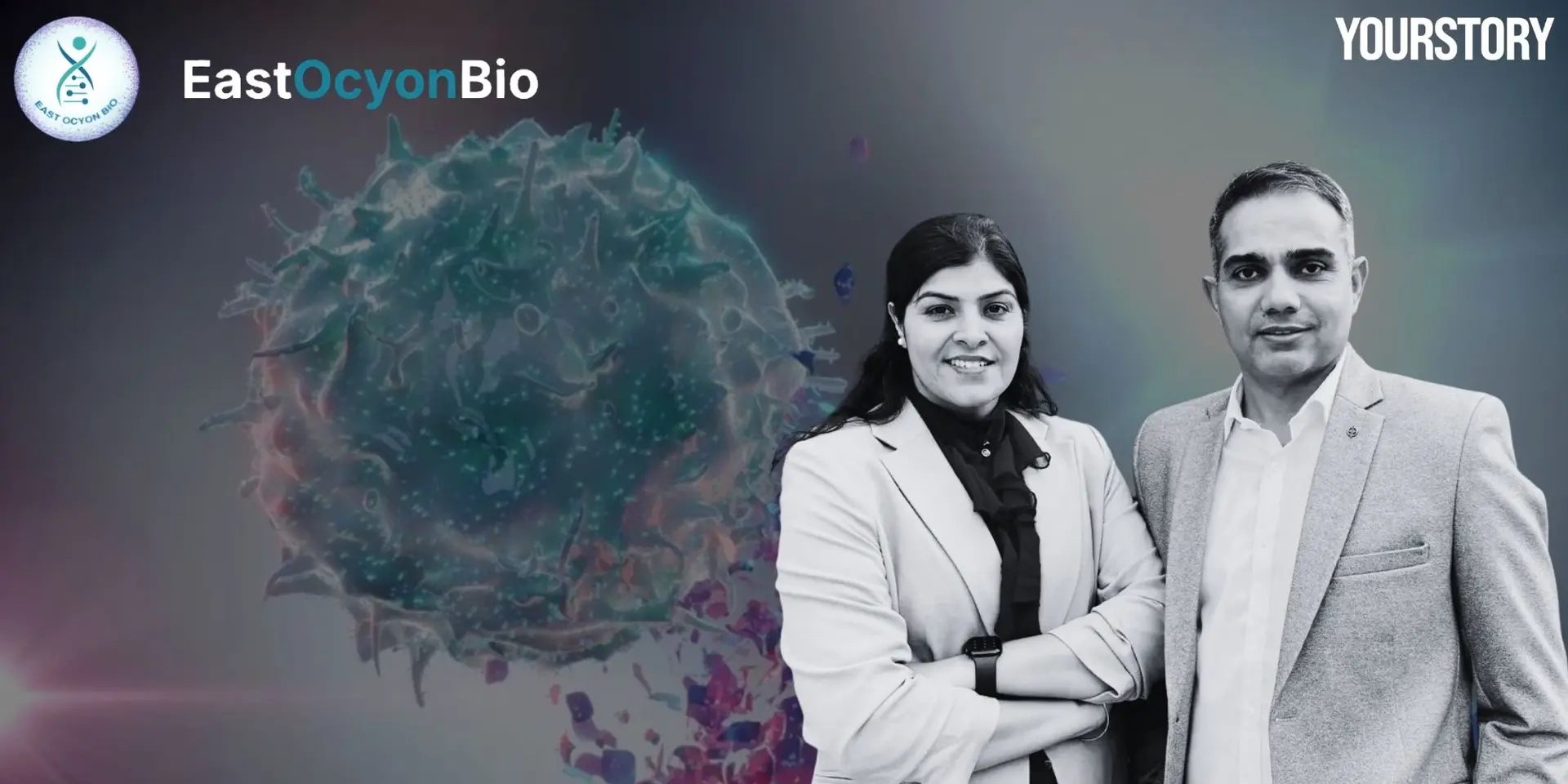

Cell therapy has produced some of the most effective cancer treatments of the past decade, and some of the least available. CAR-T therapy is made from a patient’s own cells, which means a separate manufacturing run for every person treated, at a cost and a turnaround time that puts it out of reach for most patients.
The alternative is to make the therapy in advance from healthy donor cells, so that it can be taken off a shelf when a patient needs it. That is what allogeneic cell therapy means, and it is the category East Ocyon Bio is working in.
Private Limited was founded in Gurugram in 2022 by Dinesh Kundu, who is chief executive and holds MBBS and MBA degrees, along with Renu Kundu and Narinder Mehra. The company describes its aim as developing therapies in India and launching them alongside global markets rather than years behind them.
That gap is what East Ocyon Bio is trying to close. Therapies approved in the United States and Europe have historically reached Indian patients well after launch. The company has said it wants curative treatments for cancers, autoimmune disorders and rare diseases developed domestically.
Natural killer cells, engineered
The platform uses natural killer (NK) cells, part of the immune system’s first line of response, taken from healthy donors and engineered to carry a chimeric antigen receptor (CAR) that directs them at a specific target. The result is known as CAR-NK therapy.
The company says it uses synthetic biology and non-viral cell engineering to produce these cells, and that the therapies are allogeneic and off the shelf. Alongside CAR-NK, its website lists CAR-gamma delta T cell therapies, CRISPR gene editing and mRNA work.
CAR-NK is not East Ocyon Bio’s invention. It is an active global research area, and the Technology Development Board describes it as a potentially safer and more scalable alternative to CAR-T, carrying a lower risk of the severe immune reaction that CAR-T can trigger. What the company proposes is an Indian platform for it.
None of it has been tested in patients yet. The seed round was raised to fund pre-clinical testing, build a facility to good manufacturing practice (GMP) standards, and reach Phase I clinical trials. Phase I is the first stage of human testing, and the company has not announced that one has begun.

A government grant and a second target
In February 2026, the Technology Development Board, under the Department of Science and Technology, extended financial assistance to the company for a project titled CAR-NK based Cell Therapy Development and Clinical Trials for Difficult-to-treat Tumours and Leishmaniasis. The amount was not disclosed.
Under the project, the company has proposed an anti-PD-L1 CAR-NK therapy for resistant solid tumours alongside the leishmaniasis work. The board describes the goal as a first-in-India, platform-based ecosystem for off-the-shelf CAR-NK therapies, aimed at reducing reliance on imported and high-cost treatments.
The seed round closed in December 2024 at $4.2 million, co-led by Aeravti Ventures and Micro Labs, a Bengaluru pharmaceutical company. Rishabh Singh of Aeravti Ventures said at the time that India carries significant unmet medical need and lags in access to innovative therapies.
Company databases citing filings put revenue at about Rs 2.33 lakh for the year ended March 2024, and headcount at 14. Beyond the grant announcement, no clinical result, trial registration, manufacturing site or partnership has been made public.
(This story has been researched and compiled using publicly available information.)