



Gurutvaa Systems builds the anti-drone equipment that Indian forces use to jam intruding drones
The Pune-based company makes DRONAAM, a modular counter-drone system carried as a rifle or a backpack, and has been delivering it to the Indian Air Force since 2022.


It is difficult to detect a small commercial drone crossing national borders at night. It is too small for most radar, too cheap to be worth a missile, and it can be carrying anything. The answer that has proved practical is not to shoot it down but to cut the link it depends on, jamming the satellite navigation and the control signals so that it lands, returns or falls.
makes equipment that does this. Incorporated in Pune in September 2014 by Harshad Dave and Sonika Sehraya, the company works on precision electronic systems: inertial sensors, radio frequency components, radar and automated test equipment, alongside the counter-drone line it is now known for.
Its stated purpose is substitution. The company describes itself as designing and integrating technologies in India to maximise Indian content in the systems it delivers, which in defence electronics means components that would otherwise be bought abroad.
Counter-drone work became urgent in India after a run of incidents on the northern borders, where small aircraft were intercepted carrying payloads across. The systems that answer that threat had largely been imported, and the government has since pushed procurement towards Indian suppliers.
A jammer that comes in three shapes
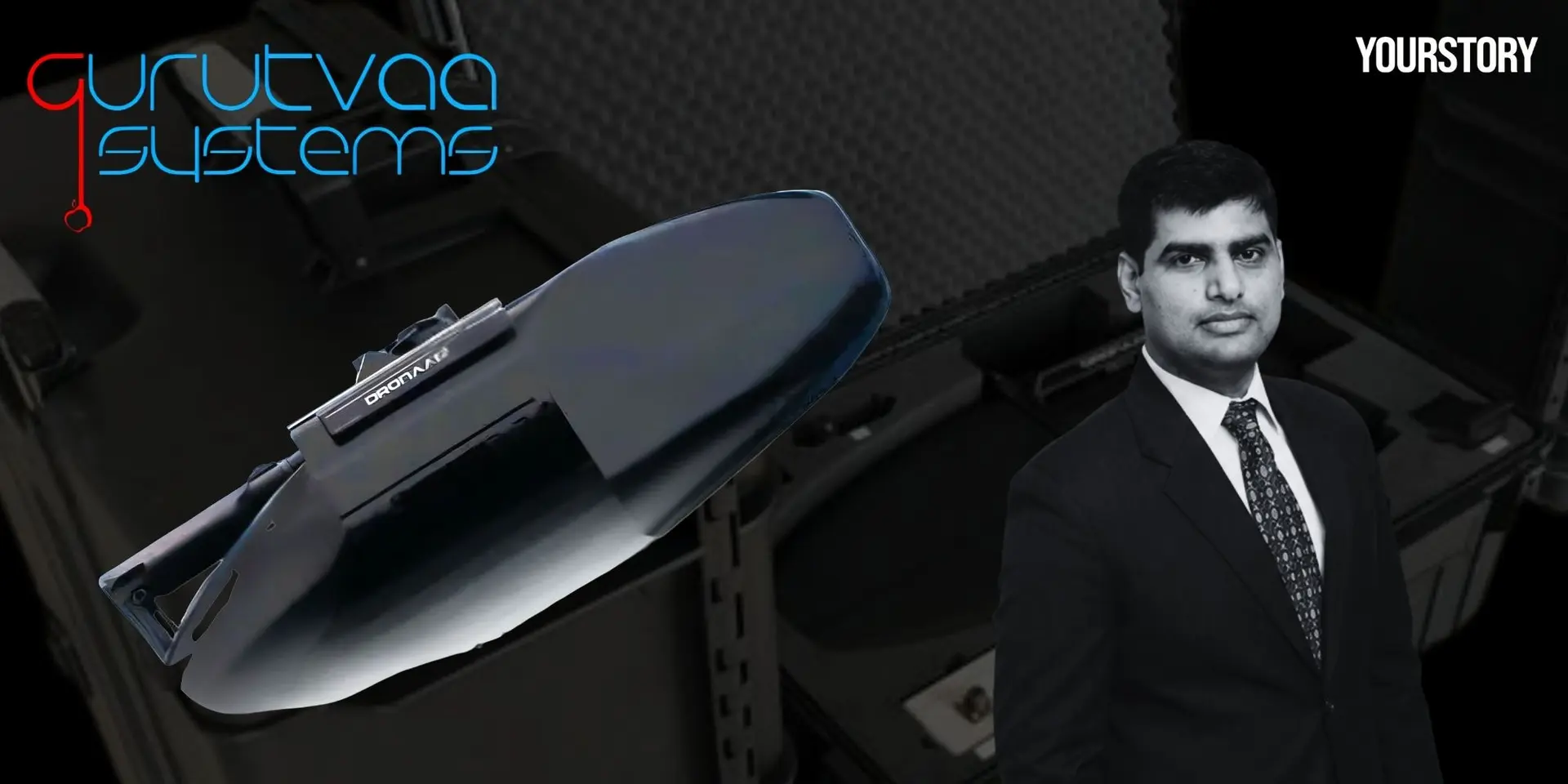
The product is DRONAAM. The company describes it as a modular counter-unmanned aerial system that can be configured as a rifle-style handheld unit, carried in a backpack, or mounted on a fixed or moving installation, with either single-directional or all-round coverage.
It works by disruption rather than destruction. According to the company, the system jams satellite navigation along with the control, video and telemetry links a commercial drone relies on, which it describes as a soft kill: the drone is brought down without anything being fired at it.
The Indian Air Force ordered the system in August 2021. Gurutvaa says it completed design, prototype build, customer approval and the first production batch within eight months, and its vice-president told a defence publication in November 2022 that bulk deliveries had begun after an Air Force team approved the production lot at the Pune facility.
Training came with it. The company said in 2022 that it had trained more than 200 personnel of the armed forces in operating and maintaining DRONAAM, which, for a system meant to be carried by a soldier, matters as much as the hardware.

From the G20 to the border
DRONAAM units were deployed around Delhi during the G20 summit in 2023, at Bharat Mandapam, Pragati Maidan, Raj Ghat and Akshardham, according to the company's own account of the work.
The clearest external assessment came from the government. At the Border Security Force's 60th Raising Day in Jodhpur, Union Home Minister Amit Shah said anti-drone deployment had raised the rate at which incoming drones were neutralised in the Punjab sector from 3% to 55%, and credited DRONAAM among the systems responsible.
The business behind it is small and growing. Corporate filings record revenue of Rs 8.08 crores for the year ended March 2025, up from Rs 5.91 crores the year before, with 26 employees as of April 2026. Company databases record one institutional investor with the amount undisclosed.
The company is part of the iDEX defence innovation framework and was among the Indian companies shown at Bharat Innovates in Nice in June 2026, where it described a fully owned counter-drone patent portfolio and said it was looking for procurement and integration partners. Its competitors in the segment include larger listed Indian defence electronics firms as well as international counter-drone specialists.
(This story has been researched and compiled using publicly available information.)