



ISRO’s Thoothukudi spaceport to become India’s first privately operated spaceport
IN-SPACe has invited Indian companies to operate India’s new Kulasekarapattinam spaceport while ownership remains with the Department of Space.

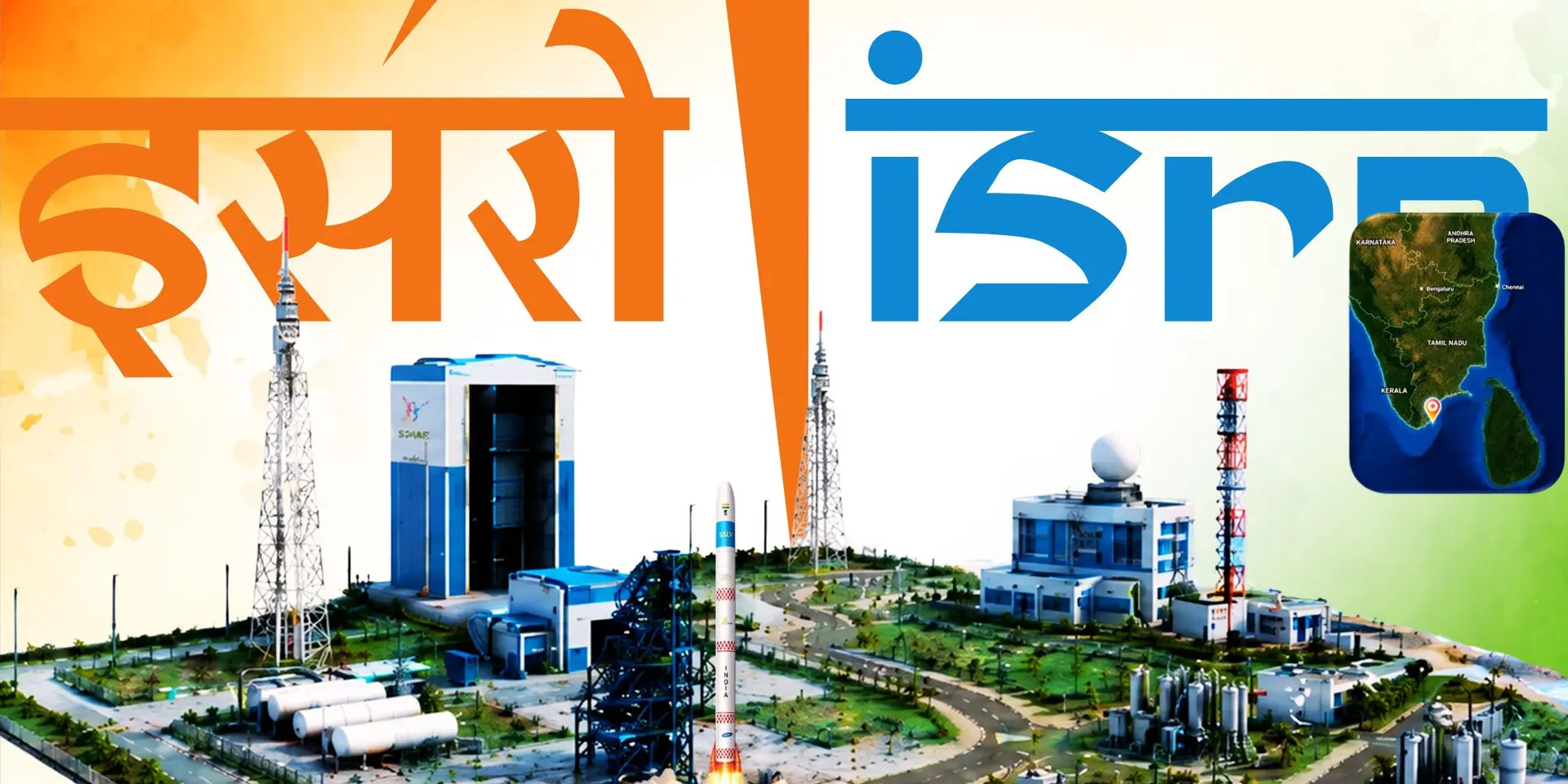

India is preparing to hand the keys of a national spaceport to a private company for the first time. The Indian National Space Promotion and Authorisation Centre (IN-SPACe) has floated an Expression of Interest (EoI) inviting eligible Indian firms to operate and maintain the Small Satellite Launch Complex (SLC) being built at Kulasekarapattinam in Tamil Nadu's Thoothukudi district. The facility spans roughly 2,233 acres along the coast and is the country's second spaceport, developed by the Indian Space Research Organisation (ISRO) at an estimated cost of ₹986 crore.
The facility, whose foundation stone was laid by Prime Minister Narendra Modi in February 2024, is being purpose-built for the Small Satellite Launch Vehicle (SSLV) and other small commercial launchers carrying payloads of up to about 500 kg. Its coastal location on the Gulf of Mannar allows rockets to fly south over the ocean, giving efficient access to polar and sun-synchronous orbits without overflying populated land, an advantage prized by the Earth-observation and remote-sensing missions that dominate the small-satellite market.
Ownership stays public, operations go private
Under the model outlined in the EoI, the spaceport itself will continue to be owned by the Department of Space (DoS). What changes hands is the running of it. The selected private entity will be responsible for operating and maintaining the launch infrastructure, coordinating with ISRO and launch providers, and executing launch campaigns.
Rocket makers who want to fly from the pad, such as Skyroot Aerospace with its Vikram-1 and NSIL/HAL with the SSLV, would become customers of the operator, booking the pad for their missions rather than managing it themselves.
A different playbook from NASA's
The approach marks a deliberate departure from the leasing model used in the United States, where launch pads are handed to individual providers. SpaceX, for instance, is the exclusive operator of Launch Complex 39A at Kennedy Space Center, flying only its own missions and absorbing the full cost of upkeep and upgrades.
IN-SPACe's design instead installs a neutral operator between the pad and the rockets. That structure lifts the burden of pad operations, maintenance and associated expenses off the launch providers, freeing them to concentrate on their vehicles and missions. It also allows a single pad to be shared efficiently among multiple providers, a setup intended to push launch cadence higher and spread fixed costs across more flights.
Training wheels from ISRO
The transition will not be a cold handover. ISRO will provide the chosen operator with extensive training and hand-holding for up to one year, or until three launches have been conducted from the pad, whichever comes first. After that, the private entity is expected to run launch campaigns independently.
Who can apply
The eligibility bar is deliberately high, effectively limiting the field to established players. IN-SPACe is seeking Indian companies that have been operational for at least seven years, with a net worth of ₹1,000 crore or more and an annual turnover of ₹2,000 crore or more in at least three of the last five years. Applicants must also demonstrate experience in managing and operating large-scale, multidisciplinary infrastructure projects.
Those conditions rule out standalone rocket startups bidding alone, though such firms could still participate as part of a qualifying consortium. Early commentary has pointed to Hyderabad-based Skyroot Aerospace, operational since 2018 and already building the Vikram launcher, as a company well-positioned to feature in the running.
Why it matters
The move is the latest step in India's post-2020 space reforms, which have progressively opened satellite manufacturing, ground stations and now launch operations to private capital. It follows the transfer of SSLV technology to Hindustan Aeronautics Limited and the ongoing effort to commercialise larger vehicles such as the LVM3.
For India, a shared, privately run spaceport promises faster turnarounds, dedicated commercial slots and relief for the crowded Satish Dhawan Space Centre at Sriharikota, which will remain under ISRO for the country's heavier and more complex missions. If it works, Kulasekarapattinam could become a template for how a national space agency and private industry share critical infrastructure, and a meaningful piece of India's bid to claim a larger slice of the fast-growing global small-satellite launch market.
The SLC is targeted for operational readiness in the 2026-27 window, meaning the first privately operated launches from Indian soil could follow within the next couple of years.