



Nike, Adidas and Puma once sourced from this Punjab city. What happened?
Jalandhar once dominated India’s sports goods exports and manufactured equipment for global brands. Chinese competition, automation and rising costs have since transformed its fortunes.

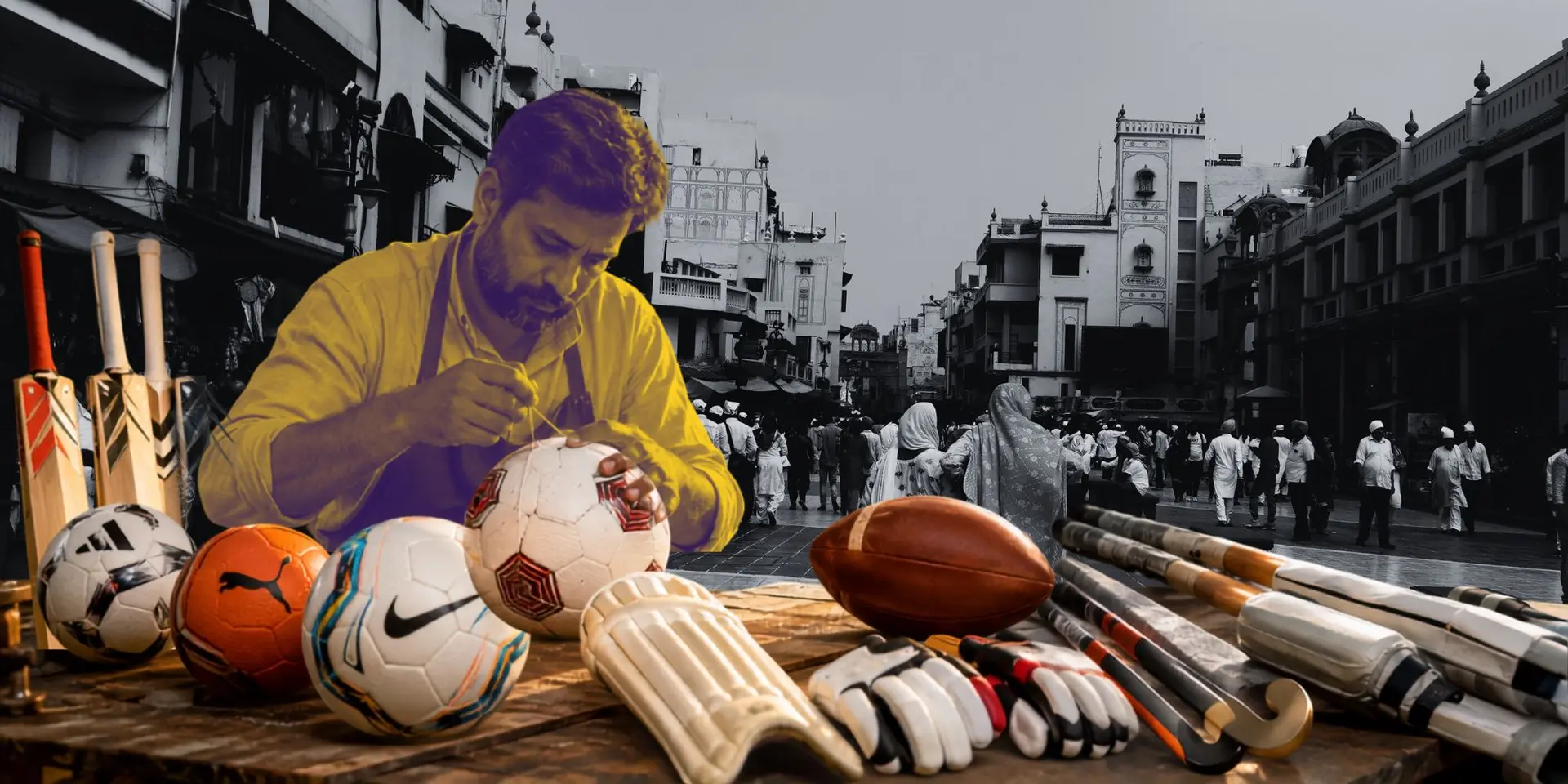

For decades, footballs, rugby balls, cricket bats, and hockey sticks stamped with names like Nike, Reebok, Adidas, Puma, Slazenger, and Webb Ellis were quietly manufactured not in Europe, but in Jalandhar, a mid-sized city in Punjab that rarely comes up in conversations about global sport. At its peak, this single cluster supplied products to more than 130 countries. Today, the story has grown more complicated, and understanding why is its own lesson in how manufacturing dominance can be built and then slowly lost.
A trade that migrated across a border
Jalandhar's sporting goods industry didn't originate there. It traces back to Sialkot, now in Pakistan, where the industry took root under British colonial influence, sports-obsessed administrators created early demand for locally made cricket and hockey equipment. After Partition in 1947, entrepreneurs and skilled workers migrated across the new border, rebuilding the trade from scratch in Jalandhar and, to a lesser extent, Meerut. It grew into a genuinely major industrial cluster: at its height in the 1980s and 90s, industry estimates put Jalandhar at roughly 90% of India's sports goods export market.
Where the dominance actually came from
The industry that grew here wasn't built on cheap, low-skill assembly. It was built on labour-intensive craftsmanship, hand-stitched footballs, precision-carved cricket bats using Kashmir willow, hockey sticks requiring skilled woodworking, much of it produced by small and medium enterprises and home-based contracted labour rather than large factories. Inflatable balls alone account for roughly 60% of what Jalandhar makes, and India became a leading sourcing destination in that category for global brands including Mitre, Lotto, Umbro, and Wilson, alongside its cricket and hockey equipment lines.
The competition that changed everything
By the most recent detailed industry assessments, Jalandhar's share of India's sports goods exports had fallen from that 90% peak to roughly 35%, with neighbouring Meerut in Uttar Pradesh at around 45% and now India's largest cluster. Unit counts for both clusters vary widely depending on whether household and micro units are included, but the direction of the shift is not disputed.
The reason is almost entirely external: cheap Chinese imports flooded both the domestic and international markets, and Chinese manufacturers gained a decisive edge through automation, lower production costs, and sophisticated technology that Jalandhar's traditional, craftsmanship-heavy small units struggled to match at scale. India's exports across the broader sporting goods category, which also covers toys, board games, and fitness and recreation items, reached $400.1 million in FY25, up about 8% year on year. Exports of sports equipment specifically are a fraction of that, and a fraction again of China's position in the same global market.
Why the industry hasn't disappeared, despite the pressure
What's kept Jalandhar in the game at all is precisely the thing that made competing on pure cost difficult: specialised craftsmanship in categories that don't automate easily. Hand-stitched balls and traditional protective gear remain areas where the cluster still holds a genuine edge, and its manufacturers continue to serve buyers across Europe and North America, with the UK, the US, Germany, France, and Australia among the largest destinations. Meerut, for its part, has leaned on its own pre-independence-era buyer linkages and faster adoption of technology in quality testing and logistics. Across India, the sports goods sector supports more than 500,000 livelihoods directly and indirectly, the large majority of them tied to these two clusters, and disproportionately including women workers in a historically labour-intensive trade.
Why this story matters
Jalandhar's arc, from near-total dominance of India's sports goods exports to a shrinking but still significant share, is a cautionary tale as much as a success story. Owning an industry completely doesn't guarantee owning it forever, especially in labour-intensive manufacturing where a lower-cost, more automated competitor can erode decades of accumulated market share within a generation. The next time you unwrap new sports gear from a well-known international brand, there's still a reasonable chance the hands that made it belonged to a small workshop in Punjab, holding onto a shrinking but still real piece of a business it once almost entirely owned.