



Odisha's Lok Bhavan becomes India's first Platinum certified green Lok Bhavan
A 635 kWp solar array, 2,374 trees, an all electric carcade and a score of 88 out of 100. Bhubaneswar has just set the benchmark for what green governance looks like on an operating government campus.

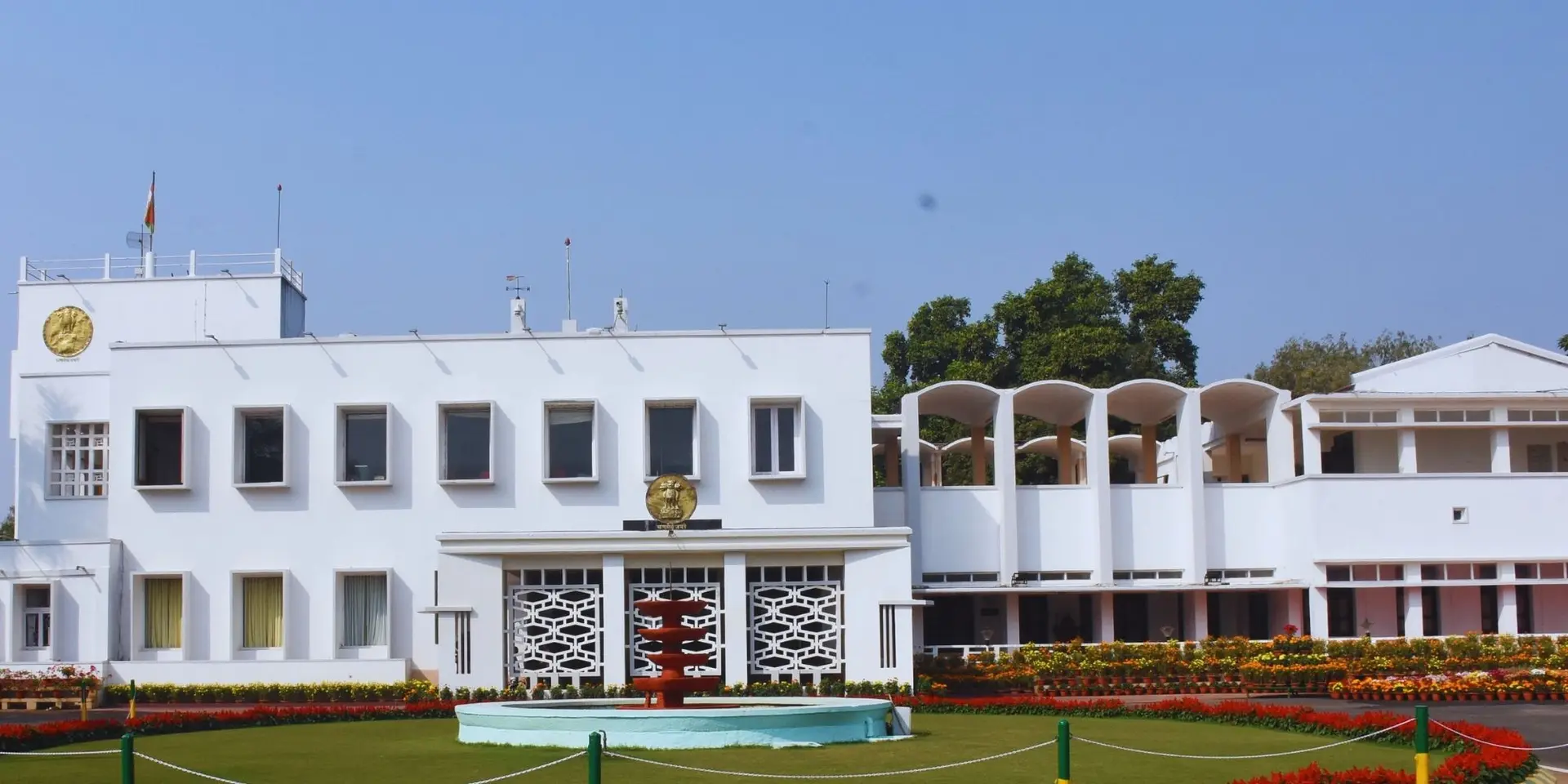

In the heart of Bhubaneswar, the institution that has housed the Governor of Odisha since 1960 has earned a distinction no comparable campus in India holds. Lok Bhavan, renamed from Raj Bhavan in December 2025, is now the country's first Lok Bhavan to receive IGBC Platinum green certification, and the first campus anywhere in India to reach Platinum under the stricter Green Campus v1 rating system introduced in July 2024.
The final score was 88 out of 100, inside the Platinum band of 80 to 100 and among the highest rated green campuses in the country.
Retrofitting a working campus
The harder part is what it took to get there. Green certifications are easier to win on new construction, where efficiency can be designed in before the foundation is poured. Lok Bhavan is a functioning government campus with decades of built infrastructure, daily operations and public engagement running through it.
Under Governor Dr. Hari Babu Kambhampati, the campus was assessed system by system. Civil works were carried out, electrical systems upgraded, water management strengthened, energy monitoring introduced, landscaping and irrigation reworked, and waste handling reorganised. Officials, engineers, consultants and stakeholders worked through a roadmap covering eight environmental and operational categories, with every credit evidenced.
The category breakdown: site planning and management 23/25, sustainable transportation 7/7, water conservation 13/18, energy efficiency 17/18, material and resource management 8/8, health and well being 6/7, sustainable operation and maintenance 7/8, and innovation in design 7/9.
Green cover, solar and water
More than 80% of the campus remains under green cover. A biodiversity survey documented 2,374 trees across 72 species, with faunal records spanning 27 species and a Shannon Wiener diversity index of 3.59. A deer park sits within the grounds, alongside Atal Van, the ecological park dedicated to former Prime Minister Atal Bihari Vajpayee, where a T-55 battle tank and a Rafale model anchor a collection of defence and naval artefacts.
On energy, the campus has installed 635 kWp of solar photovoltaic capacity, with major consuming systems metered and tracked. The Energy Performance Index stands at 50.57 kWh per square metre per year, positioning the campus as a candidate for net zero.
Water saw the sharpest operational gain: more than 35% reduction in consumption. That came from an integrated rainwater harvesting and groundwater recharge system built around recharge trenches, filter chambers, ponds and borewell recharge structures, combined with drip irrigation, controlled sprinklers, and separate monitoring of municipal supply, building systems, kitchen and irrigation lines.
Waste is segregated at source. Organic waste from kitchens and landscaping is treated on site through vermicomposting, with 100% treatment and reuse, while the final review recorded 100% diversion of reported dry waste from landfill.
The all electric carcade
Lok Bhavan has also become the first in the country to adopt an all electric official carcade, backed by EV charging infrastructure and electric vehicles for internal movement. It is the most visible element of the transformation, and the one most easily replicated elsewhere.
People, not just parameters
Indoor air quality is monitored and daylight has been brought deeper into occupied spaces. Universal accessibility is supported through ramps, tactile signage and audio assisted facilities. An occupant satisfaction survey recorded over 80% overall satisfaction across key parameters. Outreach ran beyond the boundary wall too, through plantation drives, public health initiatives, blood donation camps and adolescent health and nutrition programmes.
For a state positioning itself around administrative reform, the certification is a useful proof point. More usefully for the rest of the country, it is a documented template for what retrofitting an existing government campus involves, and what it can deliver.