



MedevPlus makes a portable eye scanner for screening outside hospitals
MedevPlus has developed a portable optical coherence tomography device for retinal screening and is extending the same imaging technology to veterinary and industrial use.


Optical coherence tomography is how an eye doctor sees beneath the surface of the retina. It works similarly to an ultrasound with light, building a cross-section of the tissue layer by layer, and it is the standard way to catch diabetic retinal damage and glaucoma early.
The machines that do it are large, expensive and installed in hospitals. A patient in a small town who needs one has to travel to a city, a journey many people do not make until their sight has worsened.
was set up to shrink the machine. Registered as Tishyas Medical Device Development Solutions and incorporated in Bengaluru in June 2018, the company is led by Dr Ravi Kiran Manapuram, who holds a doctorate in biomedical engineering from the University of Houston and worked in the field in the United States before returning to India.
A scanner that travels
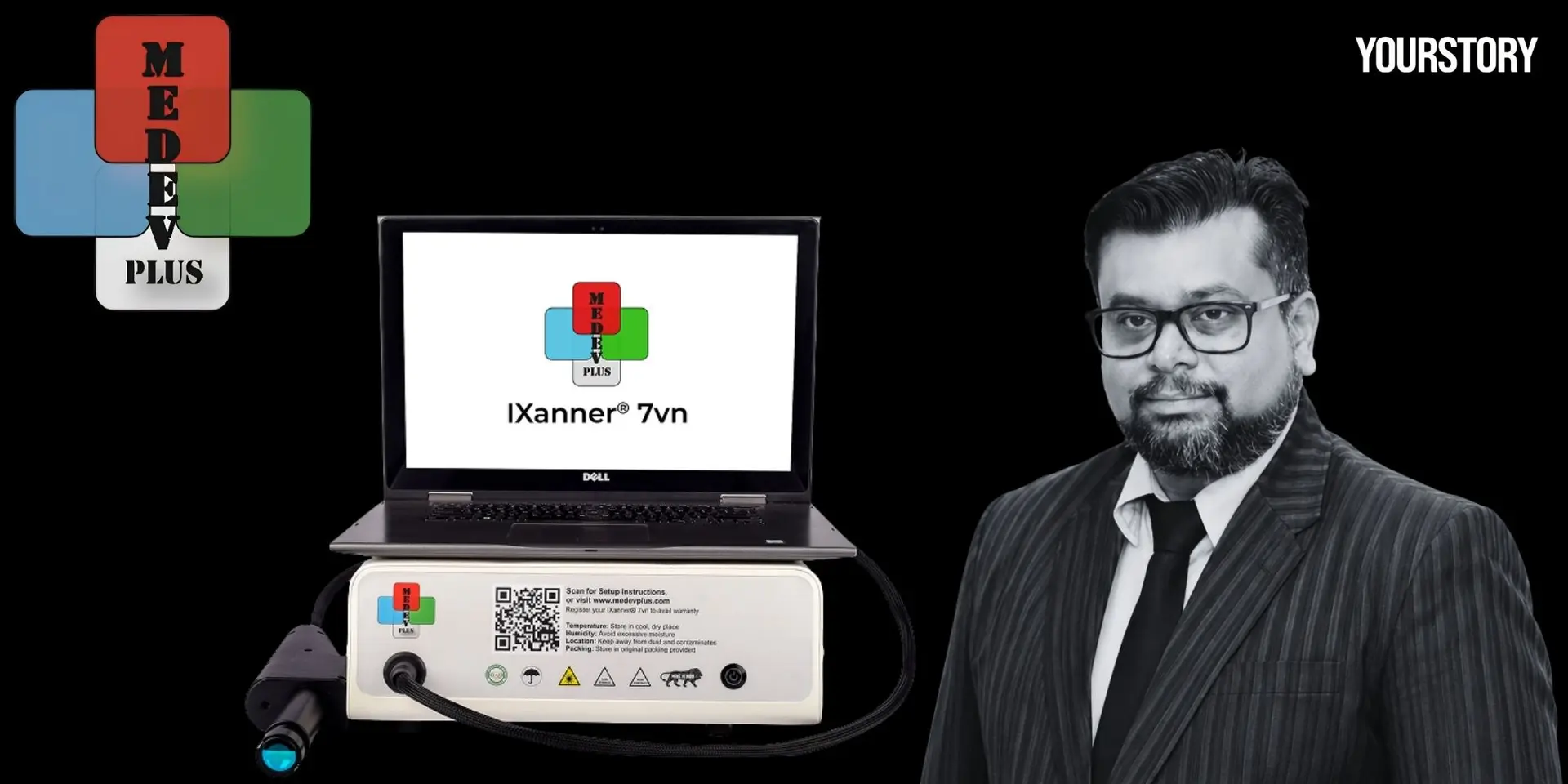
The product is called IXanner 7vn, a portable OCT device the company describes as designed for comprehensive eye screening outside a hospital setting. Its argument is about where diagnosis happens: screening at the primary level, with only the cases that need surgery referred onward.
The company has taken it into the field. It ran a retinal screening camp in Bengaluru with a local trust in March 2024, an application of the device’s portability. The condition this matters most for is diabetic retinopathy. India has one of the largest diabetic populations in the world. The damage to the retina develops without symptoms until it is advanced, and screening is the only way to catch it in time. Most people who need that screening are nowhere near a machine that can do it.
A second product, TissueXanner, applies the same imaging approach to obtaining tissue analysis without cutting, and the company says a trademark for this has been filed. Beyond ophthalmology, it lists veterinary medicine, biotechnology, agriculture and industrial manufacturing as applications.
The team around Manapuram includes co-founder Sweta Patnaik, who is director of finance, and Smita Patnaik, a microbiologist heading life sciences. The company lists collaborations with IIT Hyderabad, the ophthalmic device maker Remidio, a clinician at Centre For Sight and the American firm Lumedica.

Rs 1.37 crore, and a long qualification road
MedevPlus recorded a revenue of Rs 1.37 crore for the year ended March 2023, against paid-up capital of Rs 26.7 lakh.
Its funding has come in small amounts from many sources. Company databases record about $323,000 across five rounds from seventeen investors, five of them institutional, including VIT-TBI, BIRAC and BITS Pilani, with the most recent round of about $128,000 in March 2025. It has also been supported under NIDHI PRAYAS, a Department of Science and Technology scheme for hardware prototypes, and is recognised by Startup India, MSME, AIMED and DPIIT.
No clearance from the Central Drugs Standard Control Organisation, India's medical device regulator, appears in any public source, and no peer-reviewed clinical validation of the device could be located.
The company was among those shown at Bharat Innovates in Nice, France, in June 2026, described there as working on retinal diagnostics. Its next step is the one every medical device faces: moving from a device that works to one that hospitals and screening programmes buy in numbers, which turns on clearance, price and the evidence behind it.
(This story has been researched and compiled using publicly available information.)