



Meet the former military people who are now entrepreneurs and industry leaders
On the occasion of Independence Day, we bring you the stories of former armed forces personnel who have transitioned to the world of entrepreneurship, business and industry.

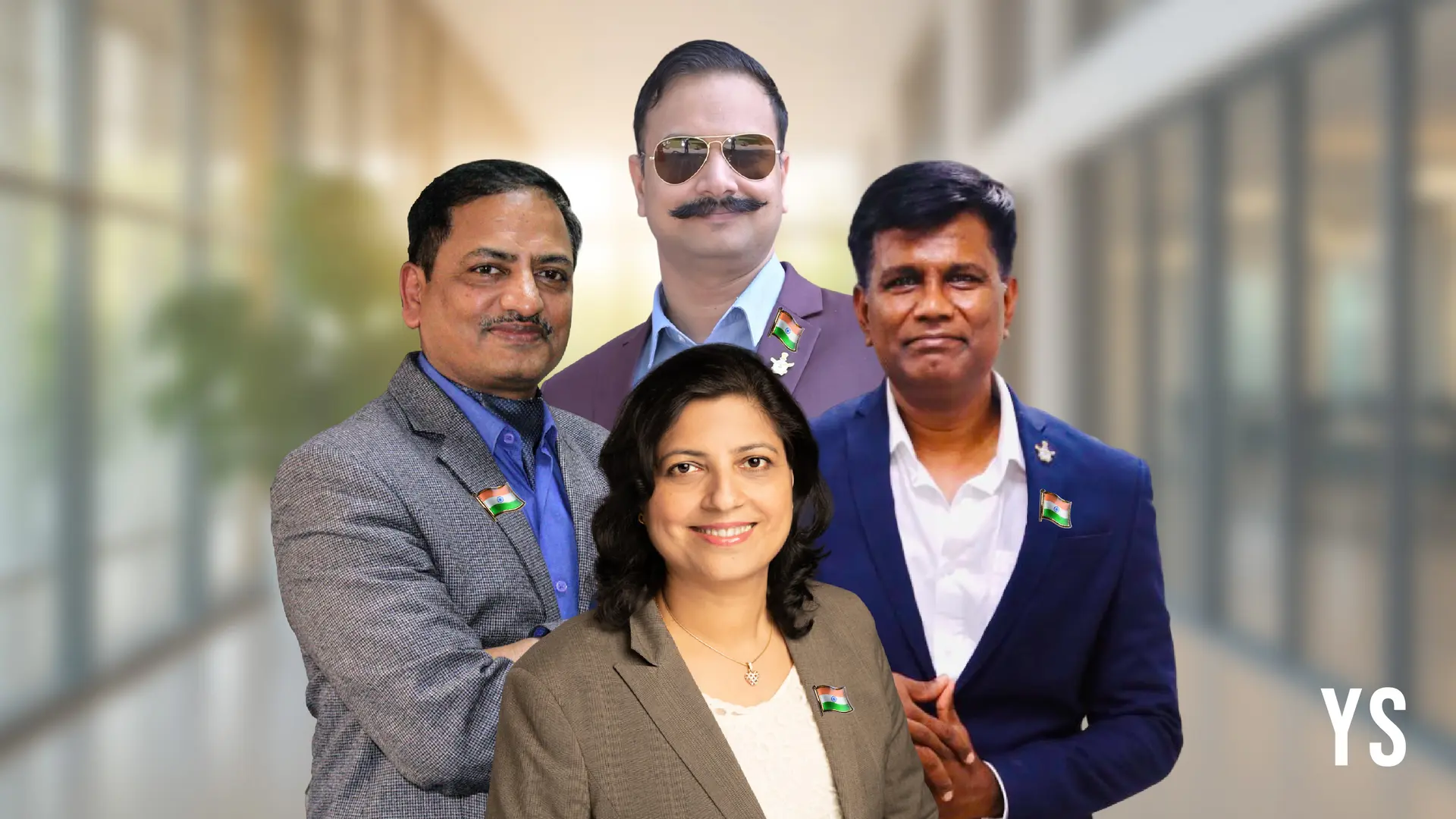

On Independence Day, we bring you the stories of former armed forces personnel who are now startup founders, entrepreneurs, and business leaders. They talk about how life in the forces shaped their journey outside the military, and the lessons and learnings they carried forward.
Anthony Anish, Co-founder & Managing Partner, Factoryal; Investment Committee Member, Jamwant Ventures; Founding Team Member, MyGate; Former Wing Commander, IAF
It’s been a decade since Anthony Anish left the Indian Air Force (IAF) and ventured into entrepreneurship. But what this former Wing Commander saw on the other side of his career—the startup space—was “intense,” in his own words.
“In fact, I had almost told my wife, ‘For the next three years, just let me be. And if you have to meet me, then block my calendar',” he laughs.
Anish is currently co-founder and managing partner at Factoryal, a startup and SME consulting and growth advisory firm.
The journey was indeed intense.
Anish joined ex-IAF pilot Vijay Arisetty as a founding team member of MyGate, a mobile-first community and apartment management platform used in housing societies to digitise and automate security, maintenance billing, accounting, and daily residential operations.
He shares how their experience in the forces was critical to perfecting the product at MyGate.
“We had a very good understanding of how security systems work, how security is supposed to be, and how to build a security system because that's what we had done in the service all our life,” he says.
Anish then moved on to become the chief operating officer of T-Hub, the Telangana Government's startup incubator. He is also an investment committee member of Jamwant Ventures, a VC fund that invests in deeptech defence startups.
“After MyGate, I wanted to create an organisation that could translate all those learnings to budding startups. That is when T-Hub happened," he says. "The learnings at T-Hub resulted in Jamwant and then Factoryal,” he adds.
Col Sanjeev Govila (retired), Founder – Hum Fauji Initiatives
Col Sanjeev Govila (retired) joined the Army when he was 16. He had never seen the outside world for a very long time. But, after 27 years of serving the country, he wanted to pursue something else.
“I had become the unofficial finance advisor to my course mates (batch mates); so I thought why not pursue this itself?” he says.
So, after taking voluntary retirement in March 2010, Col Govila and started his venture ‘Hum Fauji Initiatives’ along with his wife, who became co-founder and COO.
From planning for children’s future to retirement planning, the company helps people in the armed forces manage their money and investments.
“We only work with armed forces and their close family members as they are financially excluded since most are located in remote or border areas,” says Govila, adding that the company would never venture beyond the armed forces. “We always want to be a big fish in a small pond,” he says.
The New Delhi-based fintech business has onboarded 3,500 families as clients. “We started with a mission and it has become the soul of the business.”
Clients are onboarded through referrals and various marketing channels. Hum Fauji Initiatives also conduct lectures on financial literacy in army cantonments.
Chandan Singh Rathore, former IAF pilot, Founder – Coreshield
Chandan Singh Rathore, a retired Indian Air Force pilot, started Coreshield, an IIT Delhi-based deeptech defence and security startup in 2023.
During his tenure as pilot, he realised that, emergencies would often overstress the systems meant to handle them. Sensors could not communicate with the command centre, which in turn was not talking to the person on ground. This person was also not communicating with the decision-maker. This gap existed across military bases, refineries, airports and power plants—places where a delay of even minutes can cost lives or huge losses.
This realisation eventually led to the birth Rathore’s new venture—Coreshield.
After taking voluntary retirement, Rathore studied in IIM Bangalore where he met his co-founder Rana Amit K Navin, an aerospace and defence technology engineer with over 15 years of experience. Bhavya Kumar, a former staff engineer at Palo Alto Networks who had also worked with Bank of America and Empower in the US, joined them as the third co-founder.
CoreShield has built an AI-based security platform that makes critical infrastructure sensors, cameras, thermal systems, seismic detectors, and audio sensors smarter and capable of recognising threats in real-time. Its main product, Pulse, is a Predictive Unified Enforcement System that gathers data from many types of sensors, cleans it, and uses AI to spot unusual activity in real time.
The startup uses models based on Convolutional Neural Network, trained on different kinds of threat data, to recognise patterns and raise alerts quickly. While CoreShield doesn’t manufacture sensors, it acts as a data acquisition and intelligence layer, making existing sensors smarter.
Teja Manakame, former IAF officer, now a tech leader
Teja Manakame, who grew up in Belagavi (then Belgaum), a small town in Karnataka, was in her final year of electronics and communications engineering when she was shortlisted to join the second batch of the Indian Air Force’s women officers.
This was the early nineties when women had just started joining the IAF, inspiring many others like Manakame to join the force.
Being in uniform, Manakame recollects, brought thrill and recognition. She remembers walking down Brigade Road in Bengaluru in uniform and people approaching her, and the media being excited about the entry of women officers in IAF.
However, when India started witnessing the IT boom, Manakame was curious. So, after completing a service commission of six years, she left the Air Force to explore the IT industry. Armed with suitable training for the industry, she joined TCS as a developer.
In 2005, Manakame joined Dell Technologies as a manager and grew through the ranks to become the vice president of IT at the company. After spending nearly 19 years at Dell, she has now joined Curriculum Associates as the head of technology at its India office.
Manakame is happy that life has changed for the better for women in technology over the years. As a prominent woman leader in the tech industry, she is keenly invested in building more leaders.
“I ask myself how I can help others grow from what I have learned. I organise sessions for freshers and women on prioritisation and time management. What does success mean? Many times, we define it as reaching the top. At one of the sessions I attended at NASSCOM, a CFO of a global company spoke of success as a choice you make. It’s not about what people want; peer pressure should not define your success. This resonated well with me,” Manakame said, in an interview to HerStory earlier.