



QpiAI opens ‘Asia’s largest’ quantum chip foundry, targets 10,000-qubit processors
The company has invested $20–25 million in the facility and plans to invest another $10–15 million, says founder and CEO Nagendra Nagaraja.

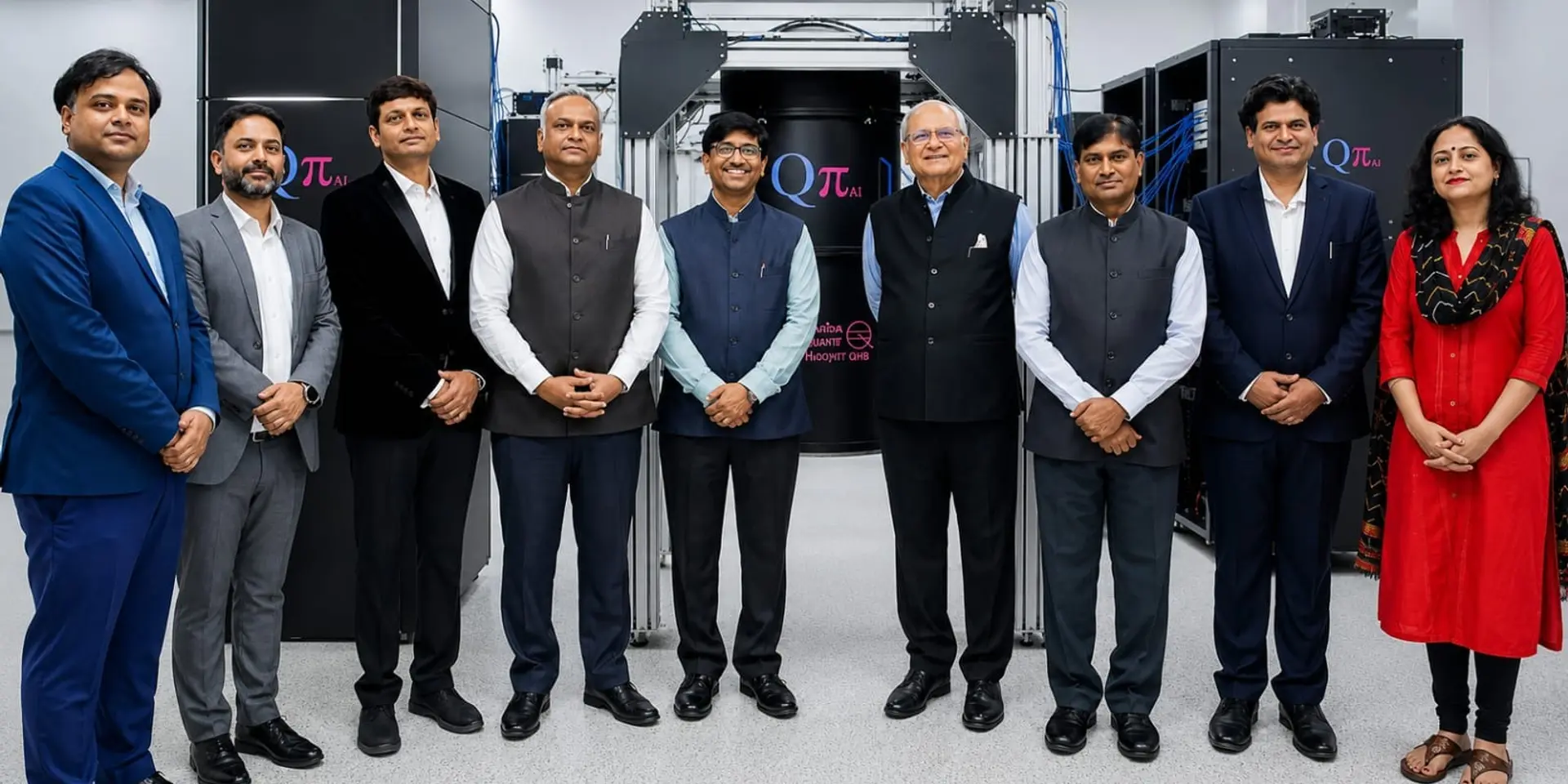

Quantum computing startup QpiAI on Monday inaugurated an eight-inch quantum processing unit manufacturing facility at Jakkur in Bengaluru. The company said the second phase of the facility, described as a quantum foundry, has been completed. It can fabricate flip-chip superconducting processors with up to 128 qubits.
A third phase, scheduled for completion in 2027, is expected to give the foundry the capacity to fabricate a QPU containing as many as 10,000 physical qubits, according to the company.
In a conversation with YourStory, Nagendra Nagaraja, Founder and CEO, QpiAI, said the company would undertake the entire device manufacturing process, including lithography, etching, patterning, assembly, and packaging at the Bengaluru facility.
“We are doing everything here,” Nagaraja said.
According to him, conventional semiconductor foundries are not equipped to manufacture all the specialised devices required for quantum computers. This made it necessary for QpiAI to build manufacturing capabilities alongside designing its processors.
“Quantum computing today is being held back because there is not enough innovation in manufacturing,” he added.
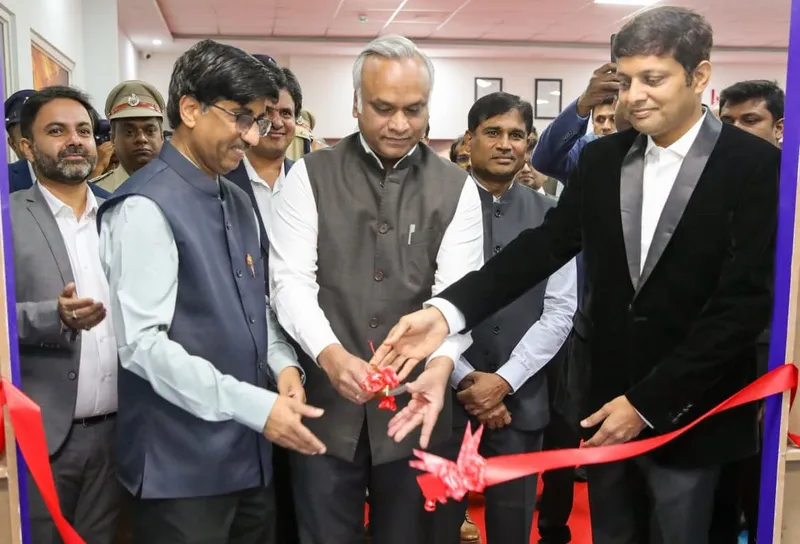
Karnataka IT Minister Priyank Kharge, Prof. Abhay Karandikar, and QpiAI CEO Dr Nagendra Nagaraja during the ribbon-cutting ceremony for the new 8-inch QPU manufacturing facility in Bengaluru.
Research into photonic and semiconductor qubits
The foundry will also manufacture peripheral chips and sensors used in quantum computers. QpiAI plans to use the facility for research into photonic and semiconductor qubits, while using superconducting transmon and fluxonium-derived qubits for production deployments.
Superconducting transmon and fluxonium-derived qubits are two types of qubits built from superconducting electrical circuits and operated at temperatures close to absolute zero.
Qubits are the basic units of information in a quantum computer, much like bits in a conventional computer. However, the number of physical qubits alone does not determine how useful a quantum computer is. Their quality, error rates, connectivity, and the ability to work together matter too.
QpiAI said it has fabricated four processors so far. These include the eight-qubit QVidya, 25-qubit Indus, and 64-qubit Kaveri, all based on transmon qubits. It has also fabricated Yukti, a nine-qubit processor based on its variation of fluxonium technology.
The company said Yukti has shown promise in the development of error-corrected logical qubits. A logical qubit uses multiple physical qubits and error-correction techniques to store quantum information more reliably.
According to QpiAI, its foundry is the largest such facility in Asia. It has Class 100 and Class 1,000 clean-room spaces and will be expanded with additional equipment.
More investment planned
The foundry is part of QpiAI’s 70,000-square-foot research and development centre, which also houses QPU testing and quantum-solutions development facilities. Nagaraja said most of the centre was already operational. The remaining section is expected to be commissioned in 2027.
QpiAI has invested around $20–25 million in the facility so far and plans to invest another $10–15 million, he said. About 20% of the inputs required by the company are currently imported, according to Nagaraja. He did not provide a component-wise breakdown.
QpiAI plans to localise more of its supply chain as it scales, particularly when imported components become a bottleneck, he added.
Building ‘quantum AI factories’
The foundry will support QpiAI’s proposed Quantum Supremacy Centres, or QSCs. These facilities will combine error-corrected quantum processors with clusters of AI chips.
“Manufacturing facilities for QPUs are essential,” Nagaraja said. The foundry would support the company’s plan to build processors with 10,000 physical qubits and eventually connect multiple processors to develop larger quantum computing systems, he added.
QpiAI said its first QSC is planned on a 10-acre site with around 300,000 square feet of built-up space. It also plans to establish four QSCs outside India. The company, however, did not disclose the locations, investment requirements, or commissioning timelines for the proposed centres.
Nagaraja described QSCs as 'quantum AI factories' that would develop commercial applications capable of demonstrating quantum advantage. Quantum advantage refers to the point at which a quantum computer can perform a useful task better than a conventional computer.
Exports on the agenda
QpiAI will initially target the Middle East, Southeast Asia, and the US for exports, Nagaraja said.
Speaking at the inauguration, Ajai Chowdhry, Co-founder, HCL, said, QpiAI’s decision to combine artificial intelligence and quantum computing had positioned it for a future in which hyperscale computing infrastructure and quantum systems would work together.
“Where quantum is today is where AI was five years ago,” Chowdhry said. He added that many investors, including those in India, had missed the early phase of the AI opportunity. Chowdhry, who chairs the Mission Governing Board of the National Quantum Mission, said QpiAI was the first company backed through its startup programme.
Founded in 2019, QpiAI develops quantum processors, control systems, software platforms and quantum-AI applications. Headquartered in Bengaluru, it also has offices in Finland, the US, and Singapore.
QpiAI raised $32 million in a Series A round in 2025 led by Avataar Ventures and the National Quantum Mission. It was one of eight startups selected for support under the mission.