



A stroke can cut the line between intention and movement. This device tries to close the loop
Nexactly AI Solutions has built an EEG-based rehabilitation platform out of IIT Roorkee's innovation hub and is taking it to Shark Tank India.


A stroke does not usually destroy the muscle. It damages the path between the intention and the limb, so a patient can want to close a hand, have the intention, and yet the signal does not move the muscle. Recovery depends on rebuilding that path, which the brain can sometimes do if the movement is practised often enough.
India records well over a million new stroke cases a year, and the hand is among the slowest functions to come back. For many patients, it never fully does.
Rehabilitation is where that recovery is won or lost. In India, therapists are concentrated in cities, sessions are expensive, and most patients stop long before the point at which improvement would stop.
Conventional therapy solves this with a therapist moving the limb, which works but is limited by how many hours a therapist can give and how many therapists there are.
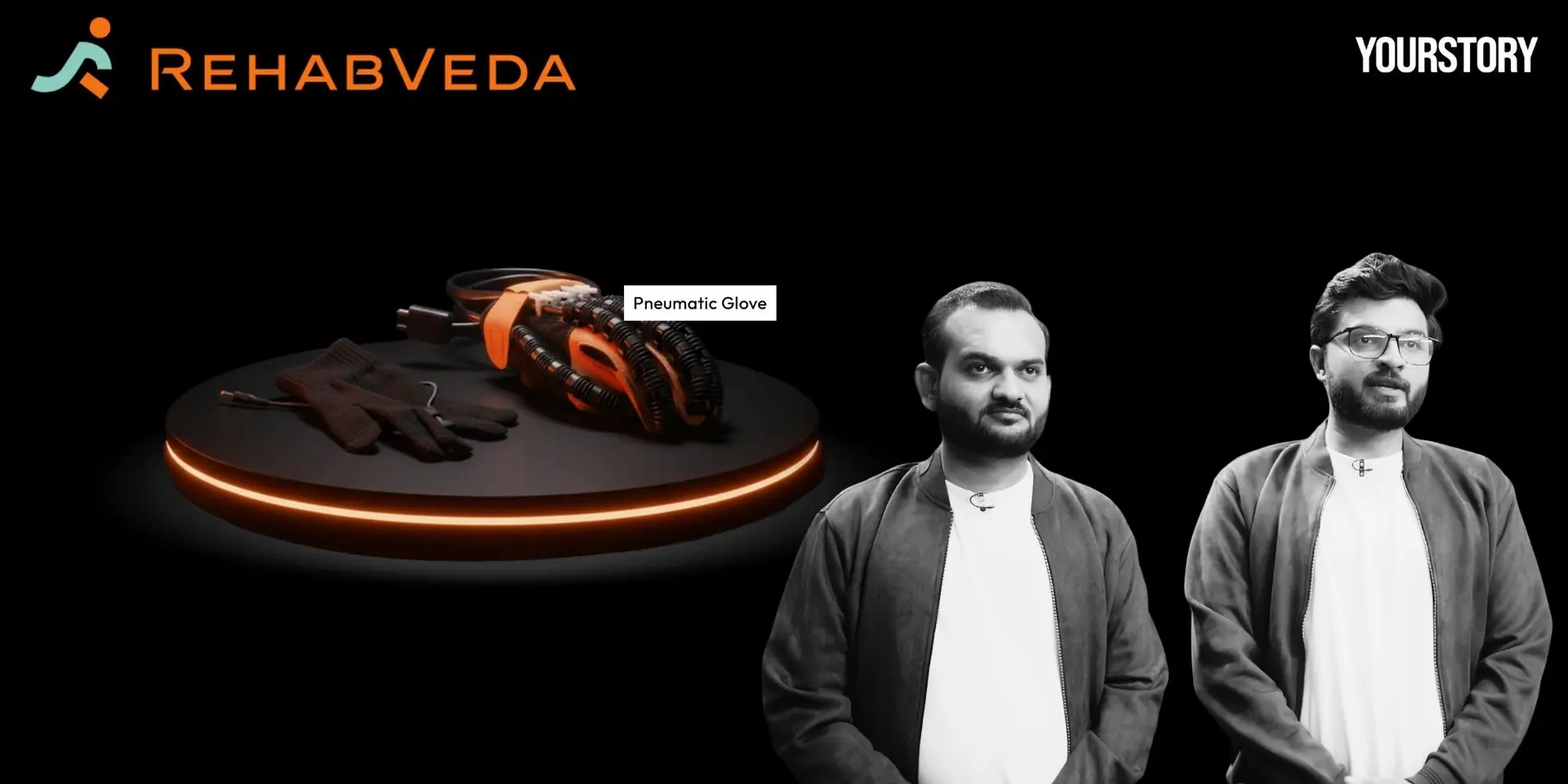
is an attempt to automate part of that loop. Built by Nexactly AI Solutions and headquartered in Ahmedabad, the product is called the R1 System: an EEG headband reads electrical activity from the scalp, software looks for the pattern that indicates the patient is trying to move, and a pneumatic glove closes the hand when it finds one. The company describes around five years of development at IIT Roorkee behind it.
Closing the loop
The term the company uses is closed-loop intent detection. The point is the order of events. The glove does not move on a timer or when a therapist presses a button; it moves when the patient intends it to, which means the brain issues a command and gets a result.
That sequence is what the underlying idea rests on. If the brain repeatedly produces an intention and repeatedly sees the hand respond, the theory is that the connection is reinforced. This is the same principle behind conventional repetition therapy, with the timing made exact.
Brain-computer interfaces of this kind are an active research area internationally, and the field has produced encouraging trial results alongside a long history of systems that worked in a laboratory and not in a clinic. EEG signals are faint; they vary between people and between sessions, and separating an intention to move from ordinary background activity is the hard part.
The company has said that 80% of patients in its trials showed improvement in hand function. That figure is its own, relayed through its incubator, with no trial registration, patient number or publication attached to it. No peer-reviewed result or regulatory clearance for the device could be located in any public source.

An innovation hub, and a television deal
RehabVeda has come up through the government research system rather than through venture capital. It has raised Rs 50 lakh in pre-seed investment from IIT Roorkee's innovation ecosystem and a Rs 10 lakh grant from the Department of Science and Technology, and it has a patent application filed.
It is supported by iHUB DivyaSampark, the technology innovation hub at IIT Roorkee, which operates under the National Mission on Interdisciplinary Cyber-Physical Systems, and has since joined the Startup Growth Pad programme at PIERC, Parul University's incubation centre in Vadodara.
In Season 5 of Shark Tank India, it secured a deal from Namita Thapar of Emcure Pharmaceuticals and Mohit Yadav of Minimalist. As with any televised agreement, what has been reported is a deal struck on the show rather than money disbursed.
It was also among roughly 130 companies selected for Bharat Innovates 2026, the programme that took Indian deep-tech companies to Nice, France, in June. The company describes a team of about ten, including physiotherapists alongside engineers, and claims a presence in the United States, Singapore and Europe.
What is still not public is who founded it. The company describes a founder with a background in robotics and AI at ISRO and DRDO, working on radar and satellite imaging, but no name appears in any source found.
(This story has been researched and compiled using publicly available information.)