



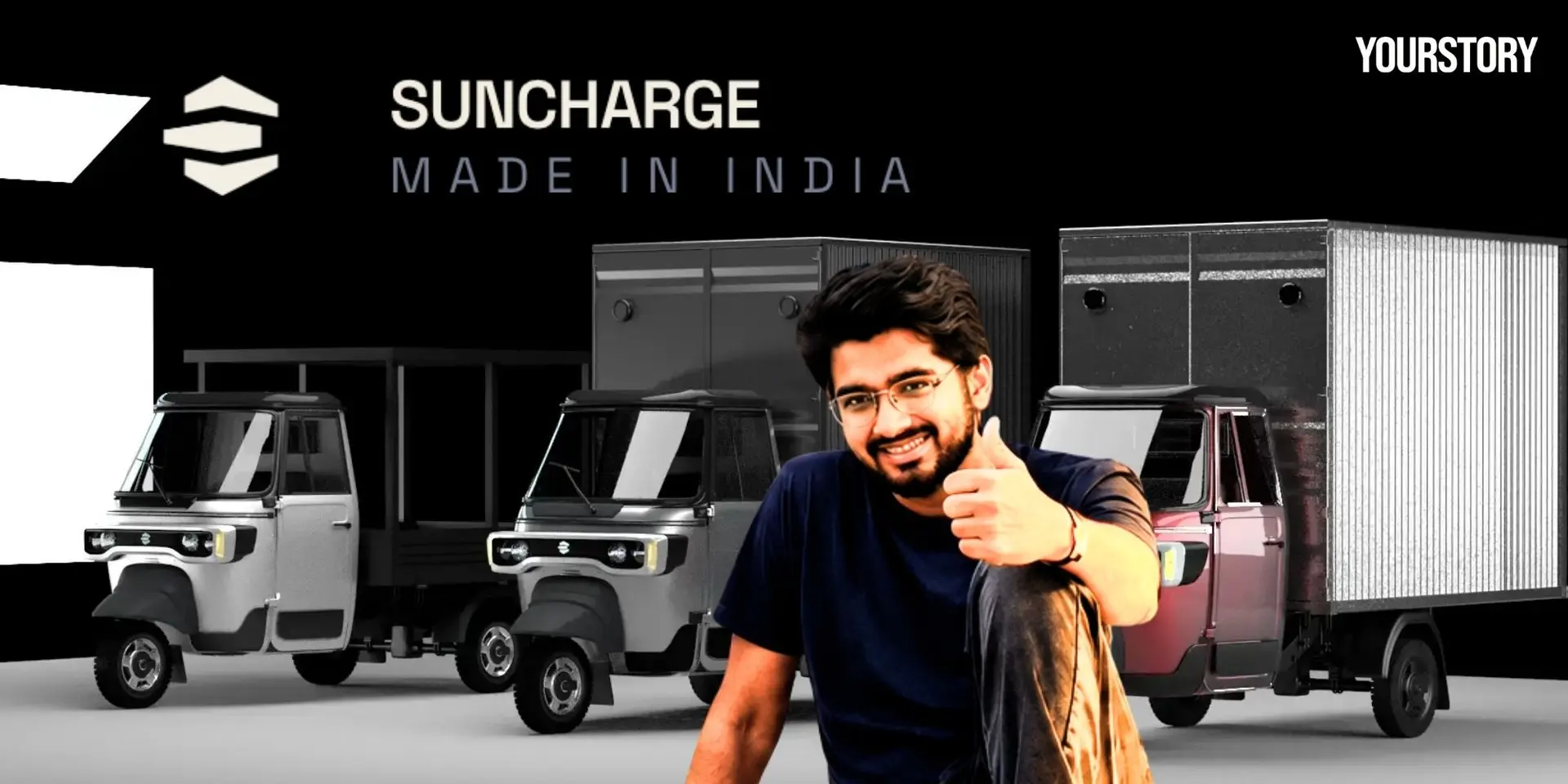
SunCharge Motors builds electric autos with solar panels on the roof
The Pune-based company makes commercial autos that generate some of their own power while running, aimed at fleet operators who lose earning hours at charging points.


Drivers who earn by the trip lose money every minute they spend charging instead of driving. That is the calculation that keeps commercial three-wheeler operators on compressed natural gas and diesel, even where electric versions are cheaper to run. Charging infrastructure is thin, power supply is inconsistent, and an auto sitting on a charger earns nothing.
was founded in Pune in 2024 by Sanskar Modi to attack that specific problem. Rather than treating charging as something to be solved by building more chargers, the company puts solar panels on the vehicle itself, so it generates part of what it needs while it is being driven.
Modi has said India's electric vehicle future cannot depend only on expanding charging infrastructure, and that the opportunity lies in energy-integrated systems built for the infrastructure the country actually has. The company frames its work as an energy problem rather than a vehicle problem, which is an unusual position in a market where most new entrants compete on price and range.
A roof that generates
The product is a three-wheeler with a solar roof, designed for commercial fleets. Around the panel, there is a battery management system and real-time energy controls, which together decide how the solar input, the battery and the load are balanced through a working day.
By the company's own account, it has moved quickly, from design sketch to deliveries in about two years. Design work began in 2024. In 2025 it says a first prototype covered 180 km of real-world range on a roof it reports as 25% efficient. Deliveries began in 2026, with the first vehicles going to fleet operators alongside a connected driver app.
Solar panels on vehicles are not a new idea, but they have rarely worked commercially. A car's roof is not big enough to generate meaningful power against how much the car uses. A three-wheeler changes that arithmetic. It is lighter, slower and uses far less energy per kilometre, so the same panel covers a larger share of what it needs.
The vehicles are sold in several colours, and the company positions the offer around uptime and running cost rather than range. For a fleet operator, hours available to work matter more than the number on a specification sheet.
The connected app shipped alongside the first deliveries.

A seed round, and a claim to check
SunCharge closed a seed round announced in May 2026, led by the JITO Incubation and Innovation Foundation with angel investors participating. The amount has not been disclosed. The funds will be utilised for technology development, infrastructure research and expanding the solar-assisted systems.
Its stated customers are fleet operators rather than individual buyers, which suits a product whose economics rest on hours worked per day rather than on purchase price alone.
Modi has claimed on social media that the company is now India's first solar-powered commercial electric vehicle company.
(This story has been researched and compiled using publicly available information.)