



A satellite collects more data than it can send back to Earth. TakeMe2Space has built the tech to process it up in outer space itself
The Hyderabad-based company charges $2 a minute for computing time on its satellites and is now raising funds to build a 50-kilowatt data centre in orbit.

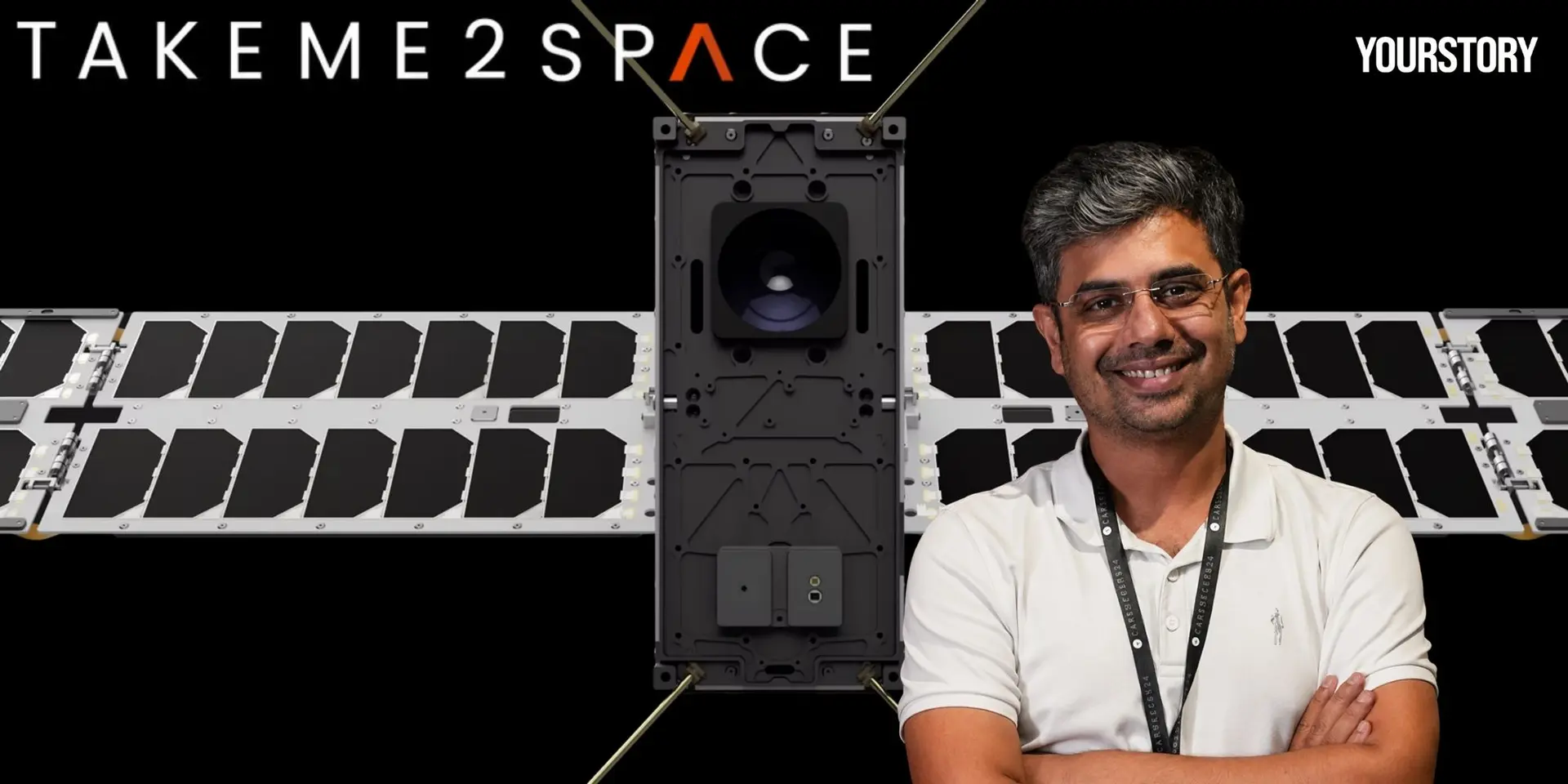

A satellite watching the Earth produces vastly more data than it can transmit. The link to the ground is narrow, the passes over a ground station are short, and most of what the sensor captures is discarded or waits for hours to come down. The bottleneck is not the camera but the pipe.
Processing the data where it is collected changes that. If a satellite can run the analysis on board, what comes down is an answer rather than a raw feed, which is smaller, faster and more useful. Doing that requires computing hardware that survives in orbit, where radiation degrades ordinary electronics.
is building that infrastructure. Founded in Hyderabad by Ronak Kumar Samantray, who previously built the software company NowFloats before it was acquired by Reliance Industries in 2019, it describes itself as building AI-first orbital data centre infrastructure in low Earth orbit.
Two dollars a minute
The commercial product is OrbitLab, which the company describes as a satellite-as-a-service platform. A student, a researcher or a business uploads an AI model to a satellite; it runs there, and the results come back encrypted. Users pay for the computing time they use, at a rate of $2 per minute.
It has flown the capability rather than only described it. In January 2025, it completed a fourteen-day orbital demonstration using ISRO's PSLV Orbital Experiment Module, a platform that repurposes the rocket's spent fourth stage as an orbital testbed. The company says the mission showed it could uplink large AI models from the ground, run external code on a satellite, and downlink encrypted results.
It has approached the radiation problem through materials. It has developed a shielding coating it calls RadShield, which it says survived multiple solar flares in orbit and extended the life of components, allowing standard electronics to be used rather than expensive radiation-hardened parts.
A third product, StarSense, is an AI-powered star tracker, the instrument a spacecraft uses to work out which way it is pointing by reading star patterns. It is backed by IN-SPACe's Technology Adoption Fund, the same scheme that selected Astrobase and SatSure as its first recipients.
Unfortunately, the spacetech startup’s first operational satellite, MOI-1, was destroyed on January 12, 2026, when the PSLV-C62 launch failed. The mission failed due to a third-stage roll-rate anomaly during the ISRO flight. The startup has since scheduled its replacement, MOI-1a, for a tentative launch in October 2026 from California.

Five million dollars, and fifty-five more sought
TakeMe2Space raised $5 million in a seed round announced in January 2026, led by Chiratae Ventures with Unicorn India Ventures, Artha Venture Fund and SeaFund. Total funding stands at about $5.64 million across three rounds. The money is for expanding from one satellite to six, targeting around 5 kilowatts of computing capacity in orbit and connecting the spacecraft with optical links.
Its ambition runs considerably further. Samantray told a space industry publication in April that the company was seeking $55 million to establish a 50-kilowatt orbital data centre, the block size from which a gigawatt facility would be built.
Manufacturing is largely internal. Samantray has said everything that flies on its satellites is designed and built in-house except solar cells and propulsion, which is the basis of its cost claims.
The company has grown from 17 people towards a target of around 60, and plans operations across India, the United States and Australia. In August 2026, it was among the twenty space startups whose founders met the Prime Minister on National Space Day.
What it has not published is a revenue figure, a customer count or how much of its orbital capacity is being used. A platform priced by the minute is only worth what people spend minutes on.
(This story has been researched and compiled using publicly available information.)