



How Tata Trusts and Sridhar Vembu kept the first MRI scanner built in India out of a multinational’s hands
The Bengaluru-based company builds a full-body 1.5-tesla MRI scanner engineered and manufactured in India, designed to run without liquid helium, with its first clinical installation at a cancer centre near Nagpur.

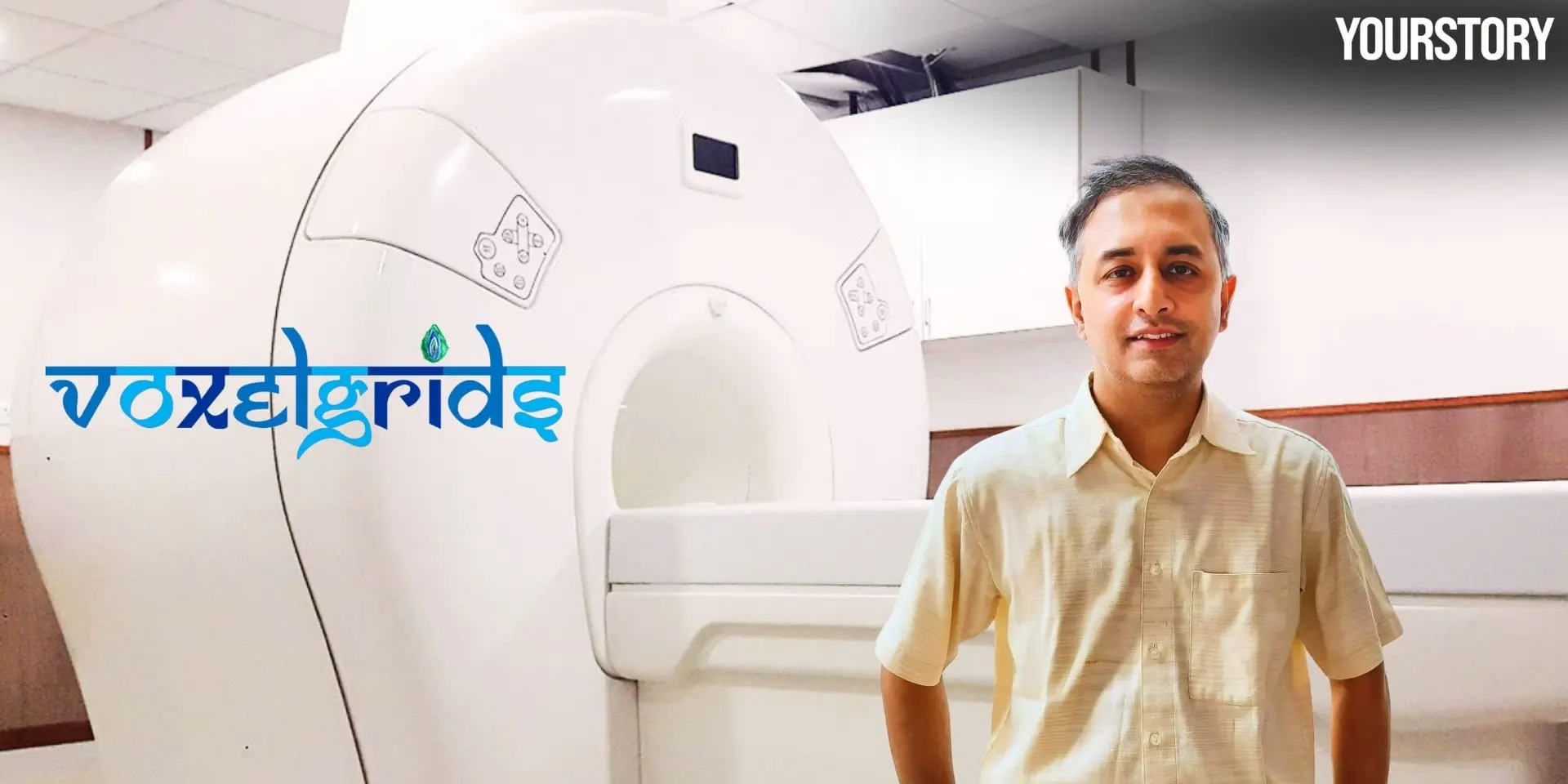

India has built most major categories of hospital equipment domestically; the MRI scanner has been a rare exception. The magnets, the electronics and the software have come from a small number of multinational manufacturers, and Indian hospitals have paid import prices for them.
The running cost matters as much as the purchase price. Conventional scanners are cooled by liquid helium, which is scarce, expensive and difficult to transport, and the machines are heavy enough that hospitals often can't install them just anywhere in a building. Innovations was founded in Bengaluru in 2017 by Arjun Arunachalam, who holds MS and PhD degrees from the University of Wisconsin-Madison and worked at the GE Global Research Center in New York between 2006 and 2008. He left GE in October 2008 intending to start a company.
A year of fundraising came to nothing, and Arunachalam joined IIT Bombay as a faculty member in electrical engineering. A grant from Spring Singapore, received after his family relocated in 2013, paid for a small test scanner.
In May 2016, he approached Tata Trusts with a proposal to build MRI scanners in India. The Trusts introduced him to the Foundation for Innovation and Social Entrepreneurship (FISE), where the core team was employed in the early years. A prototype installed at the Sathya Sai Institute of Higher Medical Sciences in Bengaluru produced its first images in March 2018.
A magnet that does not need helium
The product is a compact, full-body 1.5 tesla scanner, the clinical standard field strength. The company says it is designed to run in both fixed and mobile configurations, and to hold image quality under difficult installation conditions.
The design choice that carries the rest is the magnet. Voxelgrids uses a superconducting magnet that does not rely on liquid helium, which the company says takes roughly 40%off the cost of building a scanner. Coverage of the December 2025 deployment put the machine at two to three tonnes, against about six tonnes for a conventional system.
Weight determines where a scanner can go. A lighter machine can fit on an upper floor, in a smaller hospital, or on a mobile platform, which is why the company is targeting smaller cities and towns. Voxelgrids says its electronics are packaged tightly around the magnet, which it credits with lower power draw.
The engineering was done in-house, covering software, electronics and the cryogenic magnet. Arunachalam holds a US patent, filed in December 2015 and assigned to the company, covering part of the scanner's design. Voxelgrids was certified to ISO 13485 in mid-2020 and received its commercial manufacturing and sales licence in June 2023.

One installation, and a commercial launch still ahead
Voxelgrids' first clinical installation went in at the Chandrapur Cancer Care Foundation near Nagpur, unveiled in December 2025 and now used for patient diagnostics. Tata Trusts, which backed the company through development, also supported it by placing an order for a machine.
Zoho Corporation led a $5 million Series A round in 2021, which Arunachalam has said gave the company enough runway to keep developing the scanner. According to Business Today, Tata Trusts, and later Zoho founder Sridhar Vembu, were instrumental in keeping the company afloat during that period. Under the National Biopharma Mission, the Department of Biotechnology contributed Rs 12 crores of the Rs 17 crores spent developing the scanner, routed through the Biotechnology Industry Research Assistance Council (BIRAC).
The Bengaluru facility is set up for 20 to 25 scanners a year. Arunachalam said in December 2025 that a full commercial launch was expected by the end of the financial year, and that the company would raise a larger round as it approached volume production. The team stands at 33 members today.
Beyond the Chandrapur installation and the Tata Trusts order, no customer, contract value or revenue figure has been disclosed, and the commercial launch Arunachalam pointed to has not been separately announced since.
(This story has been researched and compiled using publicly available information.)