



How Tejaswini's MurariJyoti Welfare Foundation is transforming women's lives in Bihar
Tejaswini returned from London to Bihar and started talking to women about menstrual health. That conversation grew into the MurariJyoti Welfare Foundation, which has now reached 3,500 people across menstruation, diabetes, hypertension and cervical cancer awareness.

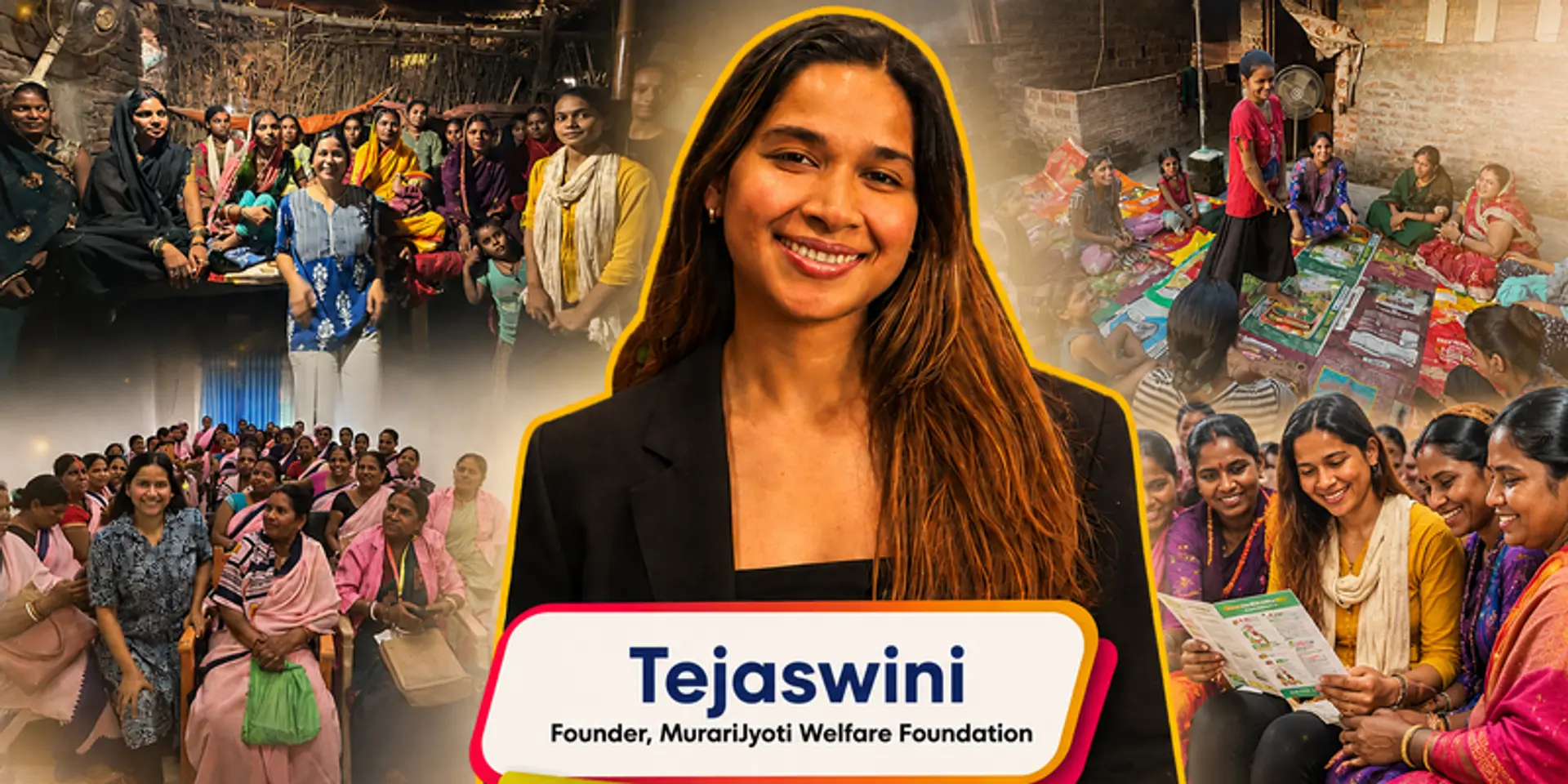

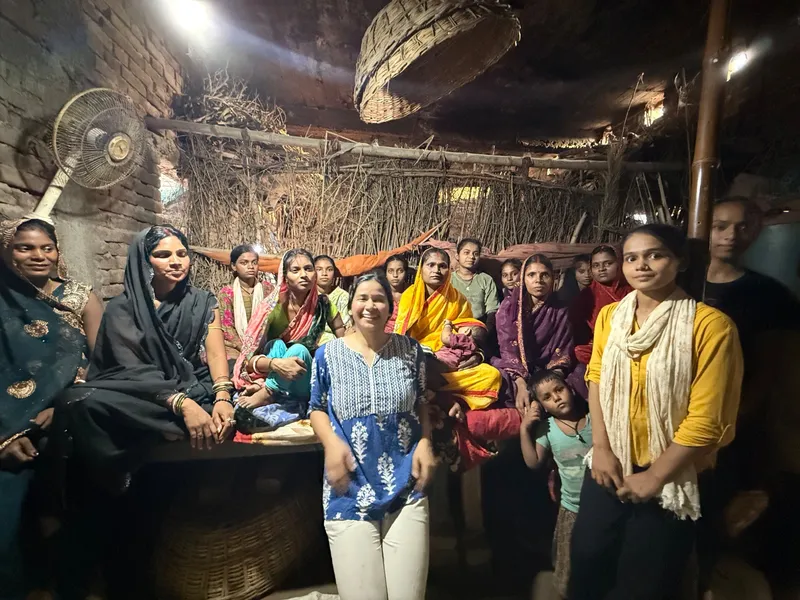
While talking to women in a small community in Bihar, Tejaswini had never imagined that these very conversations would one day shape the direction of an entire organisation. It began with menstruation. Then the women spoke about their other problems. ASHA workers explained what the villages needed. The questions kept growing, and with them, so did the scope of the work.
Today, the MurariJyoti Welfare Foundation (MJWF) has reached around 3,500 people. The organisation is working with about 1,500 women and has distributed more than 500 menstrual cups. But the notable part of this journey is not the numbers. What stands out is that this work did not begin with a big project or with funding. It began with a conversation.
Efforts like these carry their own significance in understanding women's health needs in Bihar. Alongside the work being done by the Bihar government on health and awareness, women like Tejaswini, working at the grassroots, are also carrying this effort at change forward.
In this context, YourStory recently spoke with Tejaswini, founder of the MurariJyoti Welfare Foundation (MJWF). She explained how important it is to speak directly with women in villages and small communities, to understand their health needs and to give them the right information.
One question that changed a life
Tejaswini's social work was not a decision taken on any single day. It began in her childhood.
Her childhood was spent in boarding schools in Bihar and Darjeeling. Her family gave her the freedom to make her own choices and to ask questions. Understanding the body and the mind, meditation, sport and studies were all part of how she was raised.
At around the age of 12 or 13, an incident changed the way she thought. The daughter of a woman who worked in their home came asking for help, distressed by domestic violence. Tejaswini told her mother that the girl should be allowed to stay with them.
Her mother asked her a question: if she wanted to change someone's life, how much power did she have to do it?
At the time, Tejaswini could not fully grasp the question. But as she grew older, its meaning became clearer.
Tejaswini says, "Empathy alone is not enough to empower someone. You also need knowledge, understanding, resources and capability. If you stand with someone, you have to be capable enough to bring real change into their life when the need arises."
Studied psychology in London
Tejaswini studied Mass Media. During the lockdown, when she spent close to a year with her family, she saw several mental health problems around her. She felt that people were struggling, but were unable to talk about what they were going through.
This is where the desire to study Psychology seriously came from. She completed an MSc in Psychology from the University of Essex.
After that, in London, she worked on cases relating to violence against women. As an Independent Domestic Violence Advocate, she worked with women going through domestic violence and other complex situations.
During this period she also had to work with doctors, the police, schools, health services and people connected with immigration.
This experience helped her understand that a woman's safety and her health cannot be viewed separately.
Tejaswini explains, "The circumstances of the women there were different, but many of the questions were the same. How safe is a woman, how well does she understand her own body, and how far can she make her own life decisions."
Back in Bihar, it began with one cup
After returning to Bihar in 2023, Tejaswini met Sajni, a woman who worked in her home. The conversation turned to menstruation. It was during this that the menstrual cup came up.
Sajni was hearing about it for the first time. Later, she asked for a menstrual cup for her daughter as well.
For Tejaswini this was a small but significant experience. She realised that information which was ordinary for her could be entirely new for another woman.
After this she began talking to ASHA workers. Then came a pilot research study. Slowly, the foundation of MJWF's work took shape.
In the beginning, Tejaswini continued working in London. She covered the organisation's costs from her own earnings. Her thinking was that it was first necessary to understand what the community actually needed.
In March 2026 she returned to India and joined MJWF full time. In July 2026 the organisation also received Goonj's Grassroots Award.
Today, MJWF's partners include the University of Essex and the UK health innovation company 10zyme, as well as Bhagalpur Medical College and the Bihpur Primary Health Centre.
The need showed the way
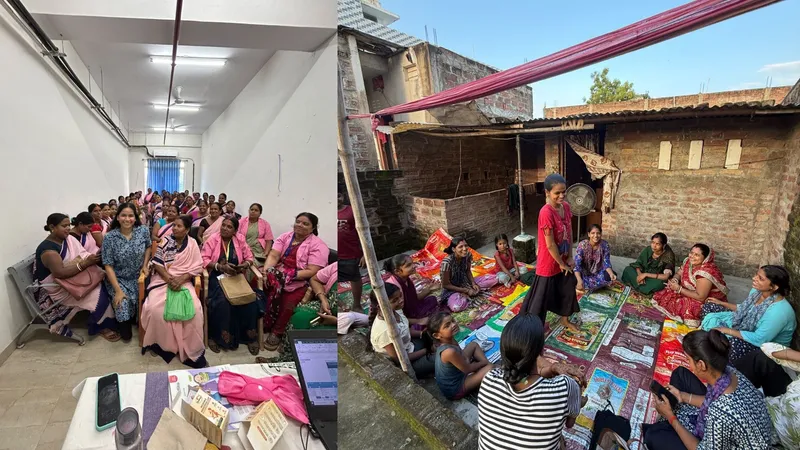
MJWF's work did not stop at menstruation. ASHA workers pointed to the need for conversations with girls in schools. After this, there was an effort to help boys understand menstruation and women's health too.
Then the community saw some other problems. People reported complaints of diabetes, hypertension and cervical cancer.
After this, NCD health camps began. People were screened free of cost. They were given information about the free medicines and services available at government hospitals.
Tejaswini says the expansion of MJWF's work did not happen according to any fixed plan. She goes on to explain, "One need led to another need. The community told us that diabetes and hypertension were big problems too. Then the health camps began. We also learned that many people did not even know about the facility of free medicines at government hospitals."
Trust matters most
While working in rural areas, the biggest challenge was not resources. It was trust.
In the beginning, people would ask why someone from outside was coming among them. Talking about subjects like women's health and the body was not easy.
The team did not rush. It kept going back into the community again and again. After several months, people began to recognise them. Conversations became easier and trust grew stronger.
The situation is now changing. In many places, people have begun asking about their next need themselves.
According to Tejaswini, this is the crucial milestone for any social organisation: when a community begins raising its own questions instead of waiting for an outsider to arrive.
Now the focus is on education, employment and entrepreneurship
Alongside health, MJWF is now also considering opportunities in education, employment and entrepreneurship for women.
But Tejaswini does not want to impose any fixed model on the community. Her approach is to understand the problem first. Then research. After that, the solution.
Tejaswini says, "I do not want to decide what a community's future should look like. My effort is that people should be listened to first, then research should be done to understand the problem, and only after that should we build what is genuinely needed."
This is the aspect that makes MJWF's story a little different from other social organisations. It did not begin with a grand roadmap. There was no ready-made model. There was a conversation, there were some questions, and there was a willingness to listen to them.
Today the scope of those questions has widened. From menstruation to NCDs. From health to education and employment.
But the core idea remains the same. Listen first. Then understand. After that, act.
For Tejaswini, success will perhaps not come on the day MJWF reaches the largest number of people. The more important day will be when the community begins to recognise its own needs and is in a position to make its own decisions.
In closing, Tejaswini says, "If one day they no longer need us, that will perhaps be the greatest success of our work."
Perhaps for a social organisation there could be no better destination than that.