


What’s next for N Chandrasekaran after Tata Group? 5 plausible second acts
From public service and AI to private equity and backing founders, Tata Group Chairman N Chandrasekaran will have no shortage of options when his four-decade Tata innings ends.

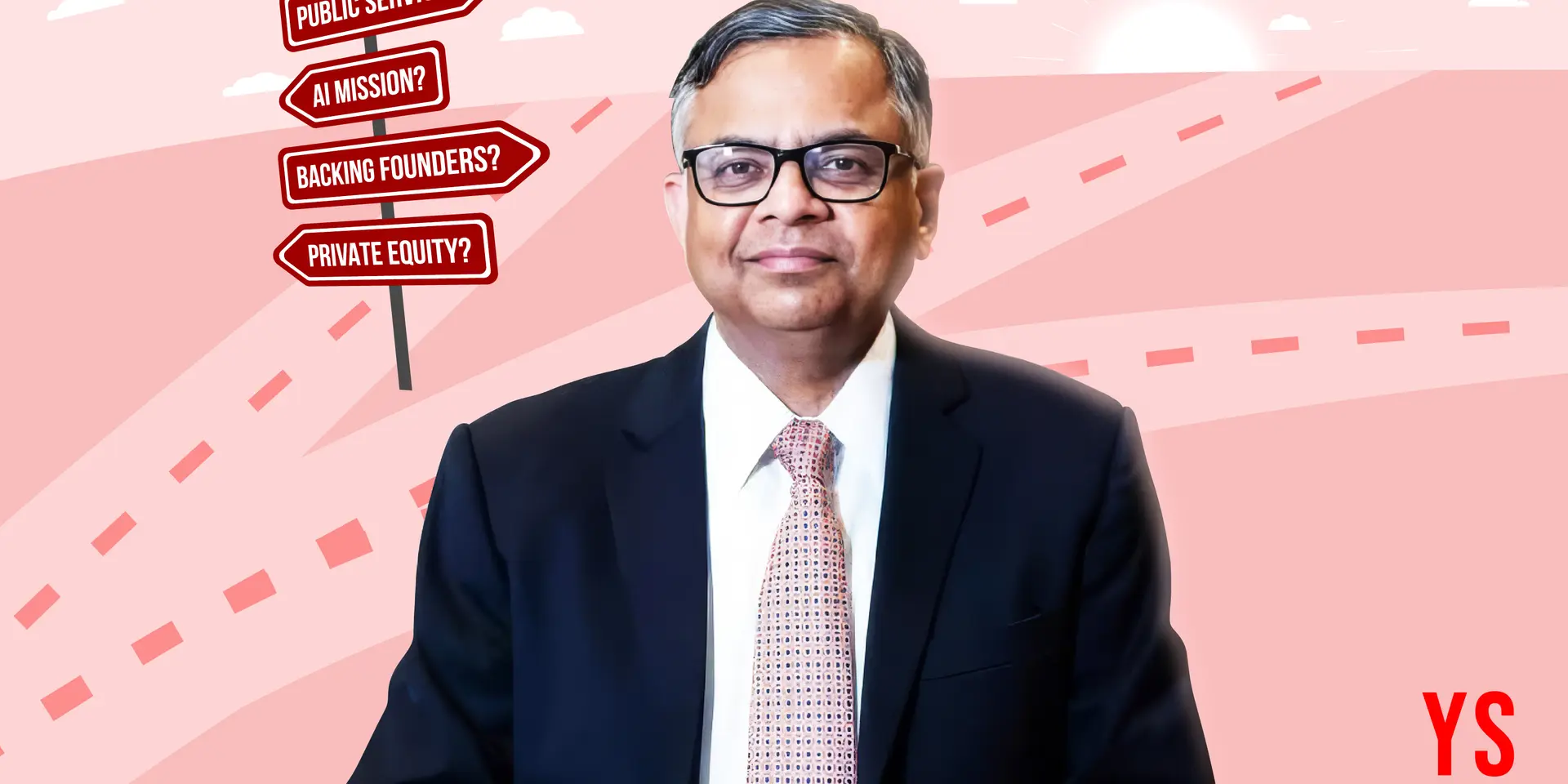

I remember meeting N Chandrasekaran, then CEO of Tata Consultancy Services, after a post-earnings interview sometime in late-2009 or 2010. At the end of the conversation, my colleague asked him what he did to unwind. Chandra, as he is best known, spoke about a recent trekking holiday (Nepal, if memory serves right). The trip lasted about a week. Anything longer than that, Chandrasekaran said, and he would get restless and want to get back to work.
It is a reporter's diary anecdote from more than 15 years ago, and some details have inevitably blurred. But his answer stayed with me: Chandra likes being in motion. When I interviewed him again in 2020, another philosophy stuck. I don't believe you need to maintain two separate to-do lists for personal and professional life, he said. You must have one list and keep it short. That philosophy feels particularly relevant now.
Chandrasekaran has decided not to seek another term as Tata Sons chairman when his current tenure ends on February 20, 2027. So, after more than 40 years of professional life at the Tata Group, what goes on Chandra's list next?
There is no indication yet that Chandrasekaran has settled on what comes next. But here are five possibilities.
1. Build a Ramadorai/Nilekani-style institutional second act
Perhaps Chandra's most consequential second act would not be another corporate job at all. From 1997 to 1999, Chandrasekaran worked as S Ramadorai's executive assistant, a period during which he was exposed to customer management, operations, and expansion before eventually succeeding Ramadorai as TCS CEO in 2009. Ramadorai did not exactly retire after TCS either. Now 81, he chairs Karmayogi Bharat, the government-backed organisation at the heart of Mission Karmayogi's civil-service capacity-building effort, and chairs the board of PRS Legislative Research. It offers an interesting template: move from running a giant technology company to applying those operating skills elsewhere.
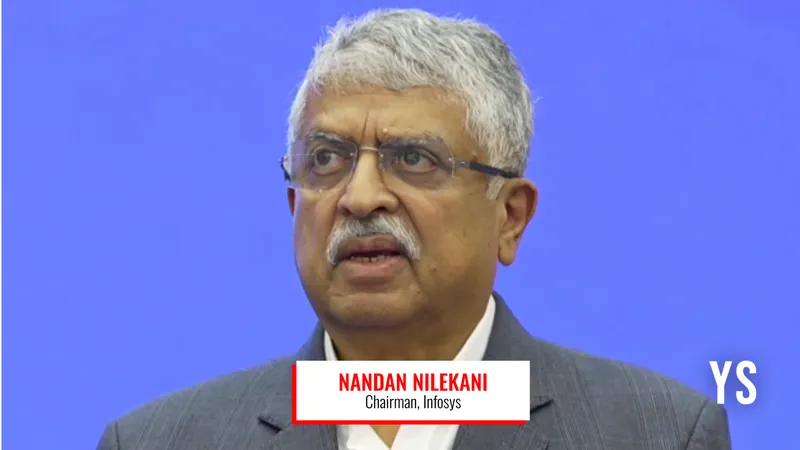
Nandan Nilekani offers another template: he moved from the Infosys CEO role to become the founding chairman of UIDAI and lead the early years of Aadhaar. The Centre has continued to call on him for public assignments, most recently to lead a high-powered task force on examination reforms.
Chandra could combine elements of both. A government mission, an academic institution, a technology board, or perhaps an organisation of his own focused on education, skilling or advanced manufacturing. There are clues from his TCS years that such work may suit him. Chandrasekaran was the chief architect of TCS iON, launched in 2011 as a cloud-based, pay-per-use platform for Indian small and medium businesses before expanding into education, recruitment, and assessments.
Passport Seva also scaled nationally during his tenure as TCS CEO. The project itself predated him as CEO, with TCS selected as the service provider in 2008, but the pilots began in May 2010 and all 77 Passport Seva Kendras were operational by June 2012.
Siddharth Pai, CEO and Managing Director of Sahasranshu Technologies, went even further recently, posting on X that Chandrasekaran should be brought into government as a senior minister through lateral entry. Whether Chandra wants a formal government role is frankly not known.
2. Back founders, like Ratan Tata did
There is another precedent much closer to Bombay House. After stepping down as Tata Sons chairman, Ratan Tata became one of the most recognisable individual backers of India's startup ecosystem, assembling a broad investment portfolio that included Ola, Paytm, Snapdeal, Urban Ladder, BlueStone, FirstCry, and CarDekho, among several others. His portfolio also included YourStory, where Ratan Tata participated in our 2015 funding round alongside Kalaari Capital, Qualcomm Ventures, and TV Mohandas Pai.

Ratan Tata
Chandra's version of startup investing could look very different. One could imagine him gravitating towards AI, deeptech, advanced manufacturing, semiconductors, enterprise software or climate infrastructure. India has plenty of people who can write cheques. Far fewer have managed hundreds of thousands of employees, worked with governments and global customers, overseen multi-billion-dollar capex programmes and navigated several technology cycles.
For a founder trying to scale from startup to institution, Chandra’s operating wisdom could be invaluable.
3. Take charge of an India-scale AI mission
If public service is too broad, one imagines Chandra being given one specific mission: national AI infrastructure. At the India AI Impact Summit earlier this year, Chandra described AI as an infrastructure of intelligence and argued that the core mission should be putting AI tools in the hands of every citizen. He brings a rare view across much of the stack. TCS gives him the software and enterprise lens, Tata Electronics gives him exposure to semiconductor fabrication, and the group's power and infrastructure arms sit underneath the massive physical demands of compute.
Chandrasekaran himself has described India's AI opportunity as spanning chips, systems, energy and applications. India already has the IndiaAI Mission, semiconductor programmes, and digital public infrastructure. The challenge now is execution: connecting chips, power, algorithms, and talent to drive mass adoption. A time-bound national mission with hard deliverables could fit Chandra's wiring better than sitting on advisory committees.
4. Become a private equity operating partner
Global private equity firms increasingly need operators who can do much more than sit on investment committees. They need people who can transform businesses, allocate capital, build management teams, and deal with technological disruption. Few executives have Chandra's breadth. He has run a global IT services giant and subsequently chaired businesses spanning aviation, steel, automobiles, power, hotels, electronics and consumer goods.
Former HUL CEO Sanjiv Mehta, who watched Chandra closely as an Air India board member, once noted on LinkedIn that Chandra thinks big, acts big, and has a tremendous bias for execution. A global PE firm could hand him a senior operating mandate with enormous reach. The catch? Advising other people's companies might feel too passive for a leader who spent four decades holding the operational steering wheel.
5. Run one more big company
We might also be overcomplicating this: Chandra could simply take on another big operating role. At 63, he has plenty of runway left when his Tata Sons term finishes in February 2027.
Finding a canvas equal to Tata Sons is the hard part. Taking charge of a conventional single-business company could represent a sharp narrowing of scope. It would take an exceptional assignment: a massive global corporation mid-transformation or an ambitious new industrial platform being built from scratch.
Ramadorai had identified Chandra's potential early and put him through roles spanning customers, operations, sales and international expansion before handing him the TCS baton. A full-scale operating role may be the simplest way to keep a restless operator in motion.
What goes on Chandra’s list?
There is also no indication yet of which, if any, of these paths Chandra might choose. Also, there is still significant work to finish at Bombay House before February 2027. Air India's transformation remains complex, the group's semiconductor and battery bets are in build phases, and Tata Sons has its own succession transition to navigate. The compelling question is not whether he has options, but where the next decade of his operating life can achieve the greatest leverage.
More than 15 years after that conversation about trekking, I still remember the thought behind Chandra's answer. A week away was enough. He wanted to get back to work. After 40 years with the Tatas, his list is about to get considerably shorter. Don't expect it to stay blank for long.