



Ashwini Vaishnaw highlights 20-year vision for India’s semicon industry
Electronics and IT Minister Ashwini Vaishnaw highlighted a 20-year vision to build India’s semiconductor ecosystem, as Semicon 2.0 expands the country’s manufacturing, design, research and skills capabilities.

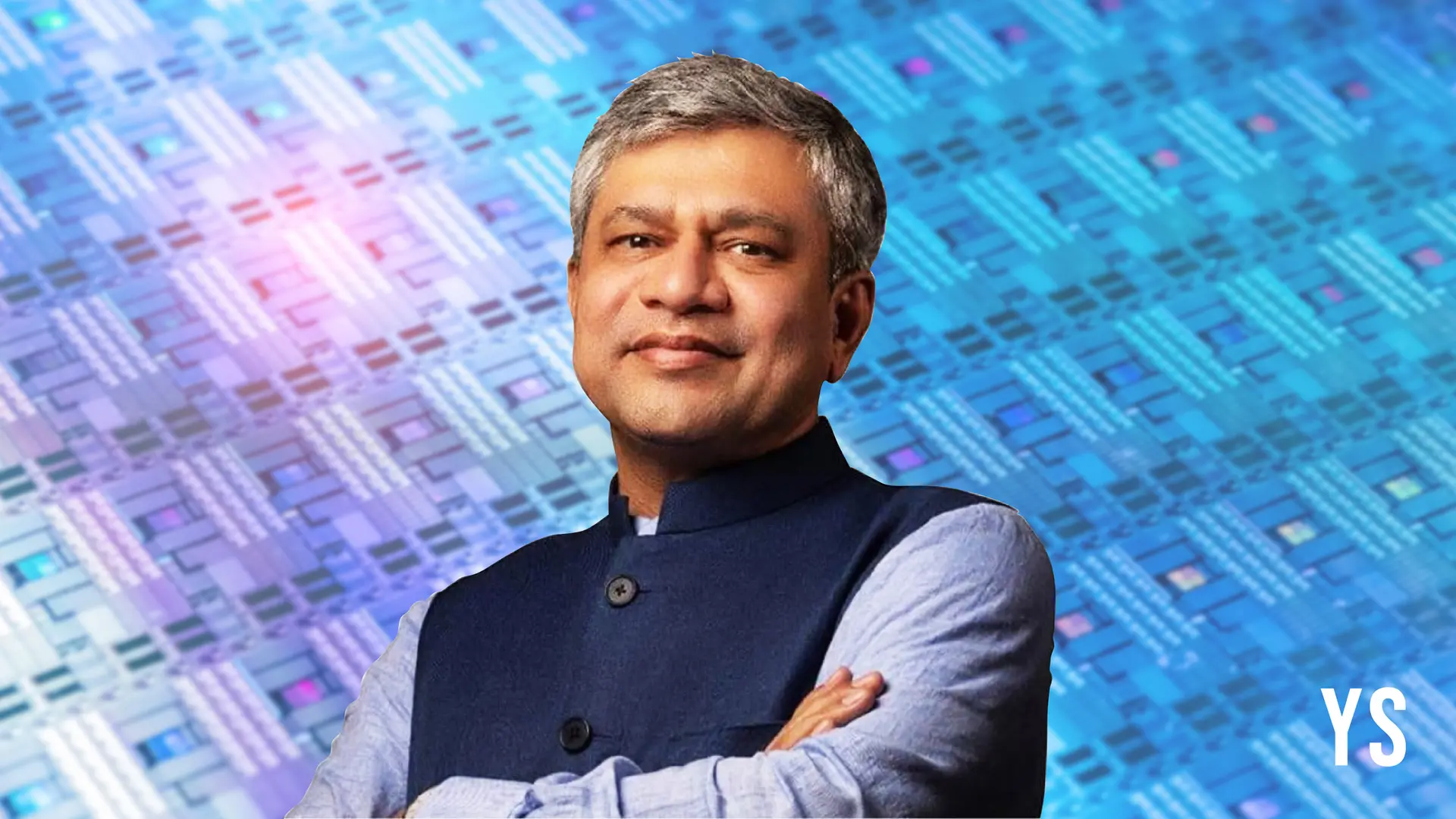

India has begun establishing a semiconductor industry after decades of attempts, but Electronics and IT Minister Ashwini Vaishnaw said the progress so far is only the beginning of a much larger effort.
In a video posted on X, he described semiconductors as a foundational industry because chips are used in products ranging from refrigerators and televisions to cars, trains, aircraft, computers and mobile phones.
“Even though attempts were made since 1960s, finally we have been successful in getting the semiconductor industry established in our country,” Vaishnaw said. He linked that breakthrough to a broader attempt to build capabilities across the industry rather than simply add individual factories.
That approach is now entering its second phase. The Union Cabinet approved Semicon 2.0 in July with an outlay of Rs 1.27 lakh crore, and notifications for its six pillars were issued on August 31. The scheme covers chip design, semiconductor machines and materials, fabs, ATMP and OSAT packaging, research and development, and talent development.
Vaishnaw’s explanation of the industry highlights why such a broad approach matters. Semiconductor production involves a chain beginning with raw materials and silicon ingots, moving through wafers and fabrication, and ending with packaging, modules and finished products.
“Complete value chain from sand, silicon ingot, bare wafer, fabricated wafer, the chip. Then it goes into different modules,” he said.
The technical demands are also unusually high. Wafer fabrication involves creating extremely intricate circuits on very thin pieces of silicon.
To explain the precision required, Vaishnaw said, “Imagine writing all your textbooks of class 10 on this small fingernail. That would require extremely fine work which normally is not possible to do by human beings. We require very special machines to do that.”
India now has some evidence that the first phase is working. Twelve projects had been approved under Semicon 1.0 by July, involving more than Rs 1.64 lakh crore of investment. The approved projects span one silicon fab, a silicon carbide fab, a gallium nitride micro-LED display fab and nine packaging units. Three companies – Micron, Kaynes and CG Semi – had begun commercial production.
Micron’s Sanand facility, which opened in February, converts DRAM and NAND wafers made elsewhere in the company’s global network into finished memory and storage products. The company says the site has begun commercial production and expects it to assemble and test tens of millions of chips in 2026.
The bigger gap remains fabrication and deeper domestic capability. The first silicon fab is scheduled for commissioning in 2028, while Semicon 2.0 seeks to expand advanced packaging and support local manufacturing of the equipment, materials and chemicals needed by semiconductor plants.
India is also trying to build a design and skills base. The government said 24 semiconductor design projects have received financial support and 105 startups and MSMEs have access to electronic design automation tools. On August 31, Vaishnaw said students from Tier-II and III cities had already designed more than 250 chips and that 85,000 semiconductor engineers had been developed in four years.
The World Semiconductor Trade Statistics expects the global semiconductor market to reach about $1.655 trillion in 2026, with memory and AI infrastructure driving much of the expansion. Governments are also competing to strengthen domestic supply chains. The European Commission proposed a Chips Act 2.0 in June to increase advanced production and reduce strategic dependencies.
For India, the challenge is therefore not simply to start making chips, but to build enough depth to compete across the value chain.
Vaishnaw made that long-term ambition explicit in the video, saying, “That’s why our Prime Minister also guided us to think 20 years. Don’t think of 4 or 5 years. Think 20 years ahead and develop the entire ecosystem.”