



HDB region can drive Karnataka’s tech-led growth, says Priyank Kharge
The HDB region is being positioned as a technology and manufacturing corridor under Karnataka’s Beyond Bengaluru push, with focus on startups, deep tech, ESDM, EVs and advanced engineering.

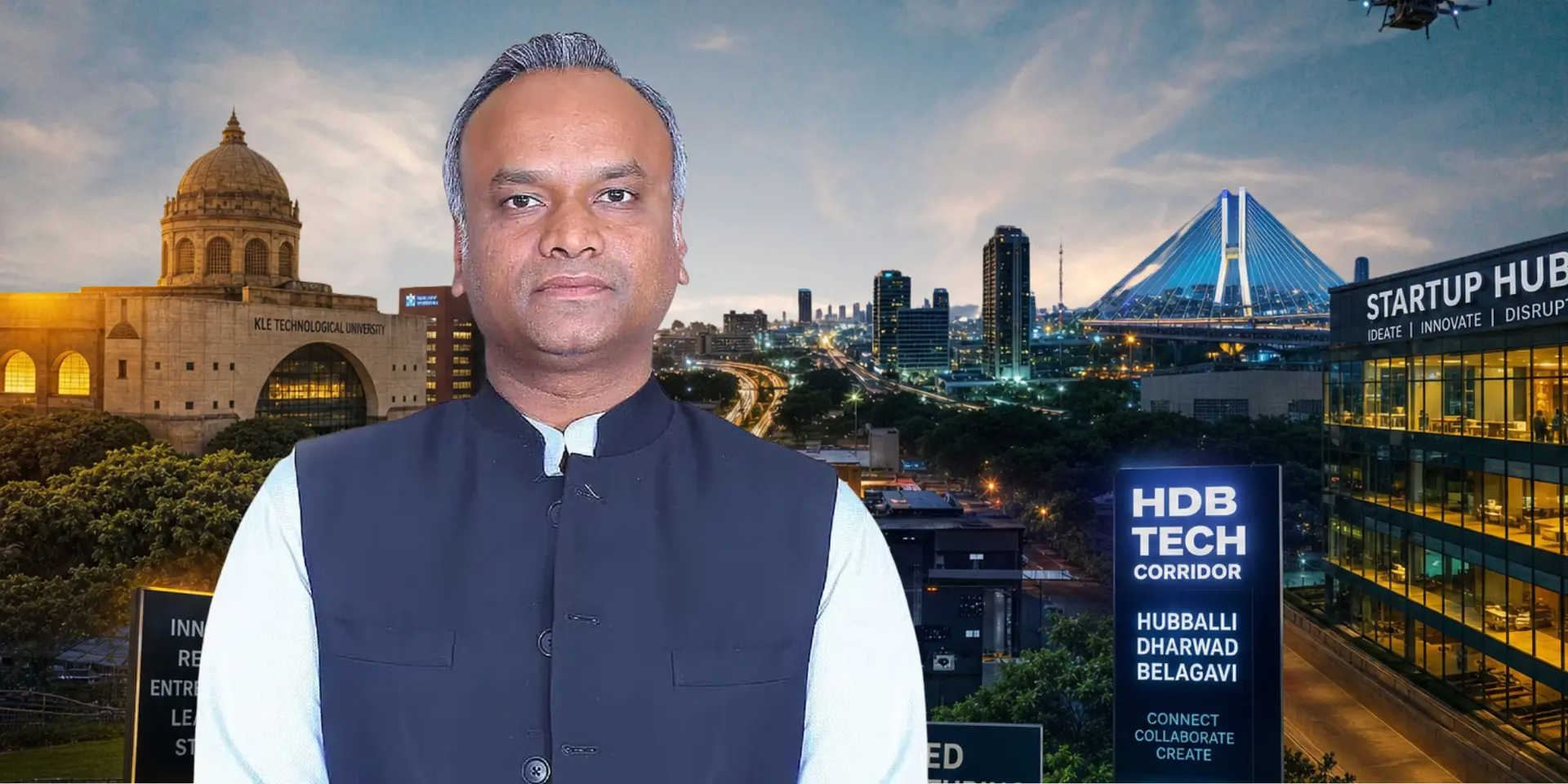

Bengaluru may dominate Karnataka’s technology story, but the state is now looking beyond its capital for the next wave of growth.
The Hubballi-Dharwad-Belagavi (HDB) corridor is emerging as a key part of Karnataka’s Beyond Bengaluru strategy, with the state setting a three-to-five-year target of attracting 35 large companies, five Electronics System Design and Manufacturing (ESDM) companies, 10 Global Capability Centres (GCCs) and 100 startups to the region.
The government is backing the ambition with a Rs 25 crore Cluster Seed Fund, new infrastructure in Belagavi, electronics manufacturing investments and programmes connecting industry with academic institutions.
Karnataka Minister for Home, Information Technology, Biotechnology and E-Governance Priyank Kharge said HDB already has the industrial base and capabilities needed to play a larger role in the state’s growth.
“HDB is building capabilities across semiconductors, Electronics System Design and Manufacturing (ESDM), electric vehicles, artificial intelligence, deep tech, Industry 4.0 and advanced engineering,” Kharge said.
Three cities, complementary strengths
The HDB corridor brings together three cities with distinct advantages. Hubballi has a growing technology and entrepreneurial base, Dharwad has strong academic and research institutions, while Belagavi has an established base in aerospace, precision engineering and advanced manufacturing.
Kharge said bringing these strengths together could create a stronger ecosystem for innovation, investment and enterprise. The approach also forms part of the state’s broader effort to create opportunities closer to where talent, institutions and industry are already present.
The numbers behind the HDB opportunity
HDB Techceleration 2026 brought together more than 700 delegates, over 100 startups and more than 25 investors, alongside industry, government, academia and technology stakeholders.
According to KDEM, the wider HDB cluster has 850 DPIIT-recognised startups and supports approximately 30,000 tech and tech-enabled jobs. The cluster has an estimated economy of Rs 2.79 lakh crore, accounting for around 11% of Karnataka’s GDP.
The HDB cluster extends beyond the three cities to cover six districts: Hubballi, Dharwad, Belagavi, Bagalkot, Gadag and Haveri.
The region is also developing manufacturing infrastructure. Around 2 lakh sq ft of GPC infrastructure is targeted for development in Belagavi within the next six months, while 224.5 acres have been secured for an Electronics Manufacturing Cluster at Kotur-Belur. Aequs is also developing an approximately 400-acre electronics cluster in Dharwad.
Beyond Bengaluru moves north
For Karnataka, the HDB push is part of a larger attempt to distribute technology-led growth across the state rather than concentrate it in Bengaluru. Kharge said the government would focus on making it easier for companies to establish and scale in the region.
“We will make it easier for companies to establish and scale in the region, strengthen innovation and advanced manufacturing, and connect HDB to national and global markets,” he said.
The state’s HDB Vision now sets clear targets for the next three to five years. But turning those targets into new companies, investments and jobs will require continued participation from industry, academia and government.
“This is at the heart of our Beyond Bengaluru vision,” Kharge said, referring to the effort to build technology and innovation ecosystems across Karnataka and create opportunities closer to existing talent and institutions.
With technology, manufacturing, academic institutions and startups developing across the cluster, Karnataka is betting that HDB can become one of North Karnataka’s strongest engines of technology-led growth.