



How Magron is building ‘Generation 2’ of electric vehicles
Bengaluru-based EV startup Magron is developing three electric motorcycles alongside technologies such as wireless charging and an AI-powered riding assistant.



The Indian electric two-wheeler market has largely been driven by scooters. But Bengaluru-based Mobility Aggregation Global Research Organisation (Magron) is betting on electric motorcycles.
Founded in 2022, the startup is developing three electric motorcycles—H35, C20 and C10—and also working on technologies that it hopes to sell across the wider EV ecosystem.
“We thought that at some point of time, motorcycles are actually going to flourish in the industry,” says Co-founder and CEO Abiram Menon. “Since our team is heavily experienced in motorcycles, we thought to take a bet.”
Menon’s move into electric mobility began at Bounce, where he was the company’s first engineer, working on scooters and the transition towards EVs. He was also the EV lead at Yulu for a brief period. He later worked on vehicle development and consultancy projects for several two-wheeler companies.
“If I can actually do it for all these people, why can't I just do it by myself?” he recalls thinking.
The founding team of Magron also includes Co-founder and Director Jahnavi Jaiswal. The startup has a 26-member team with an average experience of 15 years in relevant areas. Its senior-most consultant has around 55 years of experience.
Betting on motorcycles
Magron initially considered competing in the premium end of the electric motorcycle market. It built its first complete prototype using carbon-fibre composite materials in 85 days.
“But we soon realised that India is still not mature enough for any two-wheeler which actually goes beyond Rs 2.5-3 lakh,” Menon says.
The startup then began working on a broader portfolio.
The H35, Magron’s flagship motorcycle, is expected to cost Rs 3-3.5 lakh. It will be produced in limited batches as a technology-led, hand-built motorcycle.
The C20, priced at Rs 2-2.5 lakh, is aimed at the mainstream motorcycle segment. The C10 will be a stripped-down version of the C20, priced below Rs 2 lakh.
“We need to have a sensible product which can sell by itself,” says Menon.
Magron expects the C10 and C20 to reach the market around the middle of 2027, with the H35 following a few months later.

Building beyond the motorcycle
The motorcycles are one part of Magron’s larger technology strategy. The company says it has identified more than 200 potential areas for development across the EV ecosystem and has worked on more than 50 of them so far.
One of the more developed technologies is a patented wireless charging system that’s more convenient than the wired system. Instead of plugging a cable into the motorcycle, riders can simply park over a charging pad and let the vehicle charge automatically.
“We want to actually flood the market with the wireless charging infrastructure,” says Menon, comparing the approach to the gradual standardisation of wireless charging for smartphones.
Magron says its system is designed to deliver charging speeds comparable to wired charging. It is initially targeting 6.6kW and plans to eventually take the technology to 120kW.
The system uses a self-aligning mechanism to position the charger beneath the vehicle.
Magron is also working on safety systems that can detect disruptions around the charging area and automatically cut off power.
The company does not plan to restrict the technology to its own vehicles.
“We want to democratise this charging infrastructure,” says Menon, adding that Magron eventually wants to sell the technology to two-wheelers, four-wheelers, and commercial vehicles in the market.
An AI assistant for riders
Magron is also developing Magron Intelligent Virtual Assistant (Miva), an AI system designed for the riding environment.
Under development since 2023, Miva is intended to understand riding patterns and detect conditions such as drowsiness or unsafe riding.
“It can converse with riders in multiple languages and slang, while safety layers are designed to stop the system from distracting the rider in critical situations. It's more of an emotional AI, not like the generic responding kind of an AI,” he says.
Miva will be available on the C20, with its more advanced capabilities offered as an additional package. The H35 will get the full system.
Menon says the company sees the software as a product that could eventually move beyond its own motorcycles. Magron is already in discussions with other OEMs about sharing its AI technology.
Tech play
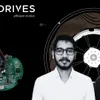
Rather than treating the motorcycle as a single product, Magron has divided the EV into different technology stacks, including data, AI and machine learning, and patented hardware components.
“Each and every individual stack also has revenue potential and opportunities to share across the entire EV ecosystem,” says Menon.
Magron has raised around $1 million so far and plans to raise about $5 million in its next round. The capital will go towards extensive testing, supply chain development, tooling, contract manufacturing, and a pilot batch of around 100 vehicles.
The eclectic two-wheeler market is currently valued at $1.98 billion and is expected to reach $5.48 billion by 2032. Prospects for EV companies like Magron are only expected to get better.
For now, the startup is focused on improving existing EV technology rather than trying to reinvent the electric motorcycle from scratch.
“We are only going to bring improvements from whatever is existing in the industry and a few things which are not available in the industry,” says Menon.
Magron is betting on development of “Generation 2” of electric vehicles—making electric motorcycles more practical and turning individual vehicle technologies into products for the broader EV ecosystem. This is what, Menon says, separates Magron from competitors like Bengaluru-based Ultraviolette Automotive.
Edited by Swetha Kannan