



Indian-origin Anil Chakravarthy to take over as Adobe CEO
Adobe has named Indian-origin executive Anil Chakravarthy as CEO, succeeding Shantanu Narayen as the software giant enters a new AI-driven phase of growth.

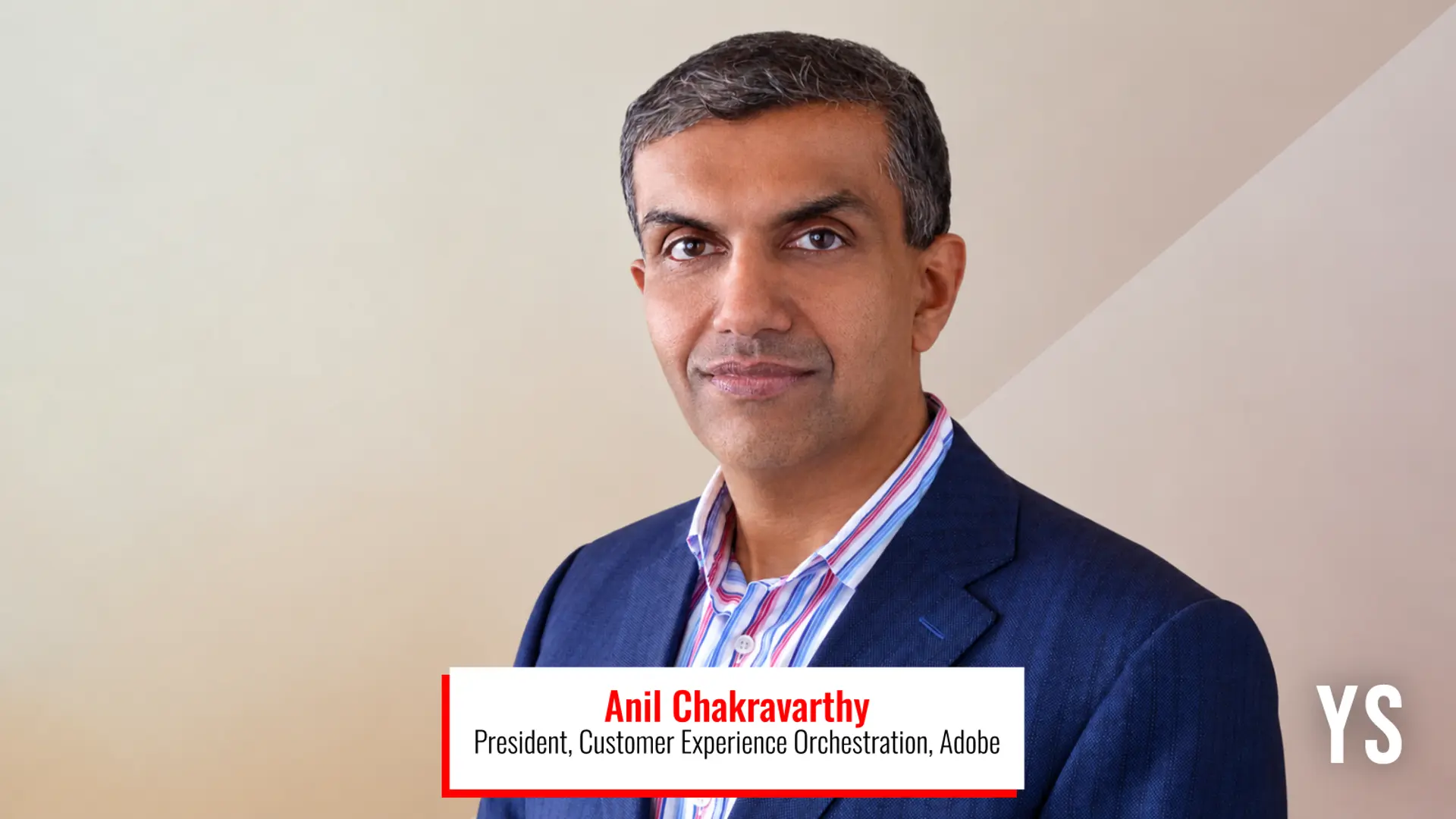

Adobe is preparing for its biggest leadership change in nearly two decades, with Anil Chakravarthy set to become president and chief executive officer on December 1, 2026, while Shantanu Narayen moves to the role of executive chair.
The transition comes as Adobe tries to turn rapid advances in artificial intelligence into a durable next phase of growth across creative software, document tools and digital customer experiences.
Chakravarthy is an internal leader whose career at Adobe has been centred on its enterprise-facing business. He currently leads customer experience orchestration and worldwide field operations.
Adobe said Chakravarthy has helped expand this business through products including Adobe CX Enterprise, GenStudio and Brand Visibility, while also scaling Adobe Experience Platform.
Narayen, who became Adobe’s CEO in 2007 and chairman in 2017, has overseen a major transformation of the company, particularly its move to cloud-based subscriptions and its expansion into digital experiences. Adobe describes that period as one in which he helped build the digital experience category and reshape the company’s business model.
The handover therefore looks less like a break with Adobe’s existing direction than an attempt to carry it into a more AI-intensive phase.
Narayen said Chakravarthy was the right choice because of his experience and understanding of the company. “I could not be more confident that Anil is the right person to lead Adobe's growth in an AI-driven era and look forward to working closely with him in my new role as executive chair.”
Chakravarthy pointed towards software that can increasingly carry out multi-step tasks rather than simply respond to individual commands.
He said, “I’m energized by the opportunity to fuel growth and drive Adobe’s leadership in the next era of agentic software for creativity, productivity and customer experience.”
That strategy comes as Adobe’s AI business is becoming more central to its financial and product story. In the second quarter of fiscal 2026, Adobe reported record revenue of $6.62 billion, up 13% year on year, and said AI-first annual recurring revenue had more than tripled to above $500 million.
The company has also been expanding Firefly, its generative AI platform, into more creative workflows and adding AI agents across products such as Photoshop and Premiere.
Competition is also moving quickly, with Canva broadening its challenge to professional creative software through Affinity, which it acquired and subsequently made free, while Salesforce is deploying AI agents for marketing and customer engagement.
Those moves suggest that AI is not simply adding features to established software products. It is changing how creative work, marketing and customer interactions are organised and delivered.
Regulation is becoming part of that environment too. In the European Union, the AI Act became broadly applicable on August 2, 2026, with new transparency requirements covering certain AI-generated and altered content.
For Adobe, whose products increasingly generate and modify media, such rules add another layer of responsibility around how AI systems and their outputs are identified and governed.