



ISRO says it is not being privatised as space reforms reshape its role
ISRO rejects claims of privatisation, while acknowledging a wider reform programme that moves mature rocket and satellite production towards industry.

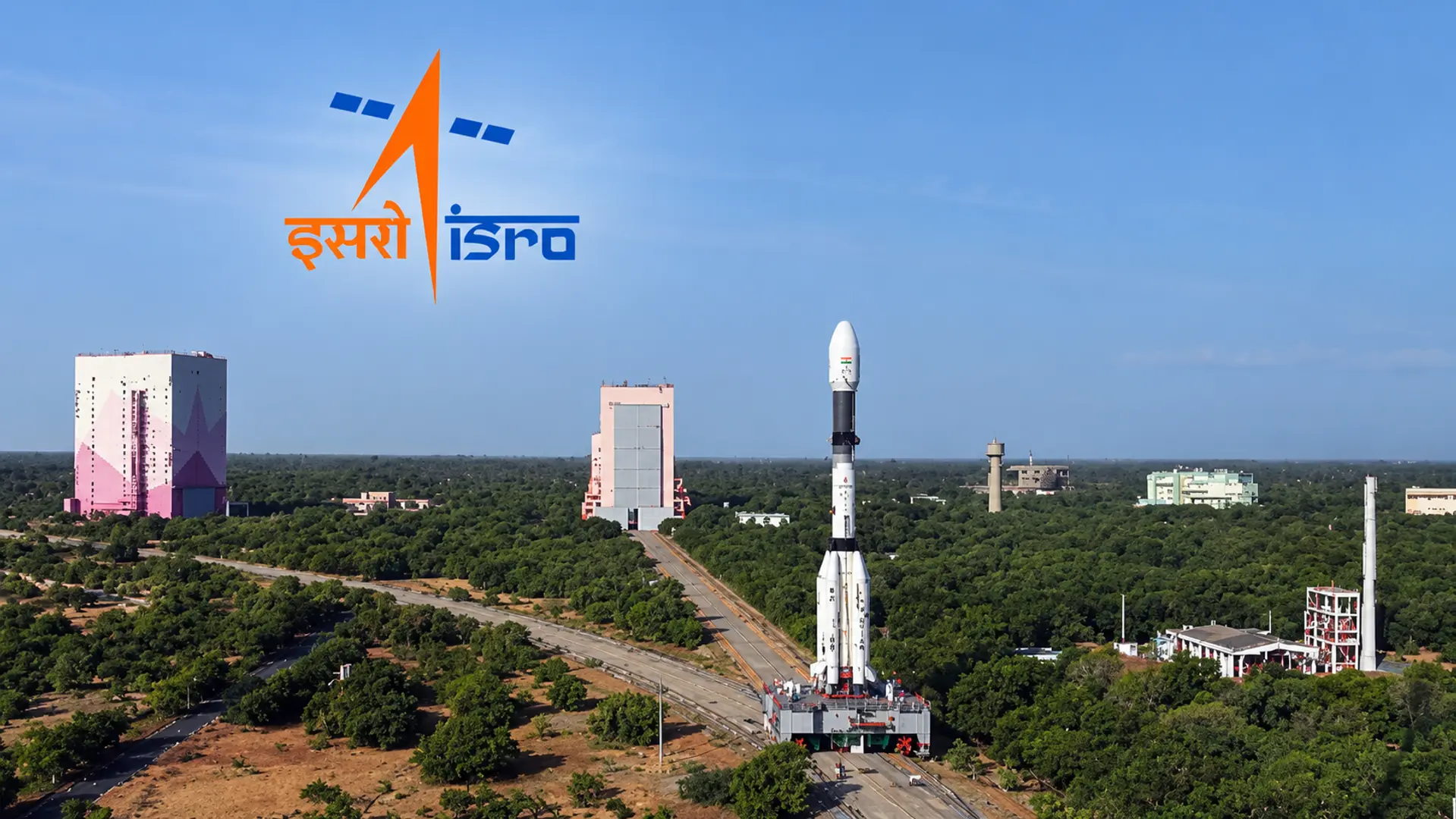

The Indian Space Research Organisation (ISRO) has firmly rejected reports that it is being privatised or that its role in India’s space programme is being reduced. The clarification came after a series of reports about plans to move more rocket and satellite manufacturing, and potentially parts of launch operations, from ISRO to private industry.
Nine ISRO employee associations had also sought formal answers from Chairman V Narayanan on where the transition was heading.
In its September 6 statement, ISRO said the reports had led to “speculations and misinformation” and described claims of an attempt to privatise the organisation or reduce its importance as baseless. It added that ISRO would remain the country’s principal institution for advanced space research, technology development, strategic and national missions, space science and exploration, and critical technologies.
The clarification is significant because the underlying change is real, even if calling it the privatisation of ISRO is misleading. ISRO acknowledges that mature technologies and routine production can increasingly be handled by industry, allowing its scientists and engineers to concentrate on more advanced work.
“Participation of private sector in space is not about reducing ISRO’s role. It is about enabling ISRO to focus even more strongly on the next generation of India’s space programme, while industry scales mature technologies and capabilities,” the statement said.
The immediate concerns arose after remarks by Pawan Goenka, chairman of the Indian National Space Promotion and Authorisation Centre (IN-SPACe). Goenka envisaged ISRO eventually moving away from routine launch-vehicle manufacturing and focusing more heavily on research, strategic missions and new technologies. He also noted that India needs to expand its launch cadence dramatically.
“We have set ourselves an ambitious target of 50 launches a year by 2030. A goal of this scale cannot be achieved by one organisation alone,” Goenka said in a September 6 post.
Last September, ISRO, NSIL and IN-SPACe signed an agreement with Hindustan Aeronautics Ltd for transfer of Small Satellite Launch Vehicle technology. SSLV is designed for relatively small satellites and was developed specifically as a production-friendly, quick-turnaround launcher. ISRO said the vehicle was intended to be manufactured in large numbers by industry.
This August, however, ISRO was still testing an improved SSLV first stage, illustrating that technology development has not simply stopped with the transfer of production.
PSLV production is also moving towards industry. ISRO’s 2025-26 annual report says NSIL has contracted HAL-led industry for end-to-end production of five PSLV-XL vehicles, with the first industry-produced PSLV scheduled for 2026. NSIL, notably, remains a wholly government-owned company and is the commercial arm of ISRO.
The broader policy shift dates to 2020, when India opened the space sector to private participation across the value chain, followed by the Indian Space Policy 2023 and a liberalised foreign direct investment framework. IN-SPACe was created to promote, authorise and supervise non-government space activities, while NSIL was tasked with commercialisation and enabling industry-led production.
All these developments have produced a substantially larger private ecosystem. Government figures put the number of space startups at around 440 by August 2026, with private companies active in launch vehicles, satellites, propulsion, ground systems and applications. Private investment has also crossed $600 million over five years, while a Rs 1,000 crore venture capital fund and a Rs 500 crore Technology Adoption Fund have been introduced to support the sector.
The real issue, therefore, is less whether ISRO is being privatised and more how far the division of labour will go. ISRO said strategic capabilities, frontier research, human spaceflight and major national missions will remain central to its work. Its employee associations, meanwhile, are asking for clarity on whether transferring manufacturing and operations could eventually leave the organisation primarily as an R&D body.
India’s latest GSLV mission, which successfully placed EOS-05 into orbit on September 4, highlights that ISRO remains fully operational at the centre of the national programme.
The more consequential transition is taking place around it, as India attempts to build a much larger commercial space industry without weakening the public institution that developed the country’s capabilities in the first place.