



How the MSME ODR portal is helping small businesses recover delayed payments
What happens when a buyer ignores your calls but cannot ignore a council notice

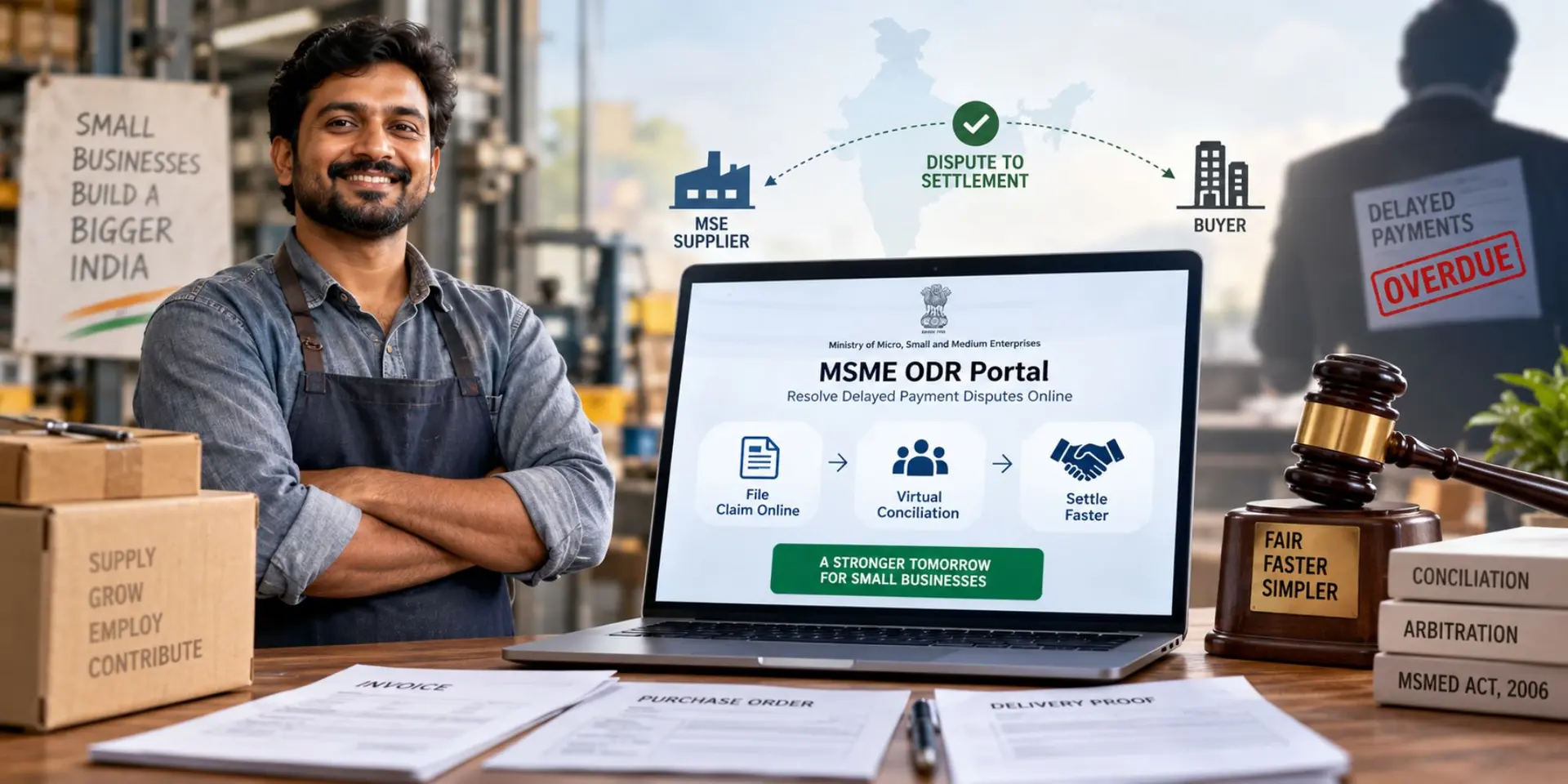

For India's micro and small enterprises (MSEs), getting paid on time is often harder than winning the order. The MSME ODR portal, run by the Ministry of Micro, Small and Medium Enterprises, is changing how these businesses chase unpaid dues. It lets a small supplier file a claim against a defaulting buyer online, attend conciliation meetings virtually and settle without a lawyer. Accounts from enterprises in Telangana suggest the shift is cutting both the time and the cost of recovery.
Why delayed payments cost small businesses more than money
A delayed payment can hold up salaries, raw material purchases and loan repayments. The MSMED Act, 2006 requires buyers to pay MSE suppliers within 45 days and levies compound interest on defaults. It also lets suppliers refer disputes to a Micro and Small Enterprises Facilitation Council (MSEFC), of which there are 161 across states and Union Territories, according to the Ministry.
In practice, pursuing a claim meant paperwork, trips to the district headquarters and repeated hearings. The Samadhaan portal, launched in 2017, brought filing online but largely worked as a tracking system. For many small suppliers, the effort of recovery outweighed the amount at stake.
How the MSME ODR portal works for small suppliers
The Ministry of MSME is the nodal body behind the platform. The Online Dispute Resolution scheme for delayed payments was launched in December 2023 under RAMP (Raising and Accelerating MSME Performance), a World Bank-supported programme. The portal went live on 27 June 2025, and since 15 October 2025, all new delayed-payment cases must be filed on it.
The portal carries a case from filing to settlement online, covering notices, conciliation meetings and hearings. States continue to run the councils that decide the disputes. In Telangana, the Commissionerate of Industries and Commerce administers six regional MSEFCs through District Industries Centres.
The benefits show up in a casebook compiled by the Commissionerate, which documents enterprises that used the councils. Several report filing online in under an hour, spending less than Rs 1,000 to file, and representing themselves without a lawyer. The most consistent observation is that a formal notice from the council moved buyers who had ignored months of follow-up.
Ankita Pandey, Director, RAMP, Ministry of MSME, writes in the casebook that a delayed-payment dispute is often a commercial relationship under stress. The aim of ODR, she notes, is to enable settlements that let buyers and suppliers keep doing business.
Case studies from the councils
Eminent Engineers, a proprietorship in Medchal-Malkajgiri, had supplied goods to a buyer who defaulted and stopped responding. Proprietor Donga Vasu Sairam filed his claim online in under an hour. The buyer made contact within a week, and the matter was settled in a single conciliation sitting. He estimated savings of around Rs 50,000 in legal costs.
Neemus Software Solutions, based in Ranga Reddy, had several delayed-payment matters pending. According to the Ministry of MSME, it resolved nine of eleven cases through the mechanism, with most respondents choosing not to contest. Director Shalini Agarwal said the route was "cheaper and time-bound versus court", adding that the company would not have approached a court for similar disputes.
For Hyderabad-based PeopleLink Unified Communications, the council has become a routine recovery channel. Its authorised representative filed online and resolved the matter in under a month, the fifth of six recoveries the company has secured this way, as per the casebook.
What the early numbers indicate
Figures shared by the Ministry of MSME in August 2026 indicated that more than 800 cases had been filed in Telangana through the ODR ecosystem, with around 85 resolved. The resolved share is still small, which reflects how recently the platform went live and how long conciliation can take when buyers contest a claim.
How does an MSME file a delayed-payment claim on the ODR portal
A micro or small enterprise with a valid Udyam registration can file once a buyer has not paid within 45 days. The supplier uploads documents such as purchase orders, invoices and proof of delivery, and the claim goes to the facilitation council in its state.
The council first attempts conciliation, with meetings held online. If the parties do not settle, the matter can move to arbitration. The MSMED Act requires a reference to be decided within 90 days, and a buyer who challenges an award in court must first deposit 75% of the awarded amount.
What lies ahead for ODR and small businesses
According to the casebook, the ODR scheme is slated to run through 2026-27, making the coming months a test of whether disposals can keep pace with rising filings. Wider adoption will depend on awareness, since many enterprises in the casebook learnt about the facility through word of mouth or industry associations. If more councils match the speed seen in these cases, the portal could make delayed-payment recovery a routine business process rather than a last resort.