



NCPCR summons Meta India head as inquiry into child abuse ads on Instagram gathers pace
The child rights body has called the company's Managing Director and Head to appear on September 9, a month after opening a formal inquiry,

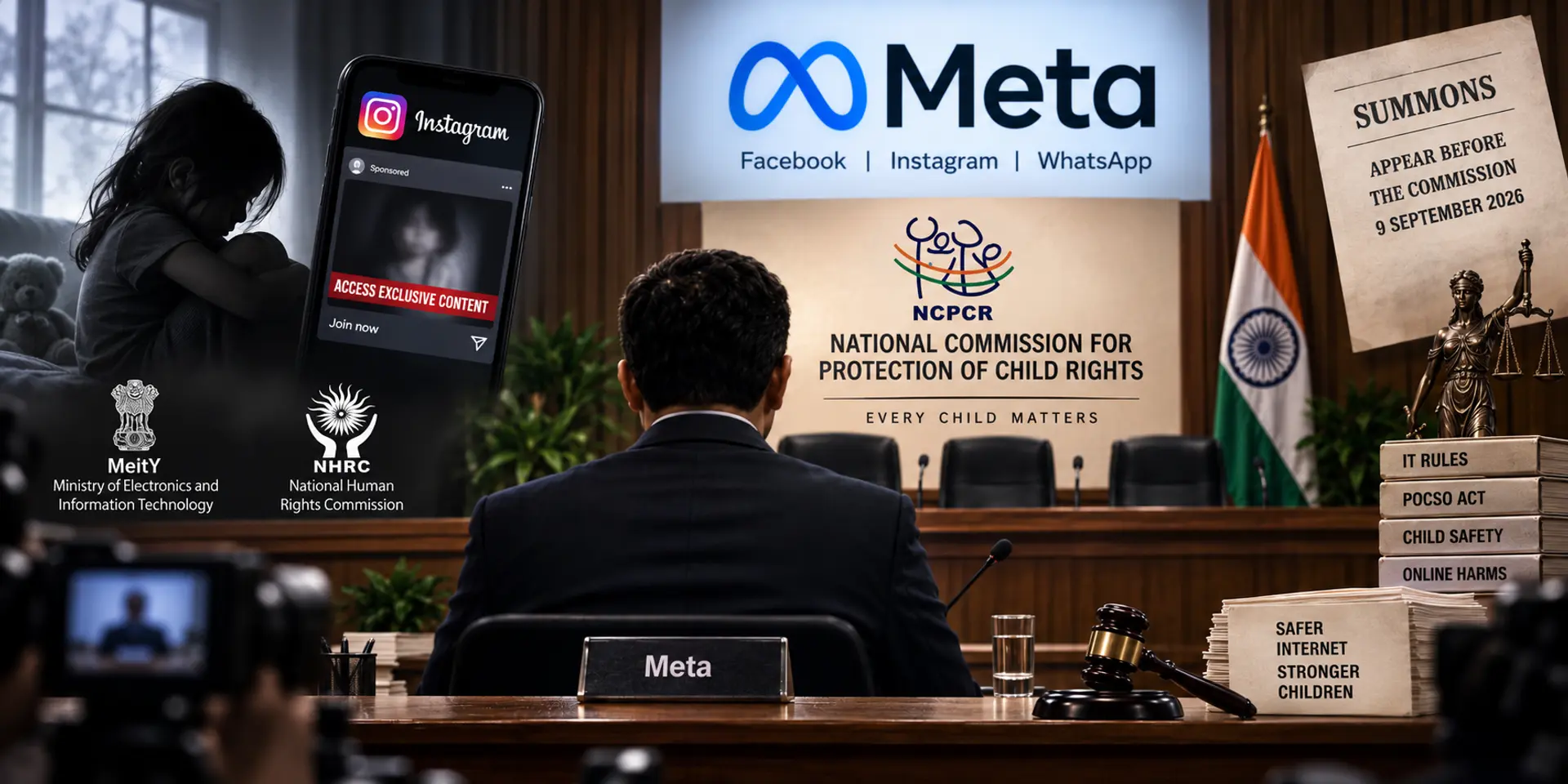

The National Commission for Protection of Child Rights (NCPCR) has summoned Meta India's Managing Director and Head to appear before the child rights body on Wednesday, September 9, 2026, YourStory has learnt.
The summons marks a significant escalation in the NCPCR’s inquiry into allegations that paid advertisements linked to child sexual abuse material (CSAM) were being run on Instagram in India.
The NCPCR had issued the notice to Meta on July 3 after taking suo motu cognisance of a BBC Eye investigation that alleged that paid advertisements promoting child sexual abuse materia were being displayed to users in India.
According to the investigation, some advertisements used terms such as “rape video” and “child video” and directed users to Telegram channels where such material was allegedly offered for sale.
The report also claimed the platform's recommendation algorithm surfaced increasingly explicit content to a newly-created test account. Meta, which owns Facebook, Instagram, and WhatsApp, has said it does not knowingly run such ads and removed the adverts, accounts and links once flagged.
How the NCPCR inquiry into Meta has unfolded
The Commission issued a notice to Meta Platforms, Inc. on July 3, 2026, the day the BBC report was published, taking suo motu cognisance of its findings and seeking details of the safeguards in place. Meta responded about a week later.
After examining Meta’s response, the NCPCR decided on August 4 to institute a formal inquiry to establish the facts, taking the matter beyond an exchange of correspondence.
Parallel scrutiny from MeitY and the NHRC
The Ministry of Electronics and Information Technology directed Meta in the first week of July to disable all advertisements and content facilitating access to CSEAM and to explain itself within seven days.
The National Human Rights Commission (NHRC) also took cognisance of reports alleging that paid advertisements displayed on a social media platform, owned and operated by Meta, promoted or facilitated access to child sexual abuse material (CSAM) in India.
NHRC sought specific, point-wise reports within two weeks from the Ministry of Information and Broadcasting (MIB), the Ministry of Electronics and Information Technology (MeitY) and the Delhi Police Commissioner, according to the proceedings of the case dated September 3.
“MeitY shall specifically confirm compliance with Section 19 of the POCSO Act, 2012, or, in case of non-reporting, state the reasons and identify the responsible officer/authority. The above issue shall not be left to a general or omnibus response on intermediary compliance and shall be answered specifically, supported by contemporaneous records,” the proceedings said.
In a statement on July 7, Meta said it had disabled approximately 1.6 lakh accounts in India in the preceding six months, adding that no review process catches every violation.
Sources told news agency ANI in early August that Meta had acknowledged that its systems had allowed illegal content to be promoted to a targeted audience and that Meta CEO Mark Zuckerberg had apologised to the government over the issue. Meta has not publicly confirmed the reported conversation or the apology.
Why do automated ad reviews miss this kind of content?
Large platforms process millions of ad submissions daily, and machine learning classifiers clear nearly all of them rather than human reviewers. These systems are trained to spot known patterns such as nudity, banned keywords or flagged web addresses.
Bad actors work around them with coded language, innocuous-looking images and links to third-party apps where the actual material sits outside the platform's view. Because the ad itself looks clean, the classifier approves it, and the advertiser pays for reach.
Safety researchers argue this is a design choice rather than an inevitability, since human review of high-risk categories and tighter scrutiny of outbound links are possible but add cost and slow ad delivery.
What happens next
Wednesday's appearance will be watched closely by other platforms in India, since the outcome could shape how regulators read intermediary obligations under the IT Rules and the POCSO Act.
If the NCPCR finds Meta's safeguards fell short, it can recommend action to the Centre and refer the matter to law enforcement. For Meta, which counts India as its largest user base, the inquiry comes as its child safety practices are already under examination on three separate government fronts.
(With inputs from PTI)