



Meet Nuvr, the bootstrapped startup managing Rs 1,200 Cr of ecommerce sales for brands
The Bengaluru-based startup runs online P&Ls for brands such as Medimix, Nilon’s, and Origami, using its own technology and a performance-linked revenue model.

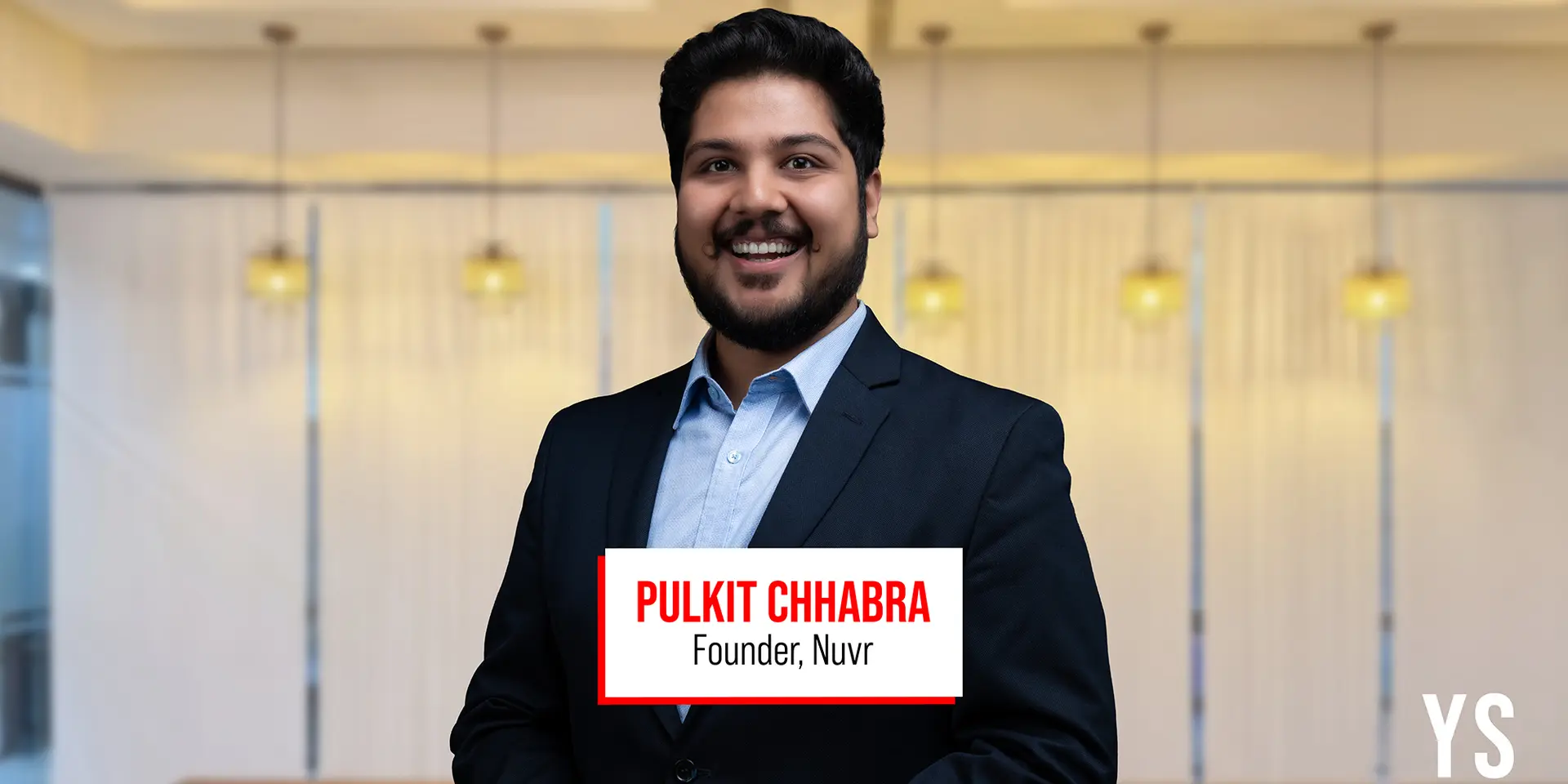

In 2023, Pulkit Chhabra was pitching an ecommerce analytics product to a consumer brand founder when the conversation took an unexpected turn. If Nuvr’s software could identify what was going wrong, the founder asked, why didn’t Chhabra’s team simply run the business? Chhabra did not have a good answer.
That conversation pushed Nuvr away from selling software and towards managing ecommerce and quick-commerce operations for brands. The Bengaluru-based company calls itself an ecommerce and quick-commerce “growth accelerator”, working across pricing, advertising, inventory planning, catalogues, supply chains and relationships with online platforms.
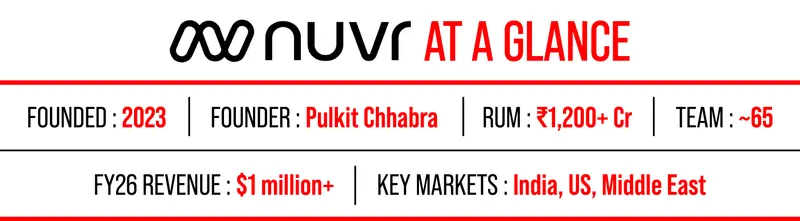
More than three years later, Nuvr says it manages over Rs 1,200 crore in online sales for partner brands. That is not Nuvr’s revenue. The company calls the metric revenue under management, or RUM, borrowing from the asset management industry’s use of assets under management.
Nuvr says its RUM has increased from around Rs 125 crore in its first year and is targeting approximately Rs 1,800 crore by the end of FY27. The company itself crossed $1 million in revenue in FY26 and is on track to roughly double that in FY27, according to Chhabra. He says Nuvr is bootstrapped and profitable, though it does not disclose margins publicly.
From software to operator
Chhabra had spent several years building consumer businesses and operating marketplace brands before starting Nuvr. He initially planned to turn that experience into software and took the SaaS proposition into Antler’s residency programme. Conversations with brands, however, changed his mind.
Many established consumer companies understood manufacturing and offline distribution, but ecommerce required them to manage changing prices, advertising and inventory across fulfilment centres and dark stores. Analytics solved only part of the problem. They also needed people to interpret the information, make decisions and act on it.
Nuvr’s first major brand partner was tissue and hygiene products maker Origami. Chhabra’s team began by visiting its factory to understand its products, manufacturing capacity and which stock-keeping units could be scaled online. Nuvr says Origami’s online business doubled in the first 12 months.
According to Chhabra, Origami’s monthly revenue run rate is now almost 10 times what it was when the partnership began about three and a half years ago. Nuvr now works with brands including Origami, Medimix, Nilon’s and CLEAR.
Unlike a conventional agency, Chhabra says Nuvr takes responsibility for running much of a brand’s online P&L rather than only advising it on marketing or advertising. The company charges a management fee, with part of its compensation tied to the revenue outcomes it delivers.
Much of Nuvr’s growth has come through referrals and word of mouth rather than a traditional outbound sales operation, Chhabra says. The company has around 65 employees, with roughly 35 to 40 based in Bengaluru, around 20 in Kolkata and a smaller number working remotely.
Running ecommerce one SKU at a time
In Nuvr’s system, a product sold on Blinkit in one part of Bengaluru is treated as its own business unit. The same SKU sold on another platform or in another location becomes a separate unit, allowing the company to track performance at a more granular level.
Its internal platform, Nuvr OS, monitors pricing, stock availability, competitor activity and marketing performance. If a competitor changes its price or goes out of stock, the system can flag the development and suggest a response. Humans still make decisions where judgement is required.
The objective is not simply to increase sales. Price cuts and additional advertising must make sense after margins are considered. Nuvr describes the platform as a proprietary, AI-powered operating system developed in-house using data from the ecommerce businesses it manages.
Nuvr OS is used mainly by the company’s teams and existing customers, although Nuvr has begun offering it selectively as a SaaS product.
Going beyond India
Companies such as Upriver and Assiduus Global overlap with parts of Nuvr’s model, including marketplace management, advertising, inventory planning and cross-border operations. Nuvr is seeking to differentiate itself by taking on day-to-day operations and linking part of its compensation to revenue outcomes.
Working across brands can give Nuvr deeper knowledge of a category, but it can also create conflicts.
Chhabra acknowledges that there may be limits to how many competing brands the company can serve in categories dominated by only a few large players.
The company is also looking outside India. It has a pilot customer in the US whose Amazon business it manages end to end and plans to focus initially on the US and the Middle East. Its international expansion could also change its business model.
In India, Nuvr generally manages online businesses without owning or physically moving stock. Overseas, it is considering whether holding inventory could make sense. Such a move would give it greater control over operations but would also make the business more capital intensive.
Chhabra says Nuvr does not plan to raise money this financial year. If it brings in outside capital later, he would prefer a strategic investor over a conventional venture funding round. He believes the existing business can cross ₹100 crore in annual revenue over the next three years.
The longer-term ambition is to build a global digital commerce company from India, combining Nuvr’s operating capabilities with its technology. Eventually, Chhabra wants to take the company public.