



Deoria MP Shashank Mani Tripathi on the 2026 NEET crisis, India's growth story and entrepreneurship
A paper leak, a resignation and a rocket launch, how one MP connects examinations, growth and enterprise into a single argument

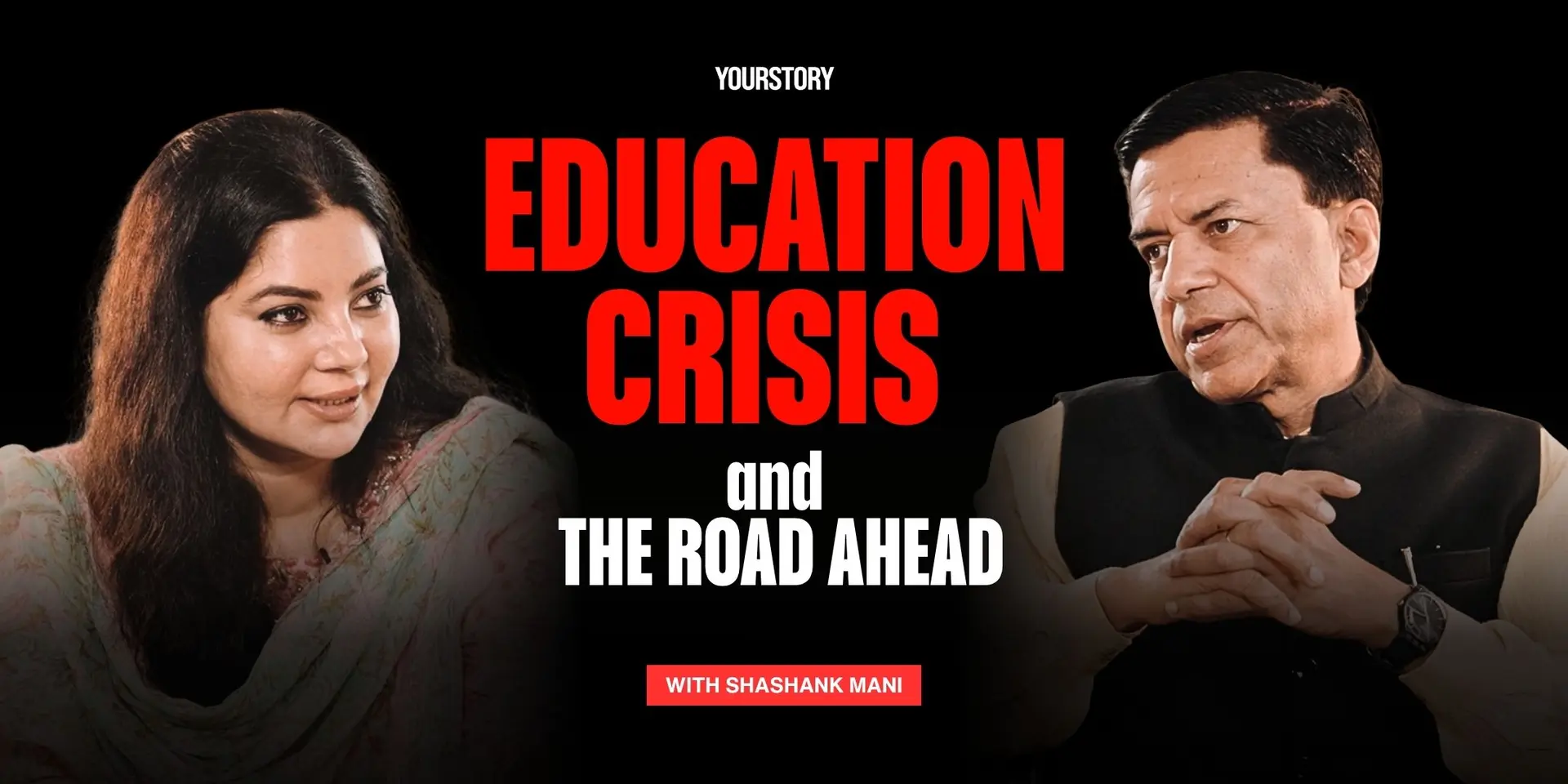

The 2026 NEET crisis, triggered by a paper leak that affected close to 22 lakh medical entrance aspirants and compounded by irregularities in CBSE's on-screen marking system, set off weeks of protests at Delhi's Jantar Mantar and eventually cost the country's education minister his job. In a wide-ranging conversation with Shradha Sharma, Founder and CEO of YourStory and The Bharat Project, Bharatiya Janata Party MP from Deoria and Jagriti Yatra founder Shashank Mani Tripathi argued that the episode points to a deeper problem: India's exam culture needs room for a different measure of success, entrepreneurship. Tripathi, who has represented Deoria in the Lok Sabha since 2024, spoke about why protest without building achieves little, why India's economic momentum gives young people a rare opening, and which sectors hold the biggest entrepreneurial opportunities over the next decade.
From Jagriti Yatra to Parliament
An IIT Delhi graduate with an MBA from IMD Lausanne, Tripathi founded Jagriti Yatra in 2008, a 15-day train journey exposing young people to grassroots entrepreneurship in India's smaller towns and cities, before winning the Deoria seat in the 2024 general election. He has since layered that enterprise-focused thinking onto his constituency work through an initiative he calls Amrit Prayas, built around four levers: economic growth, employment, environmental sustainability and human potential.
The NEET crisis and what Tripathi wants fixed
Youth-led groups, including the Cockroach Janta Party, along with student unions and opposition parties, held sustained protests at Jantar Mantar between June and late July 2026, demanding accountability. Union Education Minister Dharmendra Pradhan resigned on 25 July 2026 and was succeeded by Pralhad Joshi, who took additional charge. Tripathi, who sat the JEE himself, called the episode "wrong at a number of fronts" and, on the government's response, said "we stoop to conquer, there is no sense of loss in this. The fact that we're listening to our young people is something which is a moral victory for us."
Days later, Parliament passed the Public Examinations (Prevention of Unfair Means) Amendment Act, 2026, which received presidential assent on 31 July 2026. The amendment sharply raises penalties set under the original 2024 law, with individual offenders now facing five to ten years in prison and fines of up to Rs 50 lakh, up from three to five years and Rs 10 lakh, and service providers facing fines of up to Rs 5 crore, up from Rs 1 crore. It also mandates investigations be completed within two months and trials within three, through dedicated fast-track courts.
Tripathi said the deeper problem is not only examination security but India's narrative around failure. "A failed person in examination is not a failed person," he said, arguing that society treats an exam result as a verdict on a young person's worth rather than one data point among many. Asked what he would change as education minister, he named three priorities: tweaking the National Education Policy to emphasise human potential, strengthening state education boards, and integrating skilling, sports and entrepreneurship into the core curriculum instead of treating them as parallel tracks.
Where Tripathi sees India's economic story headed
Tripathi's optimism about India rests on a few pillars: macroeconomic stability, political continuity and a growing economy. India overtook Japan in 2025 to become the world's fourth-largest economy, and agencies including the World Bank and Moody's project GDP growth for the current financial year of 6.3% to 7%. Most estimates put India on track to become the third-largest economy sometime between 2028 and 2031. Tripathi cautioned that this demographic advantage is time-bound. "We are only young for the next 15 to 20 years," he said, pointing to states such as Goa and Tamil Nadu, where population growth has already plateaued, as an early warning of what he expects the rest of the country will face.
On where the next big entrepreneurial opportunities lie, Tripathi pointed to defence and space, citing Hyderabad-based Skyroot Aerospace, which launched India's first private orbital rocket in July 2026 and became the country's first space-tech unicorn the same year; agriculture, where he said close to 43% of India's workforce remains employed despite the sector's much smaller share of GDP, leaving room for productivity gains through diagnostics and mechanisation; and women-led enterprise and small-town urbanisation, which he links to a "Germanic model" of commuting to nearby hubs rather than permanent migration to megacities.
Banyan Revolution, scaling the Deoria model
Tripathi's constituency work has become a live pilot for his ideas: agriculture fellowships across more than a hundred villages, a defence electronics push, and a student rocket-launch programme on the Narayani river that has drawn participants from IIT campuses. He is now working to replicate that approach elsewhere through what he calls the Banyan Revolution, envisaging hubs, or "four dhams of enterprise", in Deoria, Kanyakumari, Ganjam and Nagpur, supported by a research institute he is setting up in Mumbai. Tripathi said the full rollout could take anywhere from seven to fifteen years.
What does India's demographic dividend actually mean
Demographic dividend refers to the economic boost a country can get from having a large working-age population relative to dependents such as children and the elderly. India's median age remains among the youngest of major economies, meaning more people earning, spending and building than being supported by others. But the dividend is not automatic. It pays off only if that working-age population is educated, skilled and employed, which is why the NEET protests connect directly to the economic optimism Tripathi expressed elsewhere in the conversation. A country with millions of young people and too few jobs, or the wrong skills for the jobs available, carries a demographic burden instead of a dividend. Tripathi's own estimate of a 15 to 20 year window to convert this advantage is broadly in line with projections from other economists tracking the country's population trends.
Tripathi's conversation lands as both an argument and an invitation to India's young workforce. He wants young Indians who feel boxed in by examinations to see entrepreneurship, particularly in smaller towns, as a legitimate path rather than a fallback. Whether that shift happens depends on execution far beyond one MP's constituency: how effectively the new Public Examinations Amendment Act is enforced, whether states build the institutional capacity Tripathi says is missing, and whether Amrit Prayas can scale into the Banyan Revolution without losing what made the original work. With India's growth numbers holding up and its demographic window ticking, the coming decade will show whether that shift from Deoria to the rest of the country is possible.