



Shuddh Swad is building a regional snacks brand using traditional household recipes
West Bengal-based Shuddh Swad makes preservative-free Bihari thekua and is now developing recipes for other regional snacks. It was founded just last year with an initial capital of Rs 10,000, but the bootstrapped brand has already clocked Rs 1 crore in revenue.


Every Bihari household makes thekua differently, and much of it disappears just a week after Chhath Puja.
Thekua is a deep-fried sweet snack offered as a sacred prasad during Chhath Puja, a festival dedicated to Surya, the sun god, and goddess Chhathi Maiya.
Recipes passed down through generations vary from one kitchen to another, changing even further as one goes beyond the region.
Ingredients get substituted for cost, proportions are altered for shelf life, and a snack once made fresh at home becomes something manufactured to last. What is sold as ‘traditional’ in many Indian cities is, in some cases, a version shaped more by commercial requirements rather than the original recipe.
Shuddh Swad co-founder Jayanta Karmakar encountered one such version when he was 16. During Chhath Puja, he ate thekua from a roadside stall and fell ill.
The illness passed, but it left him with a question. Thekua is a snack found in nearly every Bihari household during Chhath Puja. Then why did one have to choose between a cheap street version and an expensive one sold only once a year?
"After that experience, I felt a product so tied to our culture and memories was slowly losing its originality," says Karmakar. "All I could think was that if we brought back the original taste in a clean, accessible way, people would genuinely connect with it. That thought became the starting point for Shuddh Swad."
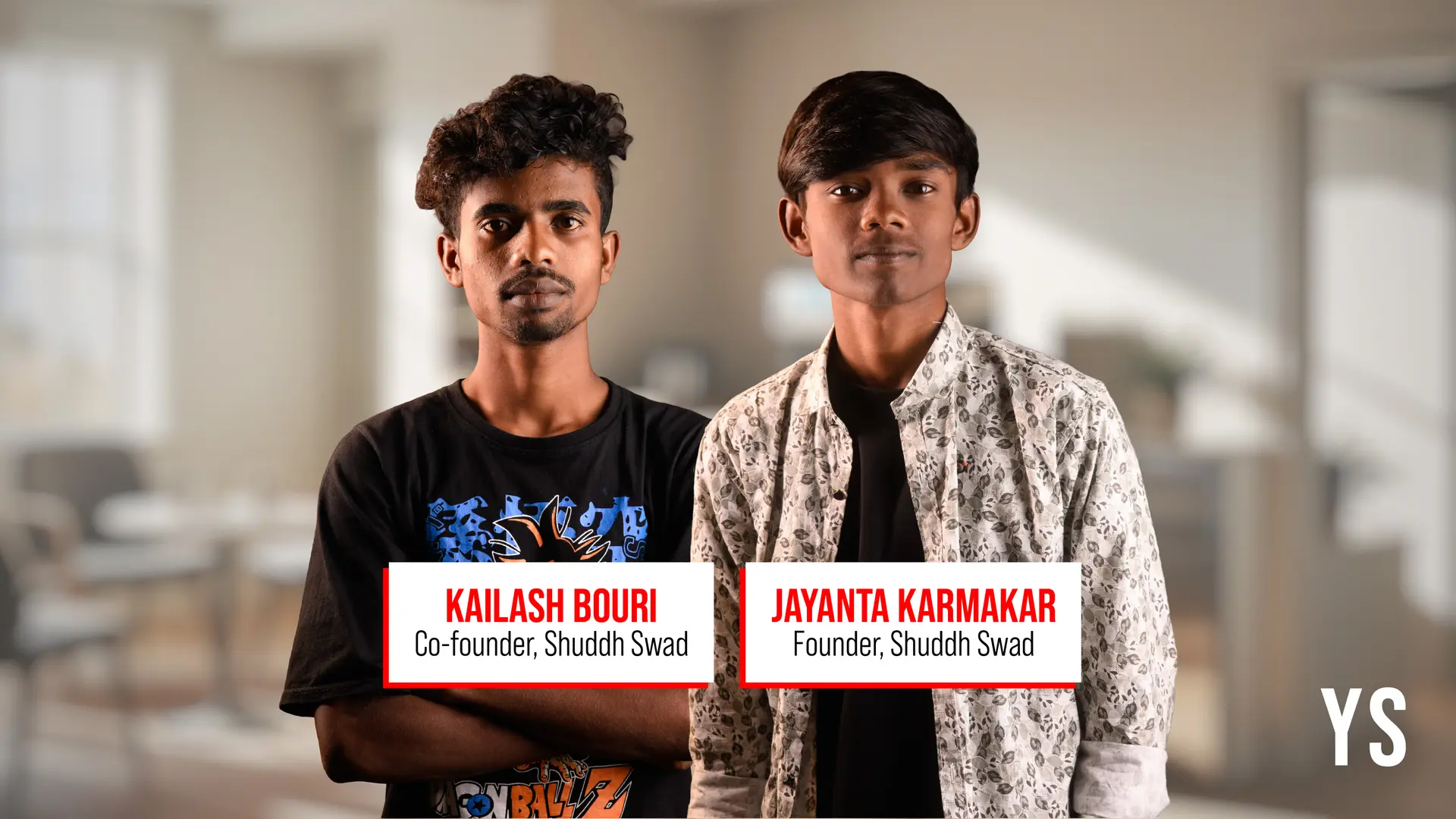
Karmakar founded Shuddh Swad in 2025 with Kailash Bouri in Adra, West Bengal. Bouri had dropped out of school and was selling water bottles at railway stations to support his family when Karmakar pitched the idea to him. Samir Ansari joined Shuddh Swad in August 2025 as CEO and strategist, taking on operations as the business grew.
Built around traditional recipes
Shuddh Swad wants to bring out regional Indian snacks in their traditional forms. The idea is to use recipes closer to the ones households used decades ago, rather than versions altered for cost or shelf life, while keeping hygiene and freshness a priority.
"For me, it means the same method and ingredients thekua was traditionally made with in our homes," says Karmakar. "We're not just making a snack; we're preserving a piece of our culture and childhood memory, and bringing it to people."
The founders see thekuas appeal across generations. Older buyers get a snack closer to what they grew up eating, while younger consumers, who often indulge on chips and other packaged snacks, get a traditional alternative.
Shuddh Swad currently sells three thekua variants: coconut and suji, coconut and jaggery, and elaichi (cardamom). Each variant is currently priced at Rs 299, discounted from a listed price of Rs 599, and is available in 250gm, 750gm, and 1.25kg packs.
The products are made with wheat flour, semolina, desi ghee, milk, dry coconut, and dry fruits. “We do not add any preservatives, liquids or additives,” says Ansari.
How the thekua gets made
The dough is shaped using a traditional wooden mould and then deep-fried, a process, Ansari says, is largely unchanged from the way thekua has traditionally been made at home. Machinery is used only where hand production would be impractical at scale. Workers wear gloves and hairnets throughout production, he adds. Manufacturing takes place at a single facility in Adra, West Bengal.
Ansari says 60-70% of the workforce is sourced locally. A third-party courier partner handles deliveries rather than an in-house fleet. Shuddh Swad sells through its own website as well as ecommerce sites Amazon, JioMart, Flipkart, and Meesho, and quick-commerce apps Blinkit and Instamart.
The startup has so far sold 40,000 units. It has crossed Rs 1 crore in revenue within its first year of operation, entirely through self-funding. Its founding team of 11 people has since grown to 40 employees.
Bootstrapped with plans to expand
Shuddh Swad has not raised institutional funding. The business was started with roughly Rs 10,000 as initial capital and has grown over time without an outside investor.
"The hardest part has been consistently making a traditional homemade product at scale without compromising its original taste," says Bouri. "Production, hiring the right people, maintaining quality, day-to-day operations, there was something new to learn at every stage."
The founders have appeared on Bharat Ke Superfounders, an OTT reality show built around Indian founder stories. Karmakar credits the platform for giving Shuddh Swad a larger stage for its pitch.
The company is entering a market that is sizeable and competitive. India’s ethnic foods market was valued at $5.7 billion in 2025 and is projected to reach $10.8 billion by 2034, growing at 7.12% annually, according to IMARC Group.
Haldiram’s, Mithila Foods, Desi Tesi, and Meal of the Moment are among the brands selling packaged regional and traditional snacks at a national scale.
Shuddh Swad’s plan has two parts: one, recover traditional recipes in their original forms, and, two, take this approach beyond Bihar and West Bengal. The founders want to recreate recipes from 20 years ago, before ingredients were substituted or proportions were changed for cost considerations.
“In the coming days, we want to take all these snacks, check their quality against the old recipe, and launch them on our platform,” says Ansari.
Research and development is underway for snacks from other states.