



UPI's new pricing phase: Who pays, who benefits?
The introduction of MDR on select UPI transactions has sparked debate among industry leaders including Nithin Kamath, Sameer Nigam, Ashishkumar Chauhan and Ashneer Grover over who should pay, how much and who benefits.

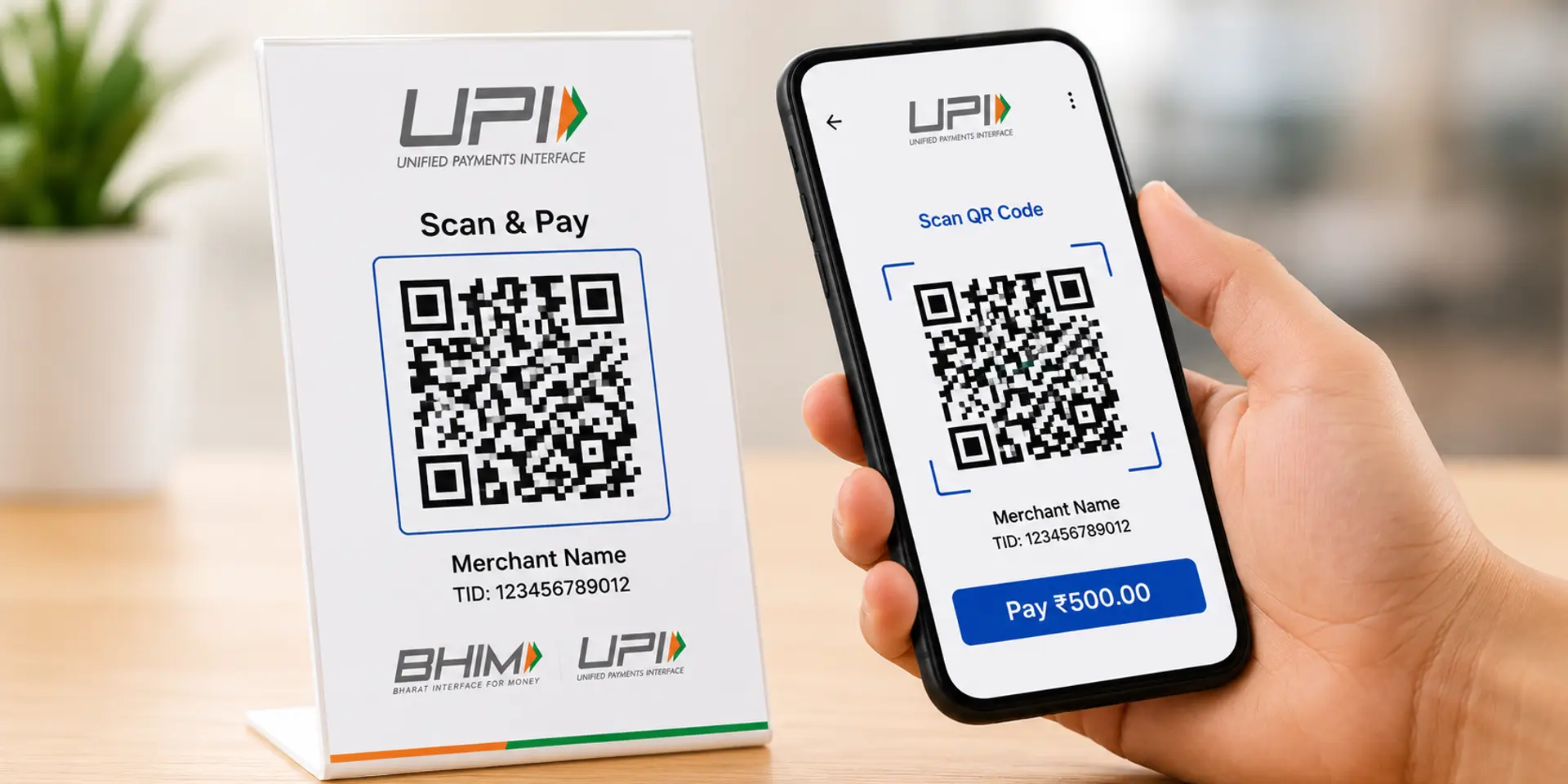

UPI is entering a new pricing phase. From October 15, 2026, select person-to-merchant UPI transactions above Rs 2,000 will attract a merchant discount rate, or MDR. It is the fee paid within the payments ecosystem when a merchant accepts a digital payment. The change has sparked debate over how UPI can remain affordable for merchants while creating a revenue stream for the banks and payment companies that keep the network running. The Finance Ministry has clarified that customers will not pay the MDR directly. It will also not apply to person-to-person transfers or small merchants covered under the zero-MDR framework. The government estimates that about 96% of person-to-merchant transactions will remain unaffected.
What changes under the new UPI charges
The standard MDR will be 0.4% on eligible merchant transactions above Rs 2,000, capped at Rs 300 per transaction. The full Rs 300 cap is reached at a transaction value of Rs 75,000, with the charge remaining at that level for higher-value payments. Some sectors will have a flat fee instead. Railways, telecommunications, insurance, fuel and agricultural inputs will pay Rs 5 on eligible transactions above Rs 2,000. Capital market payments, including those linked to mutual funds, securities and brokers, will attract an MDR of 0.02%, capped at Rs 300. Small vendors receiving up to Rs 1 lakh a month through UPI QR codes in the person-to-merchant category will continue to get zero-MDR treatment. The government will also create a dedicated fund equivalent to 5% of total MDR collections to promote UPI adoption among small merchants.
Why UPI is bringing in a fee.
UPI has grown into one of India's most important digital payment networks, but running that network comes with costs. In August alone, UPI processed about 24.5 billion transactions worth nearly Rs 29.8 lakh crore, underscoring the scale of the infrastructure that banks and payment companies have to support. Banks, payment apps and other service providers need to invest in fraud prevention, cybersecurity, technology and network infrastructure as transaction volumes continue to grow. The new MDR is intended to create a revenue stream without putting a direct charge on consumers or disrupting small-ticket payments. For selected sectors, the framework replaces the percentage-based MDR with a flat Rs 5 charge. The government has said the flat fee is intended to provide greater cost certainty for essential and thin-margin sectors. The potential revenue pool is significant. Citi estimates the new framework could generate Rs 16,000 crore to Rs 17,000 crore annually for the payments ecosystem, although the actual amount will depend on exemptions, transaction mix and how the fee is ultimately shared. But the response from fintech leaders shows that the economics are not quite that simple.
What fintech leaders are saying
Zerodha founder and CEO Nithin Kamath has questioned how the new MDR could work for the broking industry. In a post on X, Kamath pointed out that a customer may transfer money into a brokerage account without actually placing a trade. The broker could therefore incur a payment cost without earning anything from that transaction. He said a 0.02% charge with a Rs 5 or Rs 10 cap would make more sense for brokers. Kamath also warned that brokers may not be able to absorb the additional cost indefinitely, potentially putting pressure on zero-brokerage equity delivery models.
NSE Managing Director and CEO Ashishkumar Chauhan has also flagged a possible near-term impact. Speaking to reporters in the context of NSE's upcoming IPO, Chauhan said the introduction of MDR could initially weigh on transaction volumes, although he expects activity to normalise over time. PhonePe co-founder and CEO Sameer Nigam has backed the framework. Speaking to news agency ANI, Nigam said the payments industry had absorbed substantial losses during the six years in which UPI carried zero MDR.
He argued that the new revenue could help the industry recover part of its operating costs and invest further in the network, while pointing out that about 96% of merchant transactions would continue to remain free.
In a separate interview with Moneycontrol, Nigam said the introduction of MDR could also bring PhonePe closer to an IPO filing, as UPI monetisation has repeatedly come up in conversations with investors. Former BharatPe co-founder Ashneer Grover, meanwhile, has questioned whether UPI needed a merchant charge at all. In a post on X, Grover questioned the need for MDR and argued that UPI had already generated significant economic benefits for banks and the wider economy. He later reiterated his opposition in an interview with Times Now, arguing that merchants could ultimately pass the cost on to consumers.
There is another debate playing out behind the scenes: who gets the money. Business Standard reported in August, citing people familiar with the discussions, that payment aggregators were seeking a fixed and direct share of any UPI MDR rather than depending on acquiring banks to pass on part of the fee. Aggregators argue that they also incur costs in onboarding and servicing merchants even though they are not direct members of the UPI network. Analysts at Citi estimate that banks could eventually receive around 60% of the MDR revenue pool, with payment apps getting about 25% and aggregators 15%. These are analyst estimates rather than an announced revenue-sharing formula, and the final economics will depend on how the mechanism evolves. The reactions highlight two questions at the heart of the new system: how should UPI pay for its growing infrastructure without making digital payments less attractive to merchants, and how should that new revenue be divided among the companies that keep the network running?
What happens next
The Finance Ministry has said MDR is a merchant-side charge and that banks have been advised to ensure merchants do not pass it on to customers. UPI apps are also barred from imposing platform fees or hidden charges on users. Still, the real impact will only become clearer after October 15, when the new framework takes effect. For consumers, everyday small-value UPI payments are expected to remain free. For merchants and payment companies, however, the economics of UPI are about to change. For UPI, the next phase may therefore be less about how quickly transactions grow and more about who pays for that growth, who gets paid and whether the economics can work for everyone in the ecosystem.