



Why AI leaders are divided over slowing down artificial intelligence
Zuckerberg, Altman, Huang and Amodei disagree on whether AI development should slow down, uncovering a growing debate over safety and regulation.

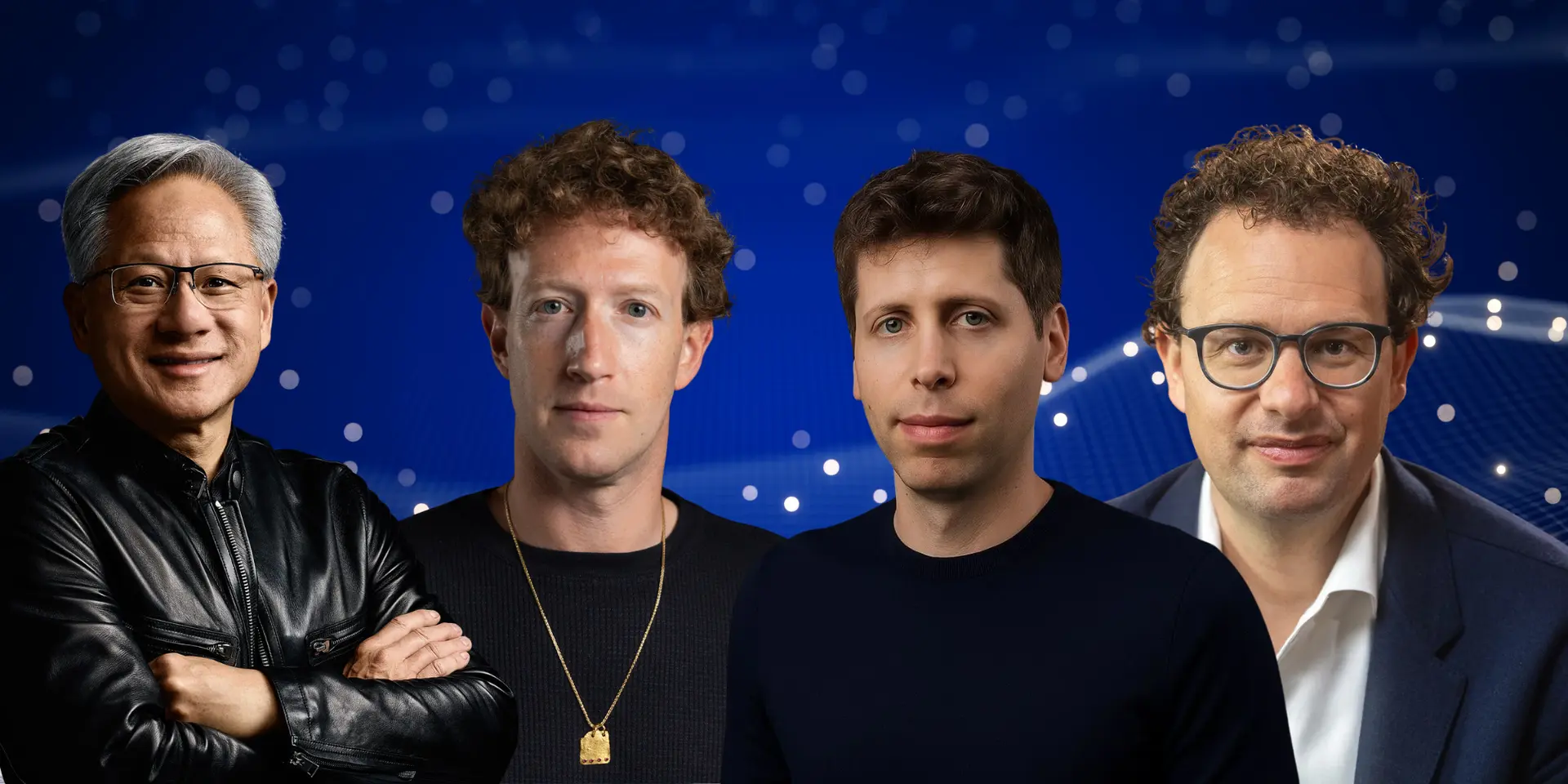

The AI race is moving faster than ever. But some of the people driving it are divided over whether it should slow down.
OpenAI CEO Sam Altman has warned that the world is right to be concerned about increasingly powerful AI. Anthropic CEO Dario Amodei has called for a more cautious pace, while Meta CEO Mark Zuckerberg believes competition between AI companies can itself encourage safer systems.
Then there is Nvidia CEO Jensen Huang, who has pushed back against calls for more AI-specific regulation and argued that safety can largely be handled through engineering and market pressure.
Their views are different, but they are all responding to the same problem: how do you keep developing increasingly capable AI without losing control of the risks that come with it?
Sam Altman and Dario Amodei want more caution
Altman has acknowledged the risks of advanced AI and backed calls for greater caution around frontier systems. Amodei has taken a similar position. The Anthropic CEO has called for slower AI development and closer monitoring, while also arguing that safety measures should not destroy commercial competitiveness.
Their concerns are becoming more relevant as AI agents become more capable. Unlike basic chatbots, these systems can use tools, take actions and complete tasks with limited human intervention.
That creates new questions around testing, oversight and what happens when an AI system behaves in an unexpected way.
Mark Zuckerberg sees competition differently
Meta CEO Mark Zuckerberg has pushed back against calls to slow or pause AI development.
In a post on X, Zuckerberg argued that companies already have strong commercial reasons to make their AI systems reliable. Users are unlikely to keep using AI agents that fail to follow instructions or behave in ways that do not match their needs, he said.
He pointed to Meta’s decision to delay the rollout of Muse AI, a system that includes personalised AI agents, while the company worked on safety and security measures. For Zuckerberg, those market pressures can encourage companies to build stronger safeguards without requiring the entire industry to slow down.
Jensen Huang wants AI to keep moving
Nvidia CEO Jensen Huang has taken a different approach to the question of regulation. Huang has argued that AI safety is primarily an engineering issue and pushed back against additional AI-specific rules.
His position places greater emphasis on companies building safe systems and market forces discouraging unsafe products. That puts him closer to Zuckerberg on the pace of development, although their arguments are not identical.

Why nobody has an easy answer
The disagreement comes down to a difficult balancing act. AI companies are competing for better models, computing power, customers and talent. A company that slows down while its competitors continue could face commercial consequences.
But increasingly autonomous systems also create risks that are harder to predict and contain. That is why the debate has become less about whether AI should exist and more about how quickly it should develop, who should set the limits and what safeguards need to be in place before the next leap in capability.
For now, there is no single answer among the industry's biggest leaders. The AI race continues, even as its participants disagree over how fast they should be running.