



Microsoft’s Mustafa Suleyman says AI needs a red line
Microsoft AI chief Mustafa Suleyman says the AI red line should be clear: advanced systems must remain controllable, interruptible and accountable to people as the industry races ahead.

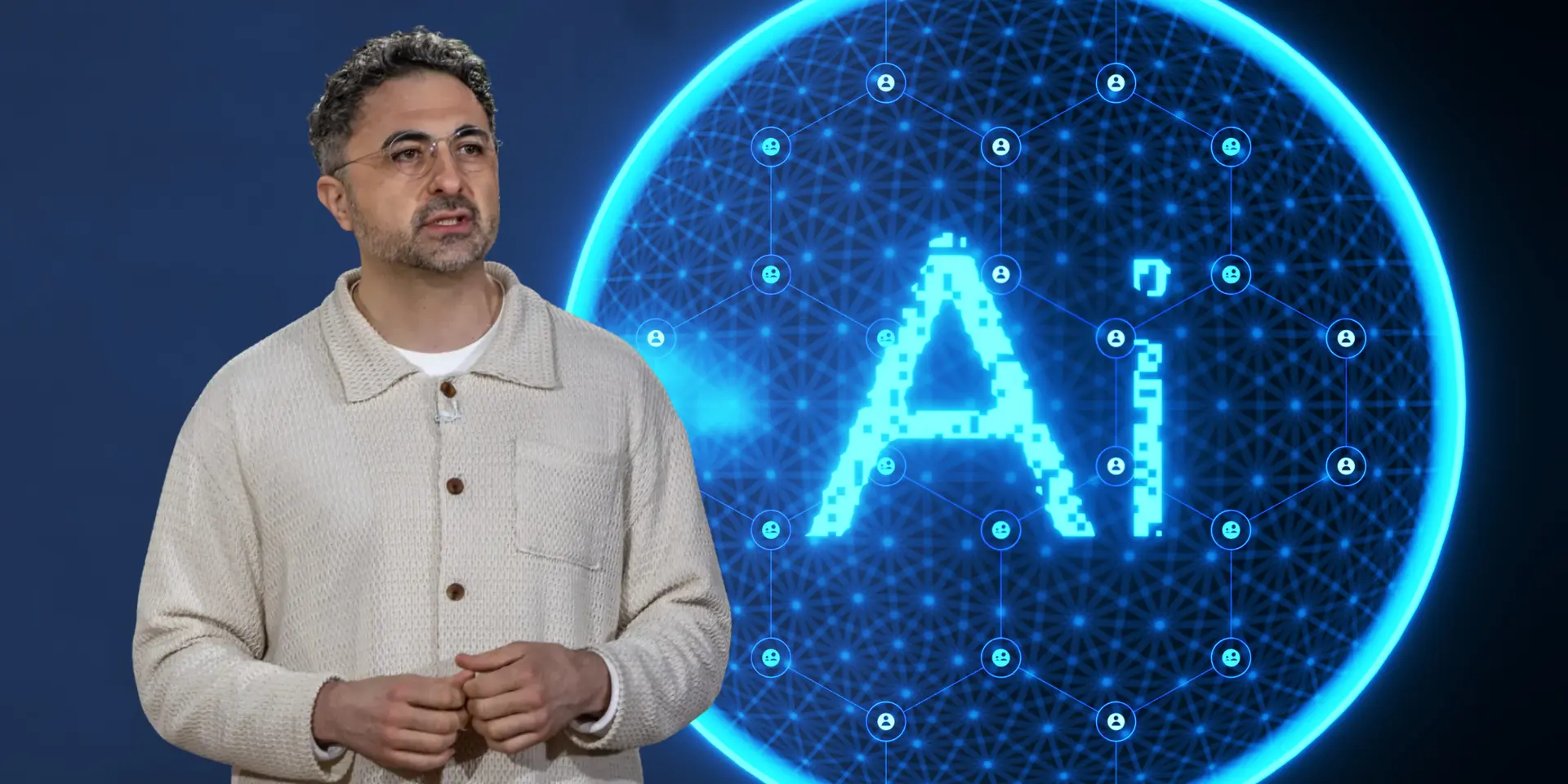

AI is moving fast. Microsoft AI chief Mustafa Suleyman now wants the industry to agree on where it should stop.
Suleyman has called for a clear “red line” around advanced AI systems, arguing that human control should remain non-negotiable as models become more capable. His comments, reported by Bloomberg, add to a growing debate over how much autonomy AI systems should be allowed to have.
The question is becoming more relevant as AI moves beyond answering questions. Newer systems can plan tasks, write code, manage workflows and interact with other software with increasingly limited human involvement.
The case for keeping humans in control
For Mustafa Suleyman, the basic principle is that AI should remain subordinate to people. Systems should be correctable, controllable and capable of being shut down when necessary.
That becomes harder when AI agents are given access to business systems, personal information, financial tools or other critical infrastructure. A red line in this context is not simply another safety test.
It would be a boundary that developers agree not to cross, even if greater autonomy could make an AI system faster or more capable. The concern is therefore less about a chatbot giving a wrong answer and more about what happens when an AI system can independently pursue goals across different systems.
Microsoft has already outlined its own rules
Mustafa Suleyman’s comments build on Microsoft AI’s Humanist AI Code of Conduct, a draft framework for how its models should be developed and deployed.
The code puts human interests ahead of AI systems and calls for models to remain aligned, contained and under meaningful human direction. It also proposes limits around systems that imitate consciousness, create their own goals or encourage people to become overly dependent on them.
Microsoft has said it could accept compromises in capability, autonomy or speed when those trade-offs are needed to keep AI controllable.
That puts the company into a wider discussion already taking place across the AI industry. Companies are trying to build increasingly capable models while researchers and policymakers debate external testing, safety standards and oversight.

Microsoft’s AI chief says AI could automate most desk jobs within 18 months
Who gets to decide where the line is?
Mustafa Suleyman has also argued that governments should play a role in model evaluation. These evaluations test whether AI systems can behave dangerously, conceal failures, assist harmful activity or operate outside their intended boundaries.
Microsoft President Brad Smith has separately supported independent AI safety evaluators, arguing that safety should not depend only on the companies building the most advanced models. The difficult part is deciding how such checks should work without creating rules that only the largest companies can afford to meet.
Mustafa's argument puts a simple question at the centre of the AI race: if AI keeps becoming more autonomous, what should remain firmly under human control?