



Anthropic Calls 2028 a Turning Point for AI Dominance
Anthropic warns that decisions made in 2026 could determine whether the US or China leads frontier AI by 2028.

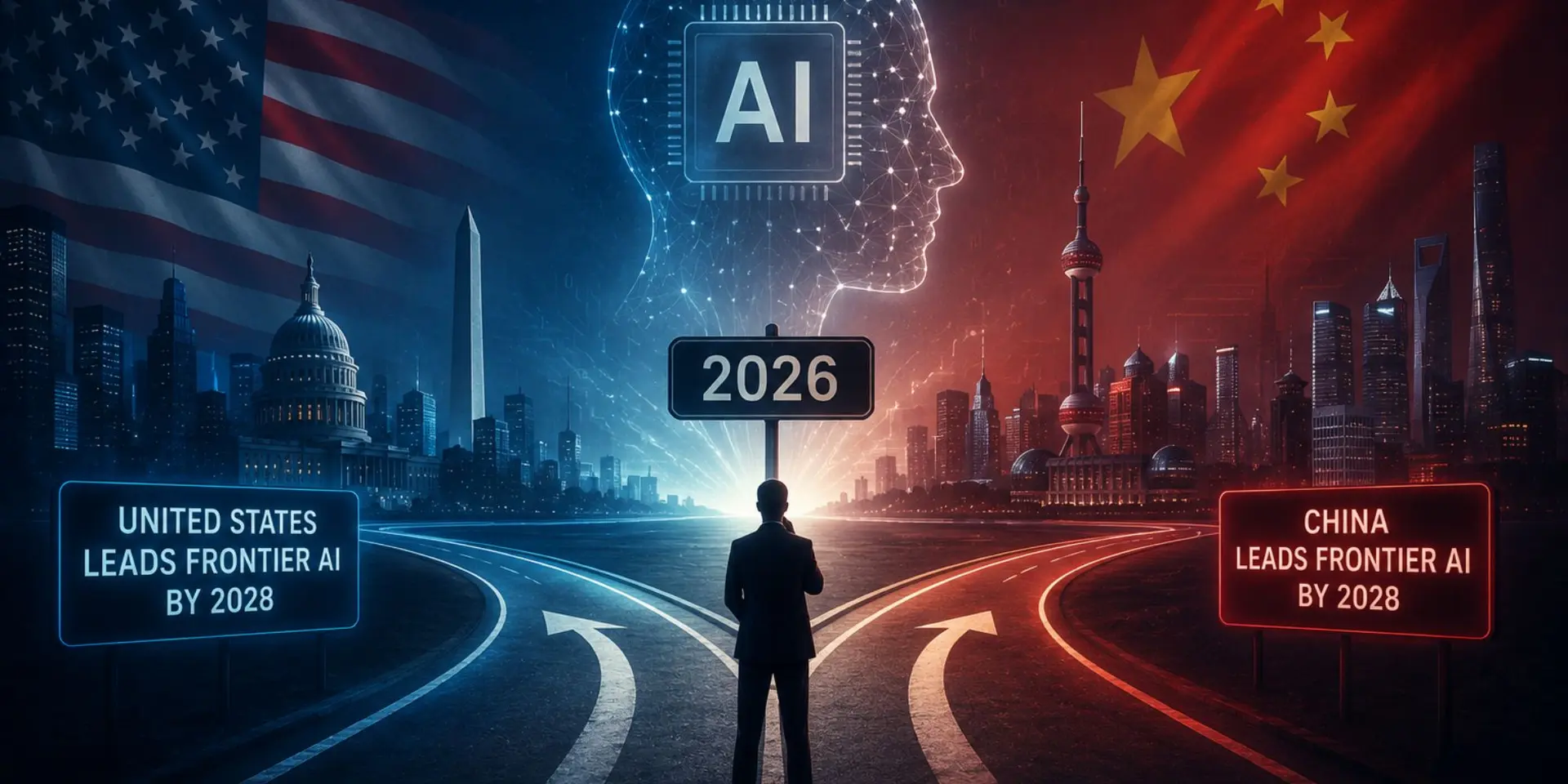

AI leadership is no longer only a technology story. It is increasingly becoming a geopolitical contest over power, infrastructure, and influence.
Anthropic has released a new policy paper arguing that 2028 could become a defining year in the global race for artificial intelligence leadership. According to the company, decisions made in 2026 may shape which countries control the standards, safety frameworks, and deployment norms for the world’s most advanced AI systems.
The paper focuses largely on competition between the United States and China. Anthropic argues that democratic nations currently hold an important lead in frontier AI, but warns that the advantage could narrow quickly if policy loopholes remain open.
Why Anthropic sees 2028 as critical
Anthropic expects transformative AI systems to emerge within the next few years. By transformative, the company means systems powerful enough to reshape industries, scientific research, national security, and public administration. In its view, 2028 represents the point where today’s strategic decisions may begin producing major global consequences.
The company argues that AI leadership will influence far more than technology markets. Countries leading in advanced AI could shape how the systems are used in healthcare, cybersecurity, finance, military applications, and government operations. Anthropic says the issue is not simply who builds the smartest models, but who determines the rules under which those systems operate.
Compute has become the centre of AI power
A major theme in the paper is compute, the advanced semiconductors and data centre infrastructure required to train and run frontier AI models. Anthropic says access to cutting-edge chips remains one of the most important factors in determining who can develop the world’s most capable AI systems.
The company notes that many critical semiconductor technologies are controlled by firms based in democratic countries, including the United States, Taiwan, South Korea, Japan, and the Netherlands.
According to Anthropic, export controls on advanced chips and semiconductor manufacturing tools have helped preserve the current lead held by the US and its allies. However, the company warns that the position is not guaranteed.
The paper highlights several risks that could weaken existing restrictions, including chip smuggling, overseas data centre access, and model distillation. Distillation refers to techniques where one AI system learns to imitate another model’s outputs, potentially allowing competitors to reproduce advanced capabilities without the same level of investment.
Two possible futures for AI leadership
Anthropic outlines two broad scenarios for 2028. In the first scenario, the United States and allied democracies maintain a lead of roughly 12 to 24 months in frontier AI development.
The company says this outcome would require tighter enforcement of export controls, stronger protection against unauthorised chip access, and limits on large-scale model copying. In this future, democratic nations retain greater influence over global AI governance and safety standards.
In the second scenario, China becomes nearly equal to the United States in frontier AI capability. Anthropic argues this could happen if policy gaps remain unresolved or if advanced compute restrictions weaken over time. The AI firm says this environment could create stronger competitive pressure to release increasingly powerful systems rapidly, potentially reducing attention on safety and coordination.
Anthropic frames AI competition across four fronts
Claude-maker describes the global AI race across four major areas:
- Intelligence, meaning who develops the most capable models
- Domestic adoption across government and business
- Global distribution of AI infrastructure and systems
- Resilience to economic and political disruption caused by AI
Anthropic notes that raw model intelligence is only one part of the equation. A country with slightly weaker systems could still gain substantial influence if its AI platforms become widely adopted internationally because of lower costs or easier deployment.

What policymakers are being urged to do
Anthropic calls for stronger safeguards around advanced chips, better enforcement against smuggling, and tighter restrictions on foreign access to export-controlled compute infrastructure. The company also supports measures aimed at limiting unauthorised model distillation and protecting frontier AI capabilities.
At the same time, Anthropic says international dialogue on AI safety should continue. However, it argues that such engagement is more likely to succeed if democratic countries maintain a clear technological advantage.
The broader takeaway from the paper is that the future of AI dominance may depend as much on supply chains, infrastructure, policy, and alliances as on algorithms themselves. If Anthropic’s forecast proves accurate, the next two years could help determine which values and governance models shape the most powerful AI systems of the future.