


TSMC Sees AI Creating a $1.5 Trillion Semiconductor Market by 2030
TSMC says the global semiconductor market could cross $1.5 trillion by 2030 as AI drives demand for advanced chips and packaging.

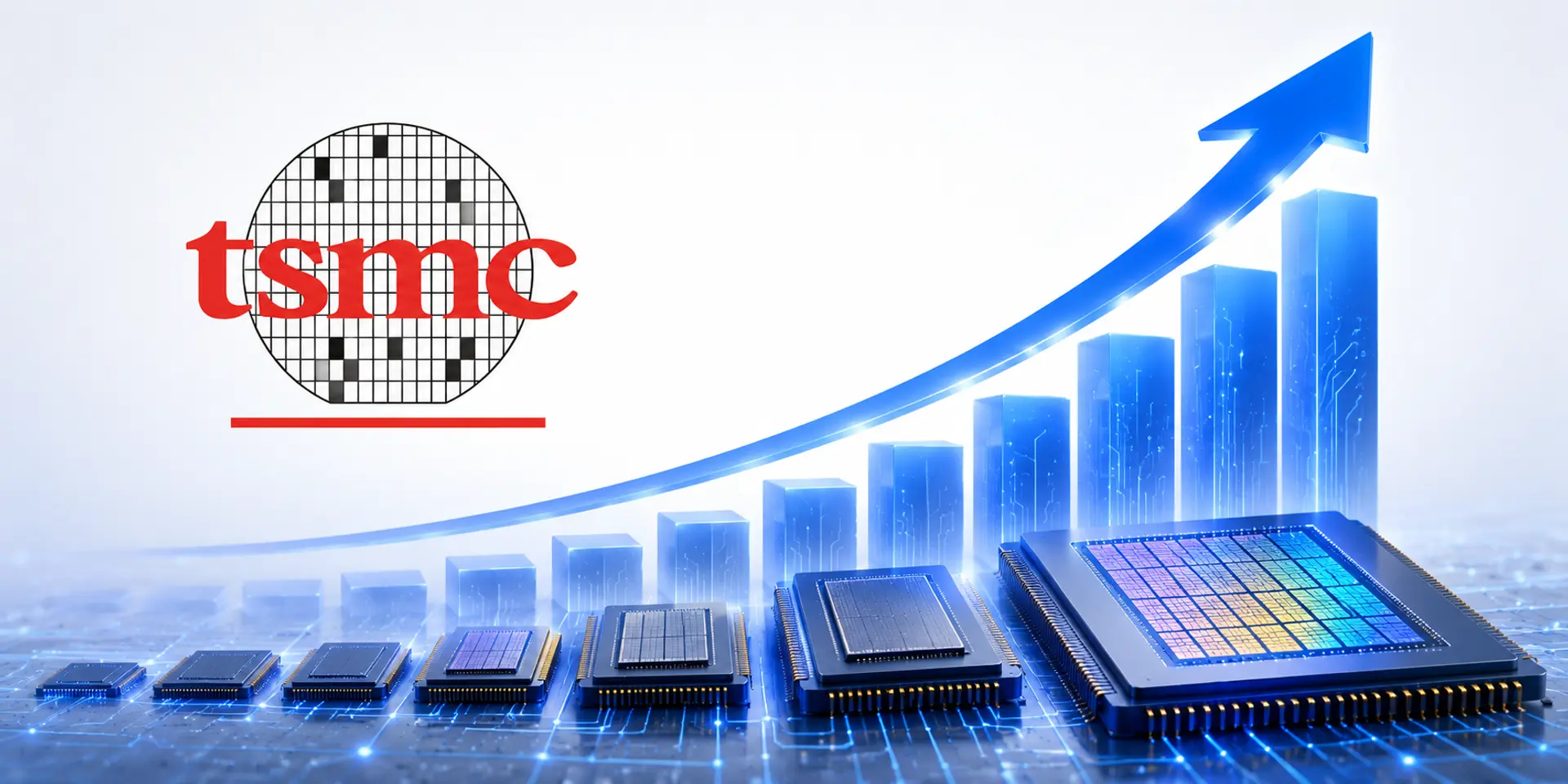

Artificial intelligence is driving a new chip boom, and Taiwan Semiconductor Manufacturing Company (TSMC) says the biggest wave of growth is still ahead.
TSMC, the world’s largest contract chipmaker, now anticipates the global semiconductor market to surpass $1.5 trillion by 2030, sharply raising its earlier forecast of around $1 trillion. The revised projection, revealed ahead of the company’s technology symposium in May 2026, reflects surging demand for AI infrastructure, high-performance computing, and advanced chip packaging.
The outlook signals how central semiconductors have become to the AI economy. From data centres and cloud infrastructure to AI assistants and enterprise software, nearly every major technology trend now depends on increasingly powerful chips.
AI becomes the chip industry’s growth engine
According to TSMC’s perspective, AI is expected to replace smartphones as the semiconductor industry’s primary growth driver over the coming decade. The chip-maker revealed demand is accelerating for advanced processors capable of training and running large AI models.
That includes graphics processing units, AI accelerators, high-performance CPUs, and the advanced packaging systems required to connect them efficiently inside data centres. Hyperscalers such as Microsoft, Amazon, Google, and Meta are now spending hundreds of billions of dollars on AI infrastructure, creating long-term visibility for semiconductor suppliers.
TSMC sits at the centre of that ecosystem because it manufactures chips for many of the industry’s biggest players, including Nvidia, Apple, AMD, and Qualcomm.
Industry reports indicate that AI workloads are also driving demand for high-bandwidth memory, advanced packaging technologies such as CoWoS, and newer fabrication nodes capable of supporting more powerful AI systems.
High-performance computing takes the lead
TSMC’s latest projections suggest that high-performance computing will account for a major share of future semiconductor spending. Moreover, market analyses tied to the company’s forecast indicate that, by 2030, roughly 55% of the projected $1.5 trillion market could come from high-performance computing applications.
That would place AI and compute-heavy infrastructure at the heart of semiconductor growth. The shift marks a major change from the smartphone-driven cycle that dominated the industry for much of the last decade.
AI infrastructure requires significantly more compute density, memory bandwidth, and packaging complexity than traditional consumer electronics. That increases the value of leading-edge manufacturing capabilities, an area where TSMC currently holds a dominant position.
Reports suggest the company is aggressively expanding advanced-node production and packaging capacity to keep pace with demand. New facilities in Arizona, Japan, and Germany are part of that broader global expansion strategy.
Why investors are closely watching TSMC
The company’s forecast is also reinforcing investor confidence around the broader AI supply chain. TSMC’s revenues and margins have surged alongside growing AI demand. Reports from recent quarters showed strong increases in earnings and factory utilisation rates as customers rushed to secure capacity for future AI chips.
Industry observers say the company benefits from a unique position in the semiconductor ecosystem. While companies like Nvidia design AI accelerators, TSMC manufactures many of the world’s most advanced chips at scale.
That manufacturing leadership has become increasingly important as AI models grow larger and more compute-intensive. It is also important to note that AI-related contracts are becoming longer-term and more predictable, allowing chipmakers to plan capacity expansion more confidently than during previous consumer-driven cycles.
Asia’s AI chip dominance grows stronger
The AI-driven semiconductor boom is also shifting the global centre of gravity toward Asia. TSMC remains the world’s most valuable semiconductor company, while firms such as Samsung Electronics and SK Hynix have also seen massive gains driven by AI memory demand.
Recent market reports described Asia as increasingly central to the global AI hardware supply chain. For Taiwan and South Korea in particular, the AI infrastructure race is becoming an economic growth engine as global technology companies compete for advanced chips and packaging capacity.
At the same time, governments are paying closer attention to semiconductor manufacturing because AI systems are now viewed as strategic infrastructure alongside energy and telecommunications networks.

The next challenge is scale
Despite the bullish outlook, scaling the semiconductor industry to support a $1.5 trillion market will not be straightforward. Advanced chip manufacturing remains extremely capital-intensive, requiring billions of dollars in fabrication plants, specialised equipment, and packaging facilities.
Supply chains for advanced lithography systems, memory, and substrates also remain tight. TSMC itself has highlighted the need for continued investment in advanced nodes, packaging technologies, and manufacturing expansion to meet future AI demand.
For the broader technology industry, the message is increasingly clear. AI is no longer simply a software story. The next phase of the AI race will depend heavily on who can build, power, package, and scale the chips behind it. TSMC’s latest projection shows how large that opportunity could become by the end of the decade.