


Anthropic CEO Dario Amodei lauds surging AI momentum in India
Anthropic’s India revenue run-rate has doubled over the last four months as CEO Dario Amodei hailed the nation’s technical intensity.

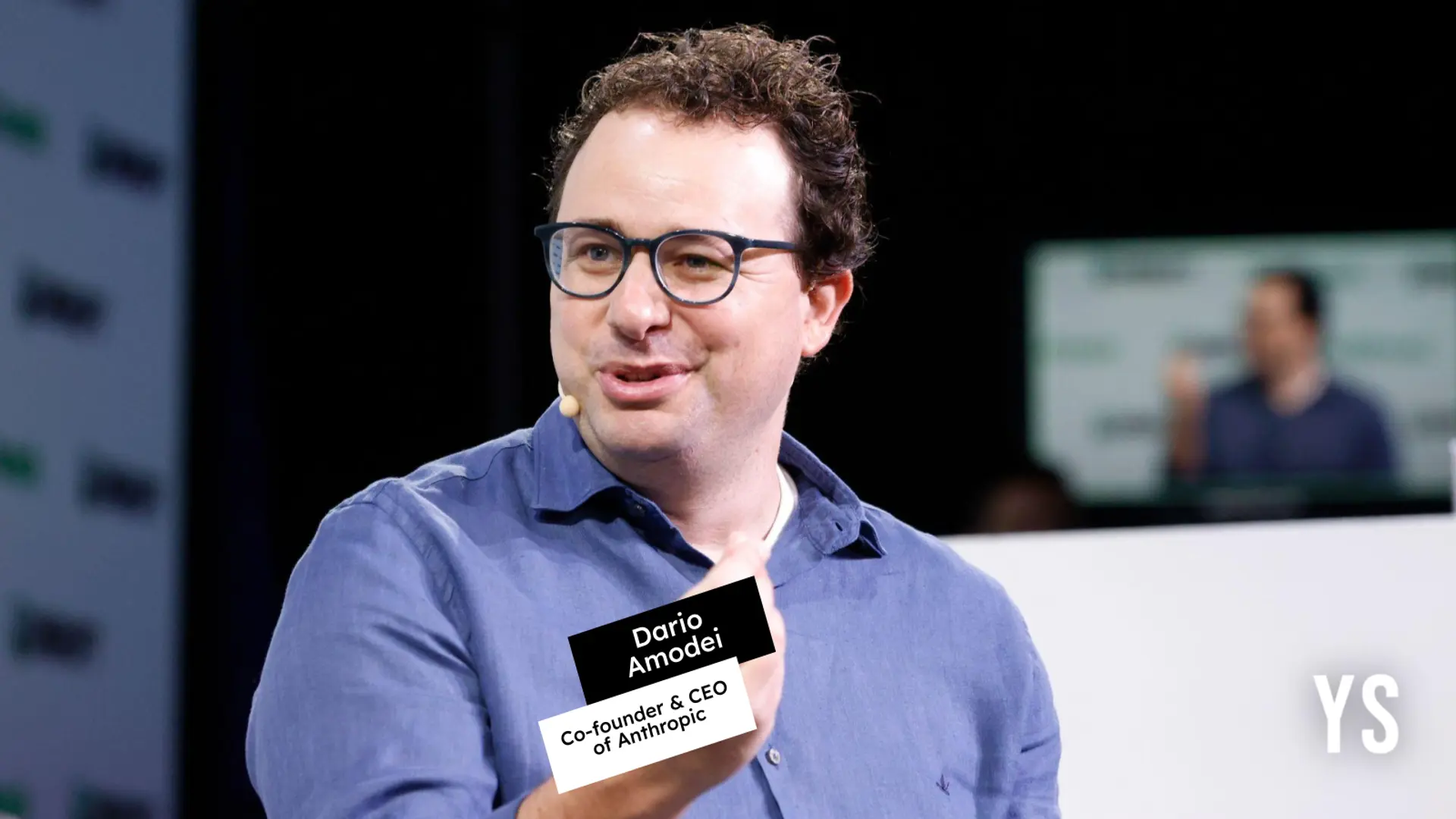

As Anthropic opened its India office, Co-founder and CEO Dario Amodei highlighted the company’s surging business momentum in the country and the rapid uptake of its agentic coding tool across the developer ecosystem.
Speaking at Anthropic’s Builder Summit at Bengaluru, Amodei noted that the AI firm’s revenue run-rate within India has doubled over the last four months. Claude Code, Anthropic’s agentic coding tool for developers, may have grown even faster, he added.
“It’s really incredible to see the rate at which things are happening. It mirrors the general progress of the explosion in Claude models and coding models. But it’s even more extreme in India than we have seen in other places in the world,” Amodei explained.
“One of the most unique things about India is maybe the technical intensity of the usage of Claude. We have always seen a mixture of casual consumer use and prosumer and developer use,” Amodei noted.
Anthropic, which announced its India plans last October, appointed former Microsoft India chief Irina Ghose as its India managing director in January. According to Ghose, the Indian market is expanding, with 6% of Anthropic’s global AI conversations originating here, and half of those are focused on computational and mathematical tasks.
The growing intensity extends into the public sector, where the Ministry of Statistics is currently building a specialised server to query economic data. Such agility is rare, as government bodies elsewhere typically do not move this fast, as per the Anthropic chief.
India’s position as the world’s largest democracy, combined with the largest working-class population and a proven track record of digital public infrastructure, creates a powerful foundation for AI-driven social benefit.
“The efficiency of the market here, the energy of very large numbers of people wanting to buy something and build something. That greatly exceeds what I’ve seen anywhere else,” remarked Amodei.
This energy is being directed toward solving local challenges, such as the Adalat AI project for legal accessibility and the EkStep Foundation’s work with small-scale farmers.
The sheer demographic weight of the country serves as a high-speed laboratory for experimentation, allowing developers to iterate on a scale that other markets cannot replicate.
“The pure scale allows us… to learn things very quickly that you can’t do in smaller markets. And so the ability… for entrepreneurs, for builders, to learn quickly and fail fast, here exceeds what we see in many other places,” explained Amodei.
Global AI business
These local insights reflect a broader global shift where AI is diffusing through society at a speed with no precedent in modern history. The strategy for survival involves anticipating future capabilities rather than reacting to current ones.
The Anthropic chief explained, “You shouldn’t build for where the AI models are now. You should build for where they are in a year or two. Don’t build for step four out of a ten-step workflow. Try and do the whole workflow, even if the AI model isn’t quite capable of it yet.”
However, this rapid progress brings risks, including the potential for coding models to be misused for cyber-attacks, and the certainty of significant economic turmoil even as great value is produced. To build durable businesses in this volatile environment, the Amodei pointed toward the intersection of AI and the physical world.
The most resilient competitive advantages will likely be found in specialised fields like biotechnology and medicine, which require deep expertise and navigation of regulatory systems.
“The things that really are going to have the biggest moats are those that relate to the physical world or to kind of something real in the world of atoms, or just something that’s not easy to do, a skill set that not that many people have,” he said.
The plan is to move away from addictive, short-term software designs and toward AI that serves long-term human interests. In a future society where humans and AI coexist, individuals will likely transition into supervisor roles, using AI to accelerate their productivity by a factor of 10x to 100x, believes Amodei.
Last week, the AI research firm behind the Claude models, raised $30 billion in a Series G funding round, taking its post-money valuation to $380 billion. Anthropic said the investment will accelerate frontier research, product development, and infrastructure expansion.
In under three years, the company said, it has grown its revenue run-rate to $14 billion, maintaining a consistent growth rate of over 10x annually during that period. This rapid expansion is particularly evident in the high-end enterprise market.
A primary catalyst for this success is the emergence of agentic coding. Claude Code, which was launched publicly in mid-2025, has already reached a revenue run-rate of $2.5 billion dollars, according to Anthropic.