


Building AI for real people means starting with their language
Roughly 90% of Indians don’t speak English even as a third language. Yet many digital services in the country, from job applications to customer support, default to English or to rigid app-based workflows that assume a certain level of tech fluency.



Many years ago, I stayed at a guest house in Mysore. It was highly recommended, and the agent assured me everything would be taken care of—breakfast, cleaning, and transport. “If you need anything”, he added, “just let the manager know.”
One small detail was left out: the manager only spoke Kannada. I knew none. And back then, there was no Gemini, no translation app, just me smiling awkwardly and hoping gestures would do the trick.
That week has stayed with me not for the sights of Mysore but for the quiet discomfort of being misunderstood. And I see that same disconnect today echoed in many of the AI platforms being built for India. They look sleek and come with powerful features, and yet they speak a language most Indians don’t.
The illusion of access
Roughly 90% of Indians don’t speak English even as a third language. Yet many digital services in the country, from job applications to customer support, default to English or to rigid app-based workflows that assume a certain level of tech fluency.
This gap between design and reality isn’t new. A few years ago, while working on geocoding in India, I realised something startling: there is no standardised way India writes addresses. “Opposite the temple”, “near the banyan tree”, or even “don’t ring the bell”—our addresses are descriptive, contextual, and deeply human. Global geocoding tools failed not because the technology was bad, but because it couldn’t understand how we communicate.
Language is no different. And communication is the real infrastructure of intelligence.
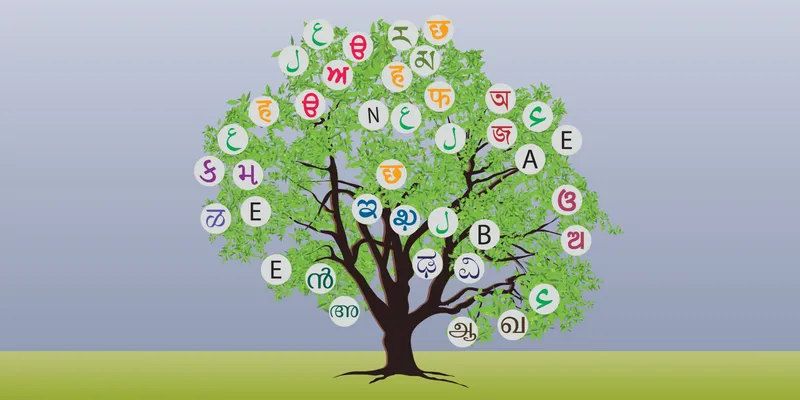
Why WhatsApp, not apps?
This is the reason we chose WhatsApp as the core interface for our AI hiring tools. It’s not just a messaging app, it's the internet for many Indians. Downloading a new app, navigating login flows, and learning how to use it are still barriers, especially in semi-urban and rural contexts. But opening a WhatsApp message and responding? That’s second nature.
Even so, text has its limits. Tone, hesitation, confidence, and clarity, these don’t always come through in typed words. This is where voice AI steps in. The idea sounds simple: let people speak in their own language.
Building for India’s noise
Popular voice models even today are largely built for English. Force them to speak an Indian language, and the result is often stilted, robotic, or just plain wrong. And when it comes to Indian conditions—low bandwidth, noisy surroundings, dropped signals, and frequent interruptions—these models often break.
One major challenge is handling user interruptions. In a noisy kirana store or a factory floor, is that “hmm” an actual response, a background voice, or just static? These are not just edge cases; they're the rule.
And yet we found workarounds. Not by reinventing voice AI from scratch, but by deeply customising it. We trained our models to work with real Indian accents, interruptions, and dialects. Crucially, we made them speak in Hinglish because that’s what people actually speak.
The human in the machine
This shift did more than improve accuracy; it changed the relationship users had with the system.
When users spoke in their own hybrid tongue, mixing Hindi and English as they naturally would, they responded more confidently. Completion rates tripled. People spoke longer. They were more truthful. They weren’t just interacting with a tool; they were having a conversation.
And this wasn’t anecdotal. A 2023 KPMG-Google study found that 68% of Indian internet users trust local-language digital content more than English. Voice isn’t just a feature. It’s the bridge to trust.
The deeper intelligence
AI is often praised for its speed, accuracy, and scale. But in India, the smarter machine is the one that listens better. Not just technically, but culturally and contextually. One that can tell the difference between “achha” (approval), “achha?” (surprise), and “achha…” (suspicion).
The future of AI in India isn’t about building louder machines. It’s about building listening machines. Systems that can not only understand what’s being said, but also how and why.
Because in a country as complex as ours, intelligence isn’t just accuracy, it's empathy. And empathy begins with language.
Speaking the language of trust
For AI to truly serve India, it cannot remain a tool that demands adaptation from the user. It must adapt itself to how we speak, how we think, and how we live. Designing AI for India is not just about translation; it's about the transformation of voice, context, and understanding. It means building systems that are not just intelligent but also inclusive.
Because the next 500 million Indians entering the digital economy won’t come speaking the Queen’s English or using flagship smartphones. They’ll come with their own languages, accents, interruptions, and needs. And if our technology cannot speak to them as they are, it will not speak to them at all.
In the end, intelligence is not just about solving a problem—it’s about recognising whose problem it is and speaking their language to solve it together.
(Shantanu Bhattacharyya is Co-founder and CTO of Hunar.ai—focused on addressing the growing challenges in India's volume recruitment ecosystem.)
Edited by Kanishk Singh
(Disclaimer: The views and opinions expressed in this article are those of the author and do not necessarily reflect the views of YourStory.)