


ChatGPT Images 2.0: AI images finally get text right
OpenAI’s new image model finally spells things right, and that’s just the start. It speaks more languages, works smarter, and adds a “thinking” mode for paid users.

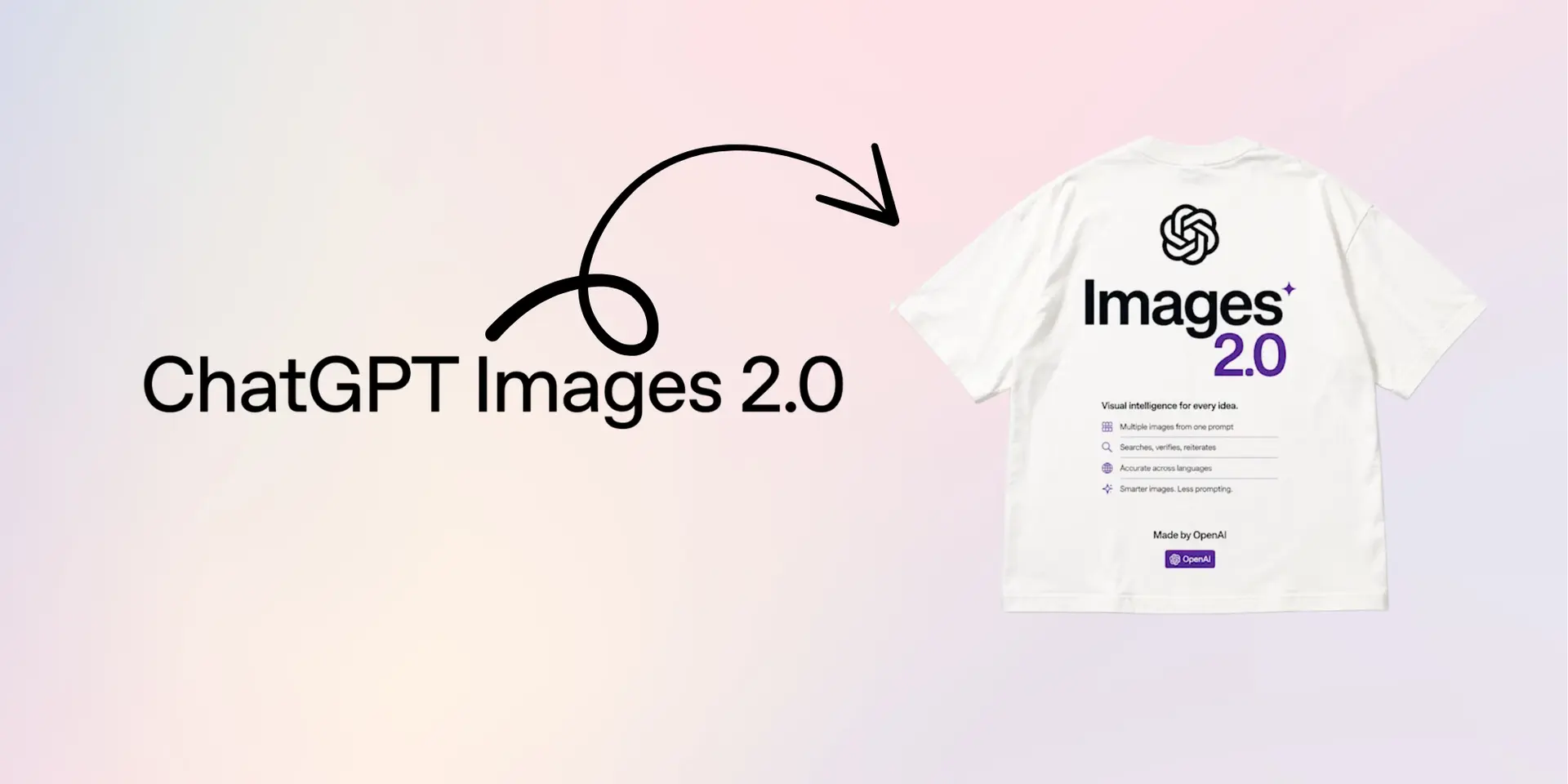

AI images can finally spell, and that changes everything. We have seen so many memes about AI tools having a big flaw. They could draw anything, except readable text, but not anymore.
OpenAI has introduced Images 2.0 inside ChatGPT, and early testing shows something surprisingly practical. The text inside the generated images actually makes sense. Menus, posters and UI mock-ups are no longer filled with gibberish. They are readable, correctly spelt and usable in real-world scenarios.
Here's everything you need to know about this latest tool!
The upgrade designers have been waiting for
This is not just a visual improvement. It solves a long-standing workflow problem. Earlier, designers had to generate images and then manually add text using separate tools. Headlines, labels and UI elements had to be stitched in later.
Images 2.0 reduces that extra step. Users can now generate visuals with built-in text that is clear and accurate. For marketers and creators, this means fewer tools and faster output.
What is new under the hood?
OpenAI says the model includes what it calls “thinking capabilities”. So, the system can analyse prompts more deeply, generate multiple variations and cross-check outputs before finalising an image. This leads to better alignment between what users ask and what they get. The model also supports more formats.
Users can create multi-panel comics, marketing creatives and layouts across different aspect ratios. Output quality goes up to 2K resolution, which makes it suitable for more professional use cases. There is also a split in access. A standard version is available to all users, while a more advanced reasoning mode is reserved for paid subscribers.
Why was text such a hard problem?
AI image models have traditionally struggled with text for a simple reason. They generate images by reconstructing patterns from noise. This process works well for shapes and colours, but not for precise letterforms.
Spelling requires consistency, and consistency is difficult when the model treats text as just another visual pattern. Images 2.0 appears to handle this better. While OpenAI has not shared details about the underlying architecture, the outputs suggest stronger instruction-following and improved handling of typography.
A big win for multilingual markets
One of the most important upgrades is support for non-Latin scripts. The model now performs better with languages like Hindi, Bengali, Japanese and Korean. For markets like India, this is a major step forward.
Creating regional creatives has often required manual adjustments or separate tools. With improved multilingual support, teams can generate visuals that are ready for local audiences in one go. This could significantly speed up campaigns across diverse regions.
Where it still falls short
Now, there are major improvements; however, the model is not perfect. Its current knowledge is only up to December 2025. This means any text related to recent events or updates may need manual verification.
Generation speed can also vary. More complex outputs may take a few minutes to produce.
And since OpenAI has not disclosed the underlying architecture, comparisons with competing tools are based on observed results rather than technical benchmarks.
The new AI battleground
Image 2.0's debut might be a sign of a new trend in the industry. Instead of assisting one part of the creative process, they are starting to handle entire workflows. For users, expectations will change. Readable text inside images will no longer be a bonus. It will be the baseline. And for the first time, AI-generated visuals might not need fixing before they can be used.