



Elon Musk’s OpenAI Lawsuit Reaches Verdict
The verdict in Elon Musk’s lawsuit against OpenAI is now out, ending a closely watched legal battle with major implications for the AI industry.

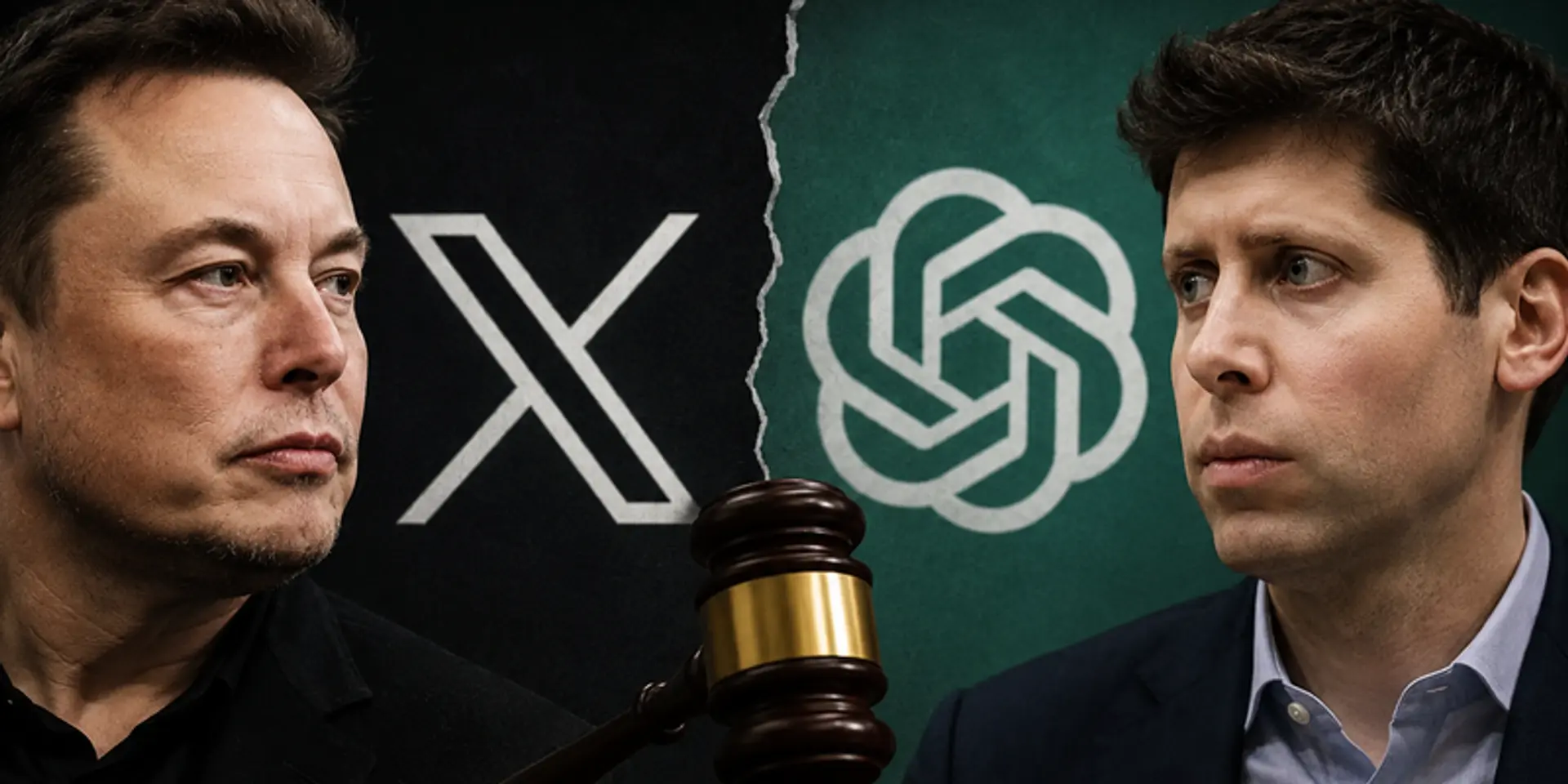

A courtroom battle between two of AI’s most influential figures has ended, but the larger debate around power, profit and public interest in artificial intelligence is only getting louder.
Elon Musk’s lawsuit against OpenAI and CEO Sam Altman was dismissed on May 18, 2026, after jurors concluded that Musk’s claims were filed too late under U.S. legal deadlines. While the ruling closes the case for now, it raised important questions about how AI companies balance idealistic missions with commercial growth.
How the conflict began
OpenAI was founded in 2015 as a research organisation focused on ensuring advanced AI benefits humanity broadly. Musk was one of its early co-founders and donors.
As AI research became more expensive, OpenAI created a for-profit arm in 2019 to attract large-scale investment while continuing to operate under a non-profit board structure. The company’s partnership with Microsoft later accelerated its commercial expansion and brought greater scrutiny to its governance model.
Musk sued in 2024, arguing that OpenAI had drifted away from its original mission. He claimed the restructuring allowed private interests to benefit from technology initially framed as a public-interest effort. OpenAI rejected those allegations, stating there was never a binding agreement requiring it to remain purely non-profit.
Why was the case dismissed?
The trial ultimately focused less on AI ethics and more on legal timing. Under U.S. law, civil claims must be filed within certain time windows known as statutes of limitations. If claims are brought too late, courts can dismiss them regardless of the broader arguments involved.
Jurors concluded that Musk delayed filing the lawsuit beyond those limits, and the judge accepted that finding. As a result, the court never fully ruled on whether OpenAI’s restructuring conflicted with its founding mission. Even so, the case forced the AI industry into a wider public conversation about accountability and governance.
Why the ruling matters
For OpenAI, the dismissal removes a major source of uncertainty. The company can continue pursuing its product roadmap and enterprise partnerships without the immediate risk of structural disruption. That stability matters in an industry where AI development depends heavily on long-term infrastructure investments, expensive computing resources and strategic partnerships.
For businesses and developers using OpenAI’s models, the decision also reduces concerns about potential legal complications affecting products or services. But Musk’s lawsuit also amplified concerns many critics already shared about the growing concentration of power within major AI companies.
The bigger issue behind the lawsuit
The case highlighted a broader tension shaping the AI industry: balancing public-interest goals with the financial realities of developing advanced AI systems. Training frontier AI models requires enormous investments in data centres, chips and engineering talent.
That has pushed many AI organisations towards hybrid structures that combine mission-driven governance with commercial funding models. The challenge is ensuring those systems remain transparent and accountable as financial stakes grow.
Questions around board oversight, investor influence and AI safety governance are likely to become increasingly important for regulators and policymakers worldwide. The OpenAI case showed how difficult it can be to preserve founding ideals once AI products become commercially dominant.

What happens next
Although the lawsuit has been dismissed, the debate surrounding AI governance is far from over. Musk could still pursue appeals or further legal action. More importantly, the trial intensified scrutiny around how AI companies operate and who ultimately controls technologies that may shape economies, labour markets and public life.
The central question remains unresolved: how should companies balance rapid AI innovation with public accountability? That debate may prove far more important than the lawsuit itself.