



Who Controls AI? Elon Musk vs OpenAI Turns Into a Power Battle
Day one in Oakland saw Elon Musk on the stand, sharp rebuttals from OpenAI’s counsel, and the court’s caution on social media as a high‑stakes battle over AI’s future unfolds.

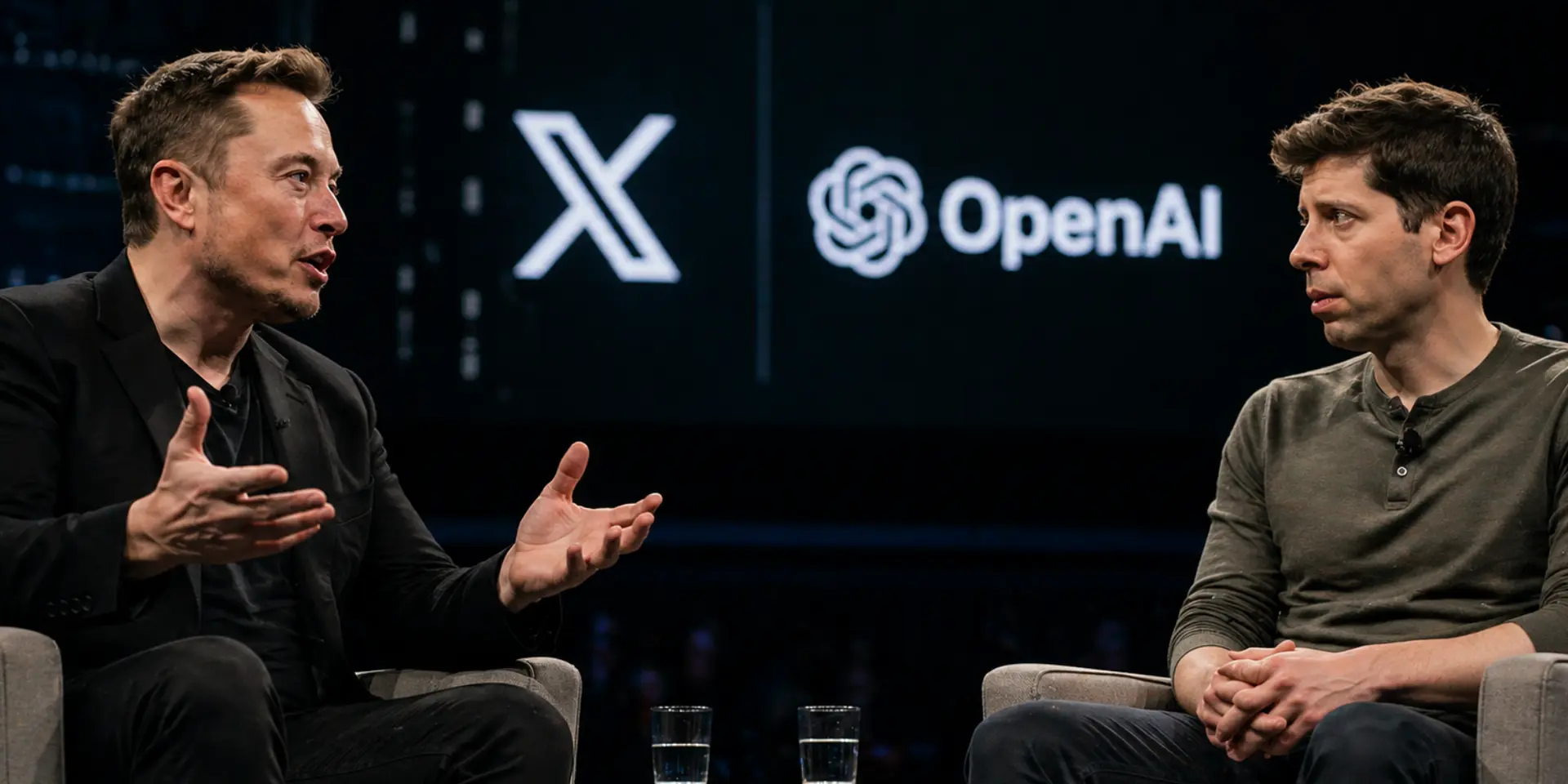

The debate around AI just got legal. What began as public criticism has now entered a courtroom.
On 28 April 2026, the dispute between Elon Musk and OpenAI opened in a federal court in Oakland, with Musk taking the stand on the first day. Jury selection was completed earlier in the week, followed by opening statements that set the tone for a closely watched trial. Here's what has happened so far!
What Musk is accusing OpenAI of
At the centre of the case is a question of mission. Musk argues that OpenAI has moved away from its original goal of building AI for the benefit of humanity. According to his claims, the organisation shifted focus after creating a for-profit arm and accepting large-scale investments.
He is seeking damages estimated between $134 billion and $150 billion. The request is unusual. Musk wants the money directed to OpenAI’s charitable arm and is also pushing for structural changes, including removing CEO Sam Altman and returning to a non-profit model.
OpenAI’s response in court
OpenAI has strongly contested these claims. Its lead counsel, William Savitt, argued that Musk himself had previously supported a for-profit structure under certain conditions. The company also stated that Musk did not fulfil earlier funding commitments.
Another point raised in court relates to timing. OpenAI’s legal team suggested that the lawsuit followed Musk’s launch of xAI in 2023, framing the dispute as partly competitive in nature.
What happened on day one
The first day centred on Elon's testimony. He spoke about OpenAI’s early days, describing his role in recruiting talent, funding the organisation and emphasising safety in AI development. His argument highlighted the potential risks and rewards of advanced AI systems.
OpenAI’s counsel responded by pointing to internal communications and historical decisions.
These exchanges indicate that the case will rely heavily on documents, emails and board-level discussions, rather than technical arguments alone.
Before the trial formally began, the judge addressed Musk’s activity on X. Judge Yvonne Gonzalez Rogers urged both sides to limit public commentary during the proceedings. While no gag order was issued, the message was clear. The courtroom is expected to remain the primary venue for arguments.
Why is Microsoft part of the case?
Microsoft is also named as a defendant. Elon's side argues that Microsoft’s multi-billion-dollar investment enabled OpenAI’s transition towards a more commercial structure. The claim suggests that this partnership played a role in shifting the organisation’s direction.
Microsoft has denied wrongdoing. Its legal team has maintained that the company acted as a responsible partner and followed proper practices throughout its involvement.
What is really at stake
This case goes beyond one company. The outcome could influence how AI organisations are structured and funded. It may also shape expectations around governance, especially for companies that start with a public-benefit mission.
There is also a financial backdrop. OpenAI’s valuation has reached significant levels, and its potential plans for public markets add another layer of importance to the case.

Key questions the trial will address
The jury will need to examine several complex issues. One question is whether OpenAI’s shift to a for-profit structure aligns with its original commitments. Another is whether Musk’s claims about control and governance hold up against documented evidence.
The role of Microsoft’s investment will also be scrutinised. In addition, the court will consider how public statements and private decisions intersect in shaping organisational direction.
The trial is expected to feature multiple high-profile witnesses. Testimony from Sam Altman and Microsoft CEO Satya Nadella is anticipated. Financier Jared Birchall is also among the early witnesses.
The proceedings are likely to cover a wide range of topics. These include corporate structure, funding decisions and the broader responsibilities of organisations working on advanced AI.
A legal test for the AI industry
AI is moving from research labs into mainstream systems that affect economies and societies. As that happens, questions around governance, accountability and intent are becoming more prominent. The Musk versus OpenAI case brings these issues into focus. Its outcome may not settle every debate around AI. It will, however, set an important reference point for how such disputes are handled in the future.