



Fighting AI with AI: This bootstrapped Pune startup is making deepfake detection easier
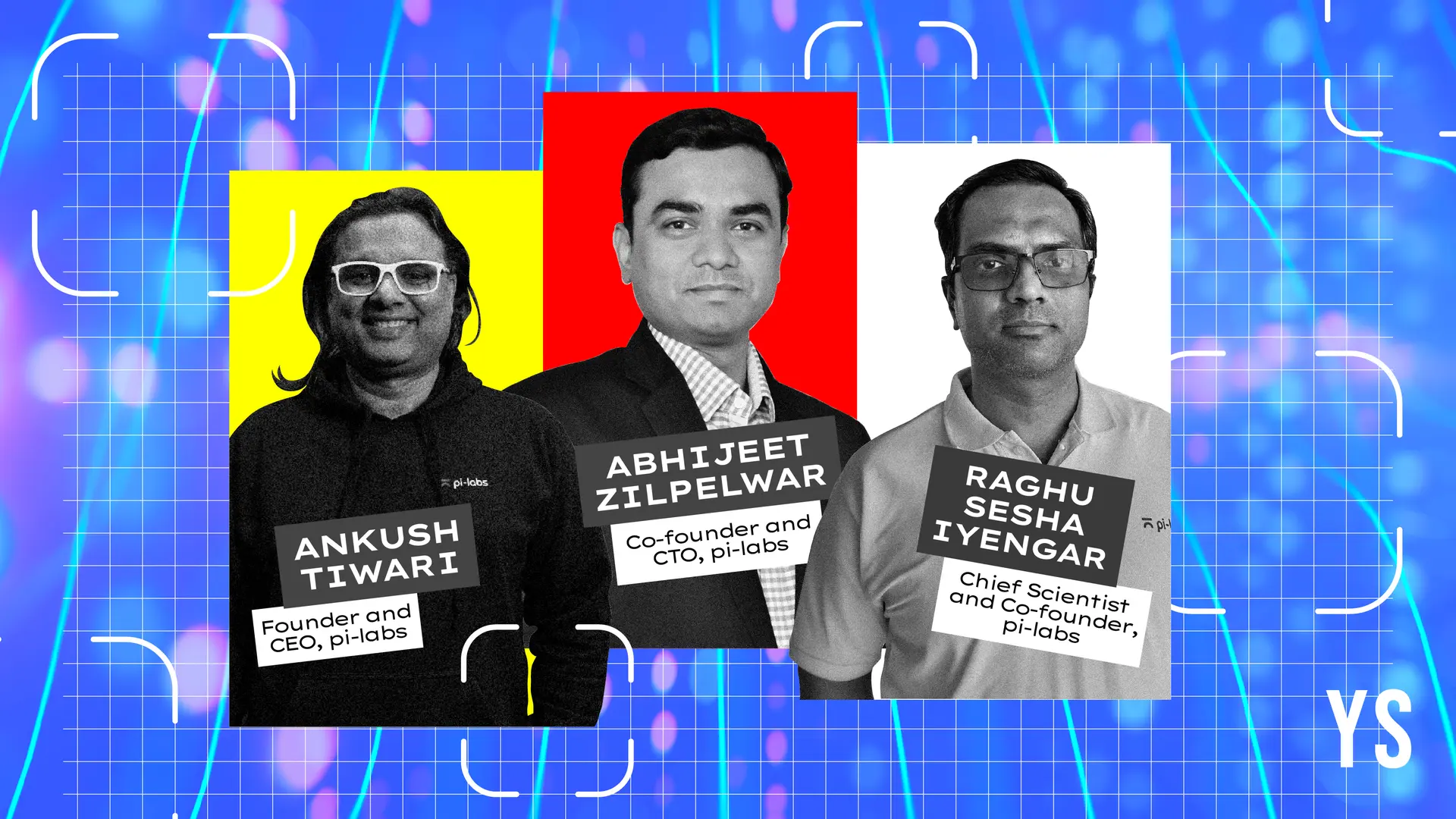
Founded by Ankush Tiwari, Abhijeet Zilpelwar, and Raghu Sesha Iyengar, Pune deeptech startup pi-labs is building defensive AI systems to combat a new generation of threats, including deepfakes, financial fraud, and disinformation.


Recently, an individual used an AI-generated voice to impersonate US Secretary of State Marco Rubio to contact three foreign ministers and two US officials. Similar instances have also been reported in India, with many deepfake videos of celebrities and politicians, including Prime Minister Narendra Modi, circulating widely.
Deepfakes—AI-generated video or audio designed to mimic real people—are fast becoming one of the most concerning offshoots of generative AI technology. From impersonation to tampering with legal evidence, spreading misinformation during elections, and causing financial fraud, the misuse of synthetic media poses serious risks to businesses, law enforcement, and civil society.
Confronting these emerging threats head-on is Pune-based deeptech startup pi-labs. Leveraging AI-powered cyberforensics, pi-labs is building defensive technologies designed to detect and counter synthetic media, especially deepfakes.
Cyberforensics refers to the practice of extracting information, analysing the data, and gaining intelligence. This data is specific to activities that one can present in a court of law as a structured chain of evidence.
“We use AI to fight AI. Our system is like an antivirus—constantly evolving. We’ve developed multiple proprietary algorithms to detect synthetic modifications in video, audio, and images,” Ankush Tiwari, Founder and CEO of pi-labs, tells YourStory.
Tiwari, a serial tech entrepreneur with experience in global cybersecurity ventures, teamed up with Abhijeet Zilpelwar (CTO and Co-founder) and Raghu Sesha Iyengar (Chief Scientist and Co-founder), who bring domain expertise in scalable AI systems and research-led innovation, to begin pi-labs in 2023.
“We always ask: what technologies will grow exponentially in the next 5-10 years, and how can we build safeguards around them? With AI, it was clear we had to start by addressing deepfakes,” he says.
AI-led offerings
The deeptech startup offers a suite of advanced tools such as Authentify, pi-scout, and pi-sense, designed to tackle deepfakes, disinformation, and the overwhelming complexity of digital evidence.
pi-labs’ technology stack caters to sectors, including law enforcement and intelligence agencies, as well as the enterprise sector, especially the BFSI segment.
“These systems are built for real-world deployment—whether it’s helping police verify evidence, enabling enterprises to prevent impersonation scams, or assisting intelligence agencies in tracking disinformation,” explains co-founder Tiwari.

Quick fashion startup Blip shuts shop after under a year
Authentify: pi-labs' flagship deepfake detection engine leverages AI++ techniques to identify synthetically generated content across video, audio, and images. According to Tiwari, it is the most widely deployed solution of its kind in India, helping central and state law enforcement agencies verify the authenticity of evidence at scale, while enabling enterprises to prevent impersonation fraud.
pi-scout: This AI++ driven unified data lake and analytics platform simplifies the complexity of digital investigations. By fusing siloed datasets and managing high volumes of structured and unstructured data, pi-scout accelerates decision-making and supports AI-powered investigative workflows.
pi-sense: The platform uses advanced video analytics to detect critical events, track predefined objects, and provide tamper-proof evidence verification, enabling faster investigations and operational efficiency for law enforcement agencies.
All pi-labs’ products are delivered via a SaaS-based model and can be deployed on cloud, on-premise, or private infrastructure, offering clients flexible integration based on their requirements. “We have an annual pricing model based on SaaS, and we provide custom pricing for each customer based on the use case and deployment model,” Tiwari says, without disclosing their revenue figures.
Backed by deep R&D, the startup has filed five global patents, published peer-reviewed work, including two IEEE research papers, and maintains strategic partnerships with global leaders like NVIDIA (via the Inception Program) and Dell (through its OEM Partner Program).
Market opportunities and the way ahead
The Indian cybersecurity market reached $9.8 billion in 2024. Looking forward, IMARC Group expects the market to reach $36.8 billion by 2033, exhibiting a growth rate (CAGR) of 15.8% during 2025-2033.
Amidst this, pi-labs is stepping into fill a critical gap in the market—one where homegrown innovation, built for scale and accuracy, is urgently needed. “Global leaders like Palo Alto Networks or Zscaler are run by Indians, but are headquartered elsewhere. We want to change that and build a solid, homegrown cybersecurity company,” Tiwari explains.
Despite formally launching in 2024 after a year in stealth, pi-labs is already conducting pilots in the Middle East and Africa, while increasing its sales through an exclusive partner-driven model in India. The startup has over 10 clients in law enforcement agencies and the defence sector.
“We're also building a strong reseller network. We only sell through partners, not directly. We began our enterprise sales motion in January 2025 and have signed partnerships with companies like Finacus Solutions (for video KYC) and ACCOPS (for cybersecurity and biometrics). More partnerships will be announced in the next quarter,” Tiwari adds.
While the company remains bootstrapped and customer-funded for now, in the next six months, pi-labs plans to launch two new AI-based products and expand deeper into Southeast Asia. “We will also be present at GISEC, a major security conference in the Middle East, next month,” says Tiwari.
Edited by Suman Singh