



Google's Gemini Robotics 2 gives robots more human-like movement
Google DeepMind wants robots to move and adapt more like humans. Here's how Gemini Robotics 2 brings that vision closer.

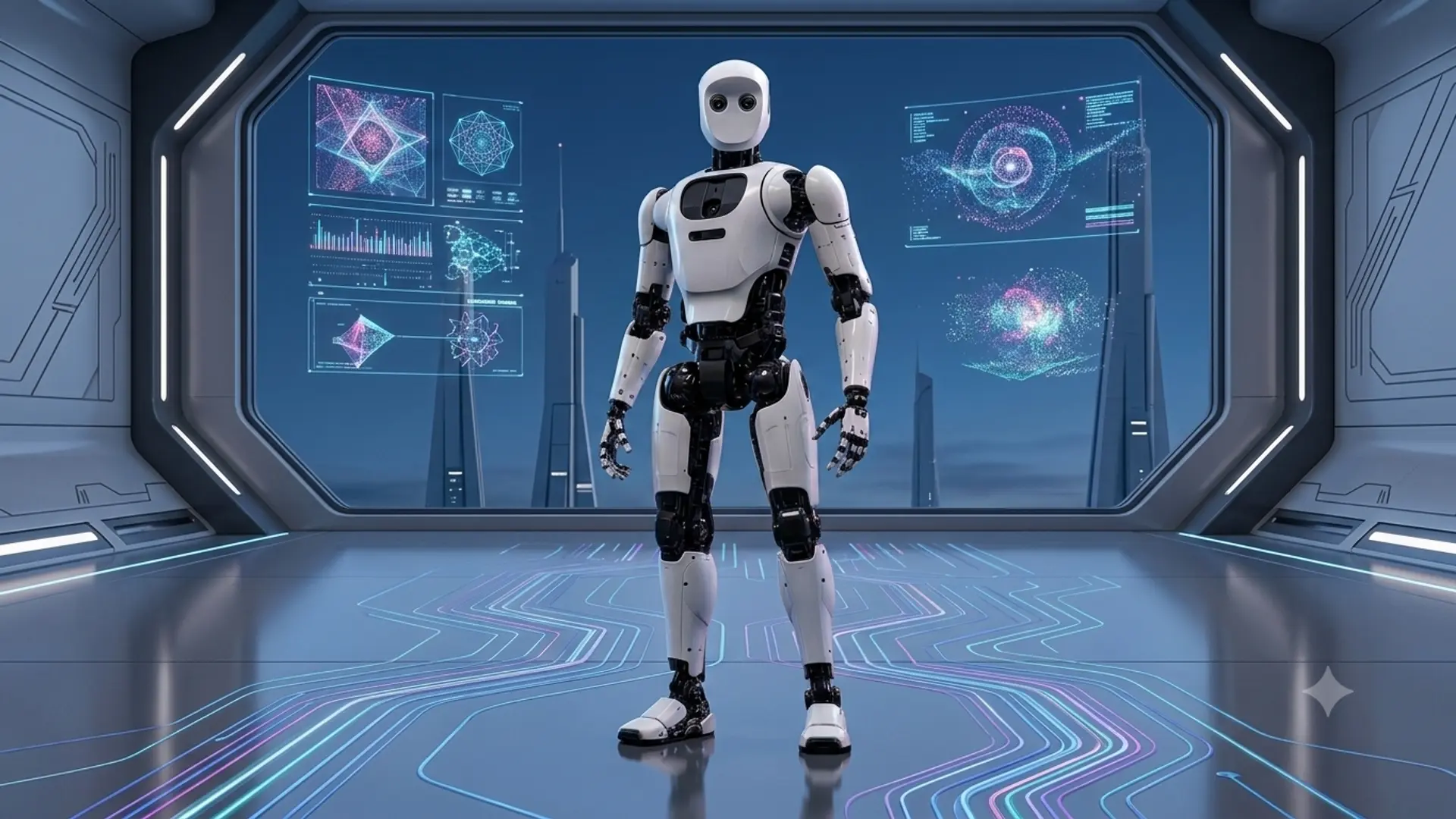

Teaching a robot to think is hard. Teaching it to move is even harder.
That's the challenge Google DeepMind is trying to solve with Gemini Robotics 2, its latest family of AI models for robots. Announced on 30 July 2026, the models are designed to help robots understand instructions, reason about their surroundings and coordinate their entire bodies to perform real-world tasks.
Instead of following fixed routines, Gemini Robotics 2 enables robots to adapt to changing environments, bringing them a step closer to moving and interacting with the world more like humans.
A new generation of robotics AI
The release introduces three specialised AI models, each responsible for a different part of robotic intelligence. Gemini Robotics 2 helps robots make sense of what they see and hear, then execute the right physical response.
Gemini Robotics ER 2 focuses on embodied reasoning, allowing robots to understand their environment, communicate with people and plan multi-step tasks. Completing the lineup is Gemini Robotics On-Device 2, which runs directly on robotic hardware, reducing dependence on cloud computing.
Together, these models enable robots to analyse what they see, decide what to do next and carry out complex actions with greater independence.
Teaching robots to use their whole bodies
One of the biggest advances is whole-body control. Previous AI systems often focused on robotic arms or tabletop tasks. Gemini Robotics 2 expands those capabilities by enabling robots to walk, crouch, stretch, bend, reach and manipulate objects while navigating real-world environments.
Google DeepMind demonstrated these capabilities using Apptronik's Apollo 2 humanoid robot. In demonstrations, the robot walked through rooms, picked up objects and placed them in designated locations while responding to changing surroundings.
Although movement speed still has room for improvement, the technology represents a significant step towards robots that can operate in spaces designed for humans rather than carefully controlled industrial settings.
Better dexterity and teamwork
Gemini Robotics 2 also improves robotic dexterity, enabling more precise hand movements. Google DeepMind tested the model using advanced robotic hands, including the 22-degree-of-freedom SharpaWave hand and two-finger grippers on the Franka Duo platform.
The robots successfully performed tasks such as tying knots, sealing Ziploc bags, tightly packing objects and completing delicate insertion tasks.
The company also introduced stronger multi-robot coordination through Gemini Robotics ER 2. The system allows multiple robots to plan long tasks together, monitor progress, recover from mistakes and divide work more efficiently.

Hachidori Robotics builds warehouse robots that need no tracks, magnets or shutdowns
Faster responses with on-device AI
Gemini Robotics On-Device 2 allows robots to process information locally instead of relying entirely on internet connectivity. This enables faster decision-making and makes robots more reliable in environments with limited or unstable network access.
Google DeepMind says the model can also be adapted to different robotic platforms in just a few hours using fewer than 200 training examples, making deployment more practical for developers and hardware manufacturers.
While fully autonomous household robots are still some way off, Gemini Robotics 2 demonstrates how AI is steadily transforming robots from machines that follow fixed instructions into systems capable of understanding, adapting and acting in the physical world with increasing independence.