



India’s first 3D chip packaging unit rises in Odisha
India announces its first 3D semiconductor packaging unit in Odisha, boosting AI, 5G and defence manufacturing ambitions!

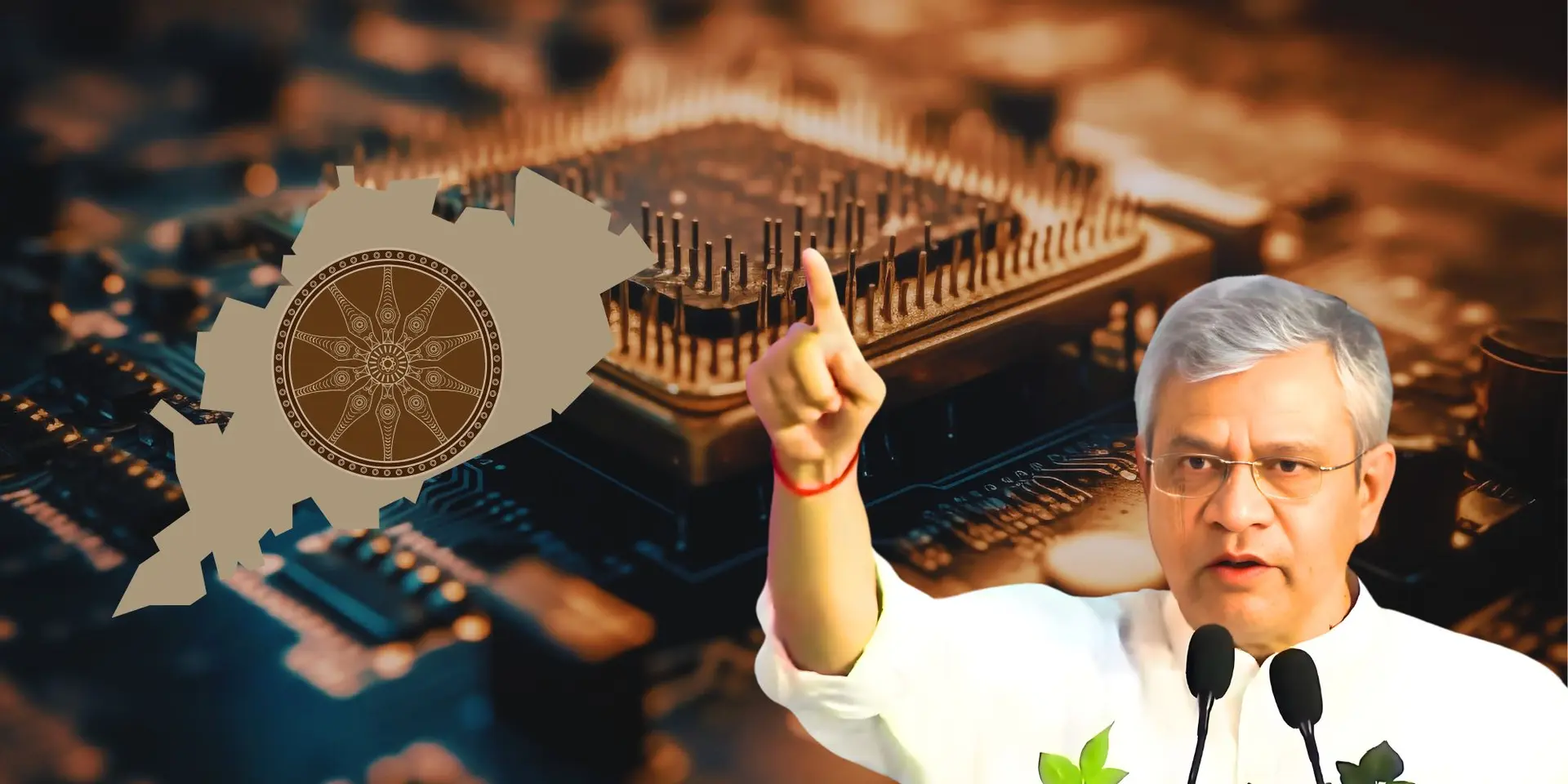

India’s push to build a complete semiconductor ecosystem has taken a decisive turn. On 19 April 2026, the country marked a significant milestone with the groundbreaking of its first advanced 3-dimensional chip packaging unit in Bhubaneswar, signalling a shift from assembly-led growth to high-value semiconductor innovation.
The project, set up at Info Valley in Odisha, reflects India’s broader ambition to move up the global electronics value chain, particularly in sectors such as Artificial Intelligence, 5G and defence electronics.
Foundation laid for a future-ready facility
The Heterogeneous Integration Packaging Solutions project is being developed by US-based 3D Glass Solutions through its Indian arm. Positioned as a greenfield facility in Khordha district, the unit will house a vertically integrated advanced packaging and embedded glass substrate ATMP (Assembly, Testing, Marking and Packaging) operation.
The groundbreaking ceremony was attended by Odisha Chief Minister Mohan Charan Majhi and Union Minister Ashwini Vaishnaw, underlining both state and central backing for the initiative.
Officials described the facility as a strategic investment that places Odisha among a select group of global regions working on large-scale heterogeneous integration, an advanced approach to chip design and packaging.
Investment, output and timelines
The project brings together substantial public and private investment, reflecting the government’s focus on strengthening semiconductor infrastructure.
Key numbers:
- Total investment: Rs 1,943.53 crore
- Central fiscal support: Rs 799 crore
- State support: Approximately Rs 399.5 crore
- Annual capacity: 70,000 glass panels
- Output: 50 million assembled units and 13,000 advanced 3DHI modules
- Commercial production: Expected by August 2028
- Full-scale production: Targeted by August 2030
The facility is being designed to meet the performance, reliability and energy efficiency standards required for next-generation computing systems, particularly in AI and high-performance computing.
Odisha emerges as a semiconductor hub
The project is part of a broader effort to position Odisha as a technology-driven manufacturing destination. According to Union Minister Ashwini Vaishnaw, India’s electronics manufacturing base has expanded rapidly over the past decade, with states like Odisha now entering advanced segments such as semiconductors and IT.
Two semiconductor projects have already been approved in the state under the India Semiconductor Mission, with additional proposals in the pipeline. Complementing this push are Odisha’s IT, AI, GCC and Semiconductor Policies 2025, which aim to build a skilled workforce and attract investment.
Why advanced packaging matters now
As Moore’s Law slows, the semiconductor industry is increasingly relying on advanced packaging techniques to improve performance. Heterogeneous integration allows multiple chips or components to be combined into a single package, enabling higher efficiency and better performance without shrinking transistors further.
By localising these capabilities, India stands to reduce dependence on imports for critical components used in AI accelerators, telecom infrastructure and defence systems. The Bhubaneswar facility, combined with existing semiconductor initiatives, could help bridge gaps between wafer fabrication, substrate engineering and final assembly.

A step towards value-chain transformation
For India’s electronics ecosystem, this project represents more than just another manufacturing unit. It signals a shift towards higher-value activities such as advanced packaging and substrate engineering, areas traditionally dominated by a few global players.
Industry observers note that the combination of fiscal incentives, clear production timelines and a focus on skill development could enable domestic suppliers in materials, equipment and design to integrate into global supply chains.
With commercial operations expected to begin in 2028, execution will be key. Infrastructure readiness, supply chain alignment and workforce training will determine whether India can translate policy ambition into scalable semiconductor capability.
The bigger picture
This decision redefines India’s role in the semiconductor landscape. If delivered on schedule, the Odisha unit could become a benchmark for how advanced packaging, reliable supply chains and skilled talent can come together to accelerate the country’s chip ambitions.
For a nation long focused on electronics assembly, this marks a decisive move towards owning a larger, more strategic share of the global semiconductor value chain.