



Interesting times ahead for India as it innovates around Indic AI models, say tech leaders
At a press briefing during Sangam 2025, hosted by IIT Madras, AI leaders Srinivas Narayanan of OpenAI, Microsoft’s Aparna Chennapragada, and Prof B Ravindran of IIT Madras outlined the next frontiers in AI development and India’s capacity to build indigenous AI solutions.


Artificial intelligence is the “most transformative” technology of our lifetime—it’s powerful and exciting, concur renowned leaders from the field of technology. However, AI innovation also comes with challenges and constraints, as India tries to build indigenous solutions, they add.
At a recent discussion in Bengaluru, AI leaders Srinivas Narayanan, VP of Engineering at ; Aparna Chennapragada, Chief Product Officer - Experiences & Devices at ; and Prof Balaram Ravindran, Head, Wadhwani School of Data Science & AI IIT Madras; shared their views on the current AI landscape and the road ahead for the technology in India.
Addressing a press brief at Sangam 2025, the sixth edition of the flagship alumni summit hosted by IIT Madras in the city, OpenAI's Narayanan said, “For a lot of us who've been in tech for a long time, we have not seen anything so powerful, and that's quite exciting.
“If you are going to do something now, it's not possible to imagine something without AI at its core. Technology is progressing at an incredibly fast rate, enabling users across industries all over the world—people are using it for education, finance, all sorts of industries.”
The former Meta researcher also said that India is one of OpenAI's second-largest markets globally, indicating the country’s major adoption of its solutions across sectors. The firm crossed 500 million weekly active users as of March, mainly driven by the adoption of its AI chatbot and ChatGPT’s new image generation feature.

How a Chennai-born researcher helped build ChatGPT—the AI transforming the world
Opportunities and challenges
While previous technology shifts, such as the rise of the internet and the mobile phone, played out over decades, the AI wave is condensing that time period into months, believes Microsoft’s Chennapragada.
“The progress that's happening with AI is like the compression of decades into months. So, in some sense, it's both an opportunity and a challenge. What was yesterday’s magic, is a commodity today,” she explained.
Chennapragada is currently steering AI product strategy for Microsoft’s productivity tools and agent initiatives. She previously served as the chief product officer at financial services company Robinhood and has also spent over a decade at Google.
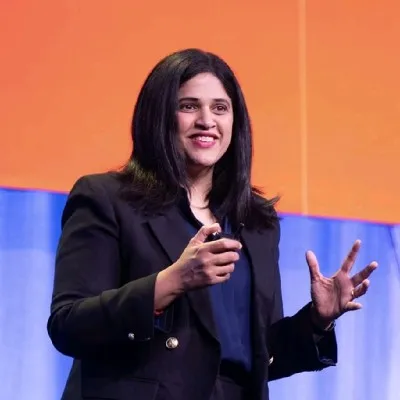
Aparna Chennapragada, Chief Product Officer, Experiences and Devices, Microsoft
Chennapragada weighed in on the new paradigm where AI can not only assist in building products but can actually generate them.
“Two years ago, if you said, ‘Oh, the model can write code to generate a user interface,’ it would have been really difficult to understand. Now the model can write code to generate the UI (user interface) that you particularly need.”
Some of the newer breakthrough areas in research, she believes, span across personalised AI interfaces and video and multimodal AI, along with physical AI.
For Prof Ravindran, a veteran who has closely studied AI for over three decades, the biggest shift has been AI’s move from controlled academic and enterprise settings into everyday life.
“Things have changed significantly. One of the biggest challenges is actually seeing AI adoption by the common public, as opposed to being curated through a very careful application layer. With ChatGPT, anybody can launch it and start using it. It’s exciting that we can make a difference to the way people consume or even think about AI,” he explained.
However, he cautioned that this democratisation comes with risks.
“Everybody has access to these highly capable AI systems, but it doesn't mean they are infallible. People do not understand the limitations of using some of these,” he said.
Narayanan too acknowledged the darker edges of the tech, citing concerns ranging from disinformation to unhealthy emotional attachments with AI systems.
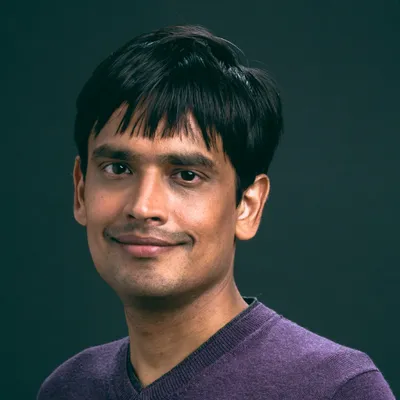
Srinivas Narayanan, VP of Engineering, OpenAI
“Of course, there’s lots of risk with any new technology, and we want to steer that in a way, but minimise the downsides. We are studying that. You want to get ahead of it and make sure that the bonds you form with these things are healthy, productive, and useful.. and not negative,” he said.
Before joining OpenAI, Narayanan was the vice president of engineering at Facebook, where he led the AI Applied Research & Engineering group from 2017 to 2021. He also co-founded Viralizr, a startup focused on consumer products for social collaboration, where he served as the chief technology officer.
Training advanced AI models requires computational resources, which often cost millions of dollars and consume enormous amounts of energy. Without access to these resources, several Indian researchers find themselves dependent on foreign partnerships or are limited to smaller-scale experiments.
Raising concerns about the disparity in AI research infrastructure in India, Prof Ravindran said, “The biggest constraint for research in India is funding. I have to find a collaborator with OpenAI or Microsoft to run those experiments for us. Otherwise, we don’t have the kind of investment in all of this infrastructure.”
Building Indic LLM
Debates over building a sovereign AI model have grown in recent months.
The three experts agree that India is both an important market and an innovation hub, despite facing significant development challenges.
“I think governments need to play a pretty significant role in shaping this technology. We definitely engage deeply and understand what they care about and on how we make this useful at citizen scale,” said Narayanan.
The researcher also welcomed the idea of building indigenous models in the country.
“There are things that are unique about every country. Speaking from OpenAI’s perspective, India is a very big user base for us. It’s the second largest market, and we are interested in solving problems for India as well. But there should be innovation happening in India, and we welcome that,” said Narayanan.
“People may be interested in solving unique problems for India. There's always going to be an opportunity for solving more specific problems by focusing on the problem, in addition to having very general purpose, larger models. Some Indic models will be able to do that,” he added.
To make high‑performance hardware affordable, the government’s IndiaAI Mission recently announced a pool of 14,000 GPUs at a subsidised rate of Rs 67 (under $1) per GPU‑hour for researchers, startups, and entrepreneurs.
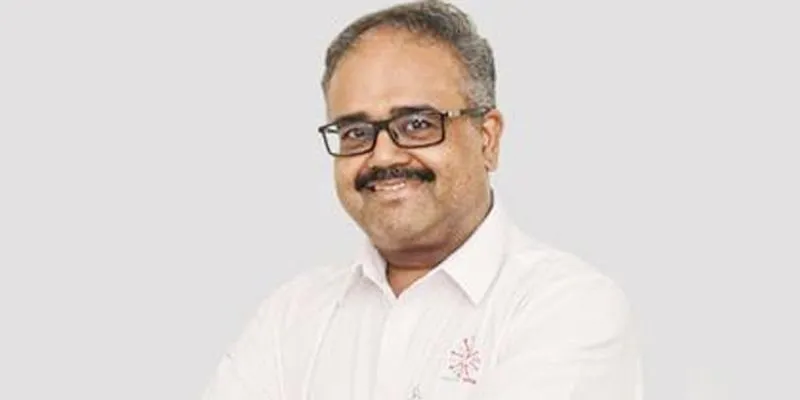
Prof Balaram Ravindran, Head, Wadhwani School of Data Science & AI at IIT Madras
Ravindran noted that foundational gaps still exist, while providing a reality check on the country's research infrastructure, compared to the AI development in the United States and China.
“If you're asking if there is a talent dearth in India—maybe. But this is predicated on the fact that we don't have enough resources to actually be able to tell a student, ‘Go learn about how to build this model by burning through certain GPU credits.’ But probably by the time you finish learning how to build a good model, they would have exhausted all the GPU credits for the lab for the month or the year,” he said.
“The government is trying to address that..by giving all the subsidised GPU and so forth. But still, there are some ways to go before we get the right kind of funding that we need,” he added.
Talking about the next big breakthrough, Narayanan said this is likely to come from advances in reasoning and the ability of AI to solve complex problems.
“The models now need the ground truth of a really hard problem and that comes from experts cutting it out. We haven't solved all of the reasoning. There is innovation to be had in how the models reason, and what is the reasoning chains of thought that they generate. We have come far, but there are still plenty of interesting challenges,” he said.
Edited by Swetha Kannan