



Kluisz rebrands as Nava, raises $22M to chase AI infra gap
The fresh capital will go into building out Nava’s full-stack AI compute platform, expanding its footprint across APAC and hiring senior people across AI data-centre design, GPU engineering, go-to-market and operations.

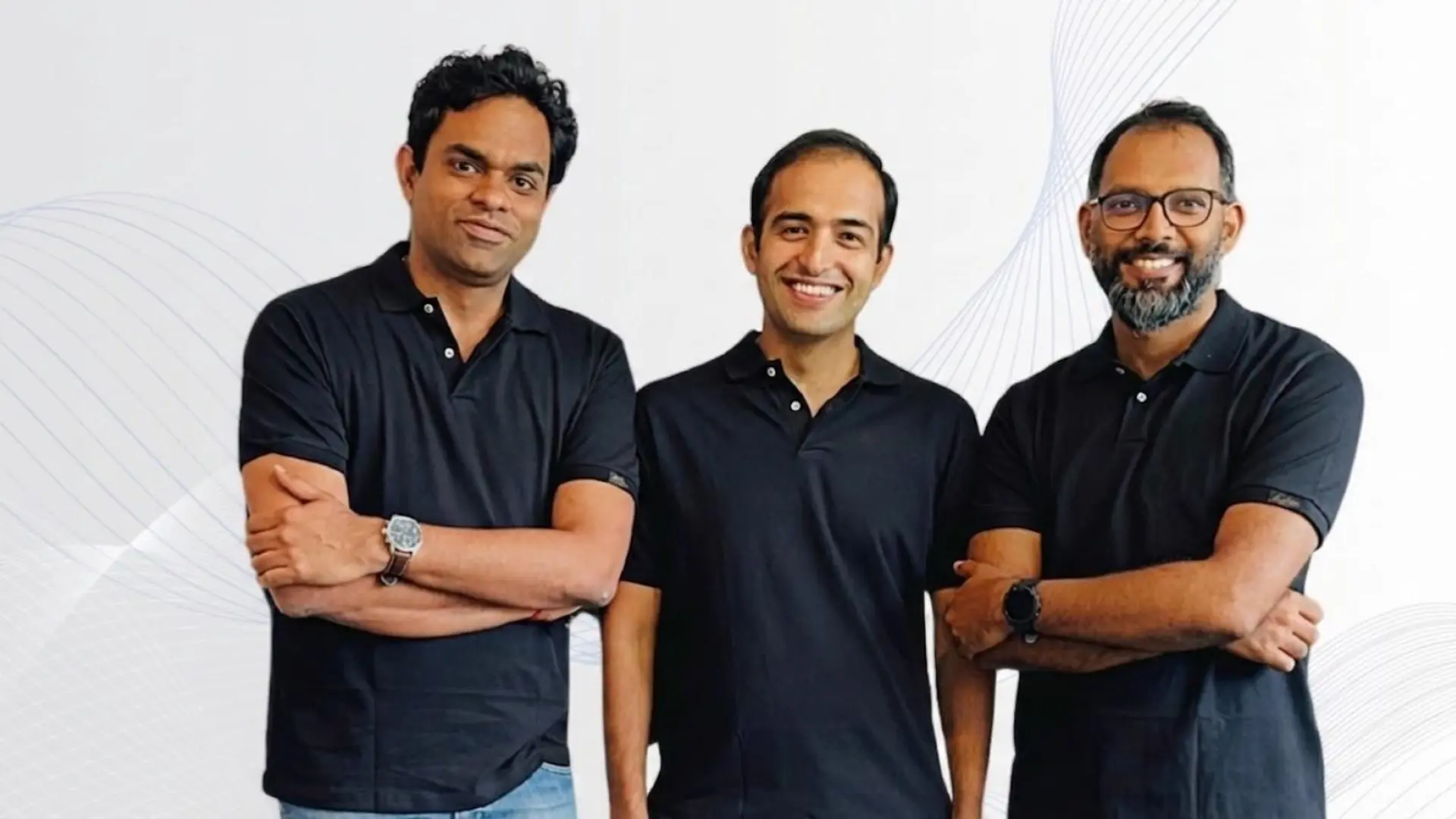

Deeptech startup Kluisz.ai, rebranded as Nava, has raised a $22 million Series A round led by Greenoaks, with RTP Global and Unicorn India Ventures also taking part.
The company, which builds GPU compute and AI data centres across Asia-Pacific, said the rebrand comes as it sets up Singapore as its regional headquarters to sit closer to major APAC markets and global talent.
The fresh capital will go into building Nava’s full-stack AI compute platform, expanding its footprint across APAC and hiring senior people across AI data-centre design, GPU engineering, go-to-market and operations.
GPUs, or graphics processing units, are the chips that do the heavy lifting for training and running AI models, while a full-stack platform combines the hardware, the software and the management layer that sits on top.
Nava said its model is vertically integrated, meaning it aims to control more of the chain itself, from AI-optimised data centres to orchestration and inferencing layers, the latter being the stage where a trained model is used to answer real-world requests.
The company is in a market where demand is rising faster than supply. KPMG estimates that data-centre power demand in Asia-Pacific will increase by 165% by 2030 versus 2023, driven by training and inferencing workloads, while noting that inferencing needs low-latency facilities near urban hubs.
The same pressure is visible in Southeast Asia more broadly, where reports have pointed to a sharp need for more capacity, and Nava argues that much of today’s infrastructure is still legacy cloud rather than purpose-built for AI.
The company was founded in 2025 by Abhinav Sinha, formerly global COO and CPO at OYO, Vamshidhar Reddy, formerly a partner at McKinsey and previously at AMD, and Abhijeet Singh, formerly VP of Cloud at Jio and previously at AT&T.
Sinha said the business has moved beyond the original AI-native cloud idea into a broader build-out of the cloud layer for AI in Asia.
RTP Global’s Madhur Makkar believes the team has executed with clarity and speed in a complex space, while Unicorn India Ventures’ Bhaskar Majumdar noted AI is driving demand for compute infrastructure and GPUs, which he described as a critical part of the value chain.
Nava, in its previous avatar, had raised a $9.6 million seed round last year led by RTP Global, before this Series A.
Nava is entering a field that is attracting very large cheques. Lambda has raised over $1.5 billion in equity for its superintelligence cloud infrastructure, Crusoe closed over a $1.3 billion Series E at a valuation above $10 billion, and CoreWeave said in March 2026 that it closed an $8.5 billion financing facility and had about $28 billion in equity and debt commitments over the previous 12 months.
In India, Neysa disclosed a $1.2 billion capital raise in February. The scale of those rounds shows how expensive AI infrastructure has become, but also how investors increasingly see the underlying compute layer as a category worth backing.
Meanwhile, Big Tech is locked in an AI infrastructure arms race, pouring hundreds of billions into data centres, custom chips and power in a long-term bet on competitive advantage that brings rising risks of overcapacity, energy constraints and investor scrutiny.
(Feature image: (from left to right) Abhijeet Singh, Vamshidhar Reddy, and Abhinav Sinha)
Edited by Swetha Kannan