



Madurai turns to AI and GPS to improve garbage collection
Madurai turns to AI and GPS to improve garbage collection with hotspot detection, live tracking, and more micro-composting centres for faster clearance.

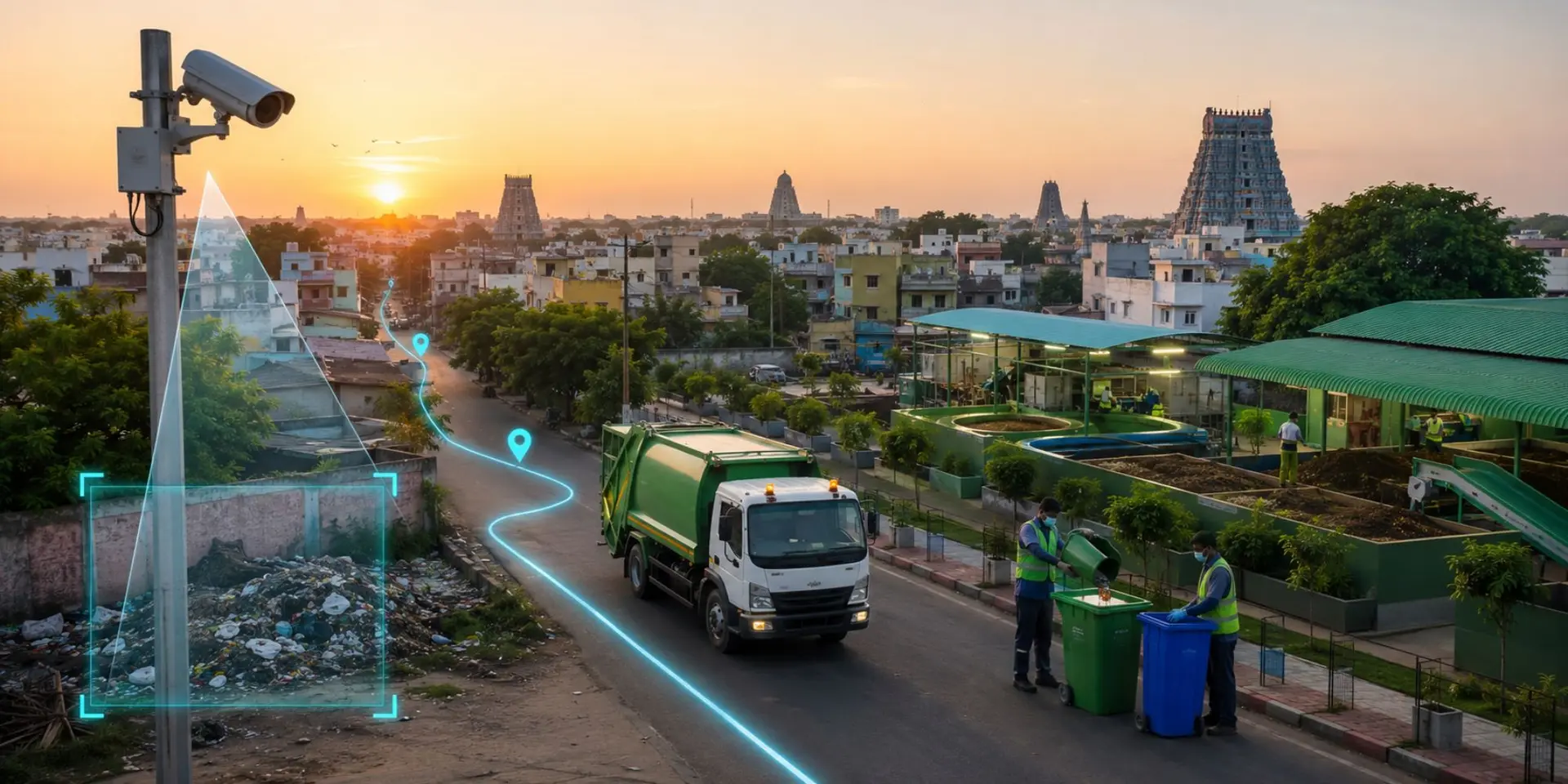

A cleaner city may soon begin with smarter monitoring. Madurai Corporation is preparing to use artificial intelligence and GPS-based systems to strengthen garbage collection and solid waste management across the city.
The plan focuses on identifying repeated dumping spots, tracking sanitation work in real time and improving the local processing of biodegradable waste.
By identifying illegal dumping hotspots, tracking waste collection vehicles in real time and expanding local composting facilities, the Corporation hopes to reduce waste accumulation while improving everyday services for residents.
AI to identify garbage dumping hotspots
One of the biggest challenges in urban waste management is repeated illegal dumping. To tackle this, Madurai Corporation plans to deploy AI-powered monitoring that can automatically identify garbage-vulnerable locations using CCTV footage and other surveillance inputs.
Instead of waiting for complaints or manual inspections, the system will alert officials when waste begins accumulating in areas known for frequent dumping. This proactive approach could help sanitation teams intervene before small piles become major public health concerns.
The Corporation has already identified 10 locations for enhanced monitoring. These include the Vandiyur Park badminton point, the Holy Family School area and the road opposite the city's fruit market, where repeated dumping has been reported.
GPS tracking to improve sanitation services
Alongside AI monitoring, the Corporation is introducing GPS-based tracking for sanitation vehicles and field staff. The Global Positioning System (GPS) will allow officials to monitor vehicle movements, verify that collection routes are being followed and ensure conservancy workers are covering their assigned areas.
Real-time location data can also improve responses to public complaints by helping officials quickly identify the nearest available sanitation team. Better visibility into daily operations is expected to strengthen accountability while improving the efficiency of waste collection services across the city.
More composting centres for local waste processing
Technology is only one part of the plan. Madurai Corporation also intends to establish five additional micro-composting centres to process biodegradable waste closer to where it is generated. The city currently operates 30 such centres.
Expanding this network will help reduce the volume of waste transported to landfill or dumping sites, lowering transportation costs while promoting more scientific processing of organic waste. Decentralised composting also supports cleaner neighbourhoods by reducing the time waste spends in collection points before processing.

IIM-Calcutta Innovation Park launches Rs 50 Cr fund for cleantech, sustainability startups
Technology alone is not enough
Civic activist T Nageshwaran has welcomed the Corporation's plans but emphasised that technology must be backed by consistent execution. He noted that door-to-door waste collection still needs improvement in several areas.
That highlights the real challenge facing smart city initiatives. AI and GPS can make sanitation services more transparent and efficient, but their success ultimately depends on timely field action, reliable data and sustained civic participation.
If implemented effectively, Madurai's technology-driven approach could become a model for other Indian cities looking to modernise waste management while delivering cleaner and more responsive public services.