



Maharashtra to get India's first AI-powered bird sanctuary
The Rs 45-crore Eco-Nature Park at Thane Creek Flamingo Sanctuary is set to combine bird conservation, smart monitoring and nature tourism near Mumbai.

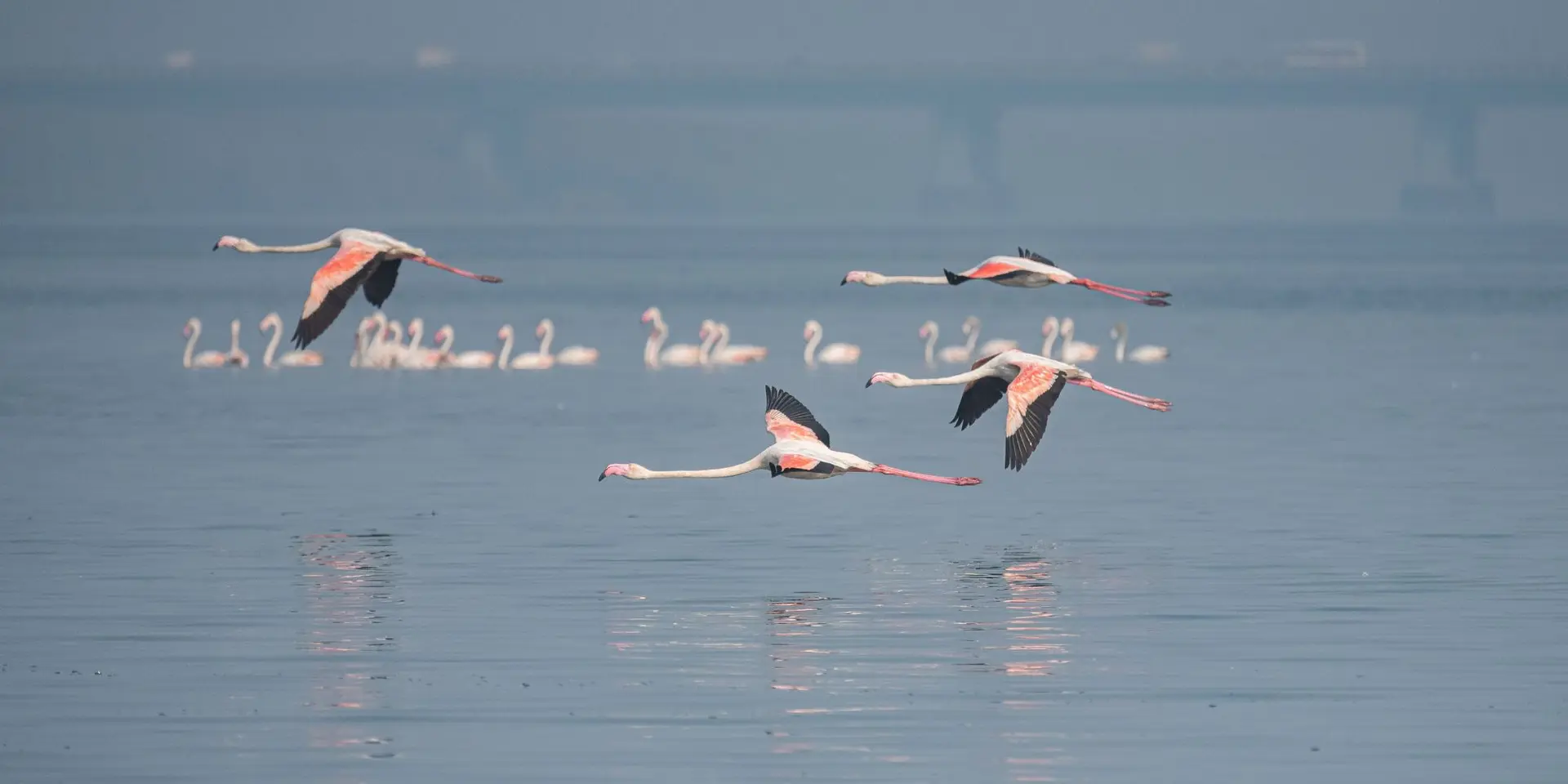

Nature tourism in India is about to get a technological upgrade. Maharashtra has approved plans to develop the country's first AI-powered bird sanctuary experience at the Thane Creek Flamingo Sanctuary, combining artificial intelligence with wildlife conservation to create a more immersive visitor experience.
Backed by a Rs 45-crore Eco-Nature Park, the project will introduce an AI-based bird detection and monitoring centre designed to improve conservation efforts while helping visitors learn more about one of India's richest wetland ecosystems. Located between Mumbai and Navi Mumbai, the sanctuary is already a popular destination for flamingo sightings and birdwatching.
AI takes birdwatching beyond binoculars
At the heart of the project is an AI-powered bird monitoring system that will help identify species, track bird activity and support real-time observation across the sanctuary. Using intelligent cameras and monitoring technology, the system will analyse bird movement along a 1.5-kilometre stretch of the Eco-Nature Park.
The data collected is expected to help forest officials better understand migration patterns, habitat usage and seasonal changes while reducing dependence on manual surveys alone. For visitors, the technology could power interactive displays and educational experiences that make birdwatching more informative and engaging.
Why Thane Creek is a biodiversity hotspot
Declared a protected sanctuary in 2015-16, Thane Creek Flamingo Sanctuary is recognised as India's first flamingo sanctuary and forms part of the Central Asian Flyway, one of the world's major migratory bird routes.
Every year, the sanctuary welcomes more than 200 bird species, including thousands of Greater Flamingos and Lesser Flamingos during the winter season. The wetlands also provide habitat for herons, egrets, kingfishers, sandpipers and several other waterbirds, making it one of Maharashtra's most ecologically important urban ecosystems.
Its location close to Mumbai makes it one of the few places where residents and tourists can experience large-scale bird migration without travelling far from the city.
A new attraction for eco-tourism
The proposed Eco-Nature Park is being designed as more than just a birdwatching destination. Plans include nature trails, interpretation centres, educational exhibits and dedicated viewing areas that aim to make the sanctuary accessible to families, students, researchers and wildlife enthusiasts alike.
By blending technology with environmental education, the project seeks to encourage greater awareness of biodiversity while promoting responsible tourism.

A model for technology-led conservation
The Thane Creek initiative reflects a trend towards using AI to support environmental conservation. Intelligent monitoring systems can help researchers gather more accurate ecological data while enabling faster responses to changes in wildlife behaviour or habitat conditions.
If implemented successfully, Maharashtra's AI-powered bird sanctuary could become a national model for conservation-led tourism. Rather than replacing nature with technology, the project aims to use AI to deepen people's understanding of the wildlife around them, showing how innovation and environmental protection can work hand in hand.