



Majorana 2 chip opens for independent testing by DARPA
Microsoft’s Majorana 2 chip is heading for a real-world test as DARPA prepares to examine it hands-on at a new quantum centre in Maryland.

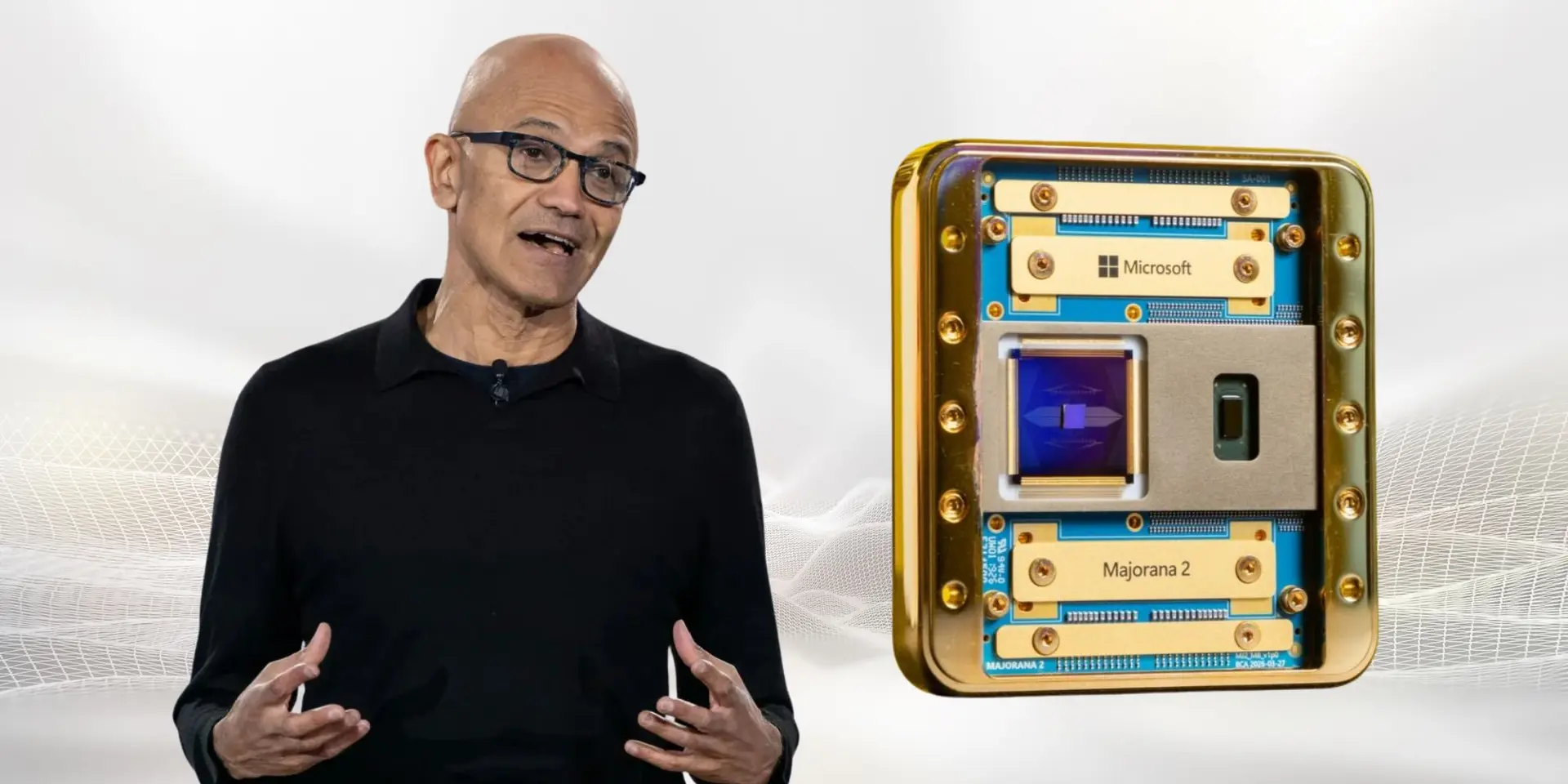

Microsoft’s quantum bet is moving beyond the demo room. The company has made its Majorana 2 quantum chip available for independent testing and evaluation by DARPA, the US Defense Advanced Research Projects Agency.
The testing will take place at Microsoft’s new quantum research centre in Maryland, located in the University of Maryland’s Discovery District near Washington, D.C. It gives DARPA hands-on access to a quantum system built around Microsoft’s topological qubit technology.
Inside Microsoft’s new quantum testing ground
Quantum computing is still an experimental field, with researchers working to solve some of the biggest challenges around stability, error correction and scale. That makes independent testing particularly important.
Instead of relying only on company demonstrations or remote access, DARPA will be able to examine and test Microsoft’s hardware directly. The testing is part of DARPA’s broader effort to assess whether different quantum approaches can eventually deliver useful, utility-scale systems.
Inside Microsoft’s Maryland quantum centre
Microsoft says the new centre was created with the University of Maryland and industry partners. It includes a hands-on quantum hardware makerspace, along with a dedicated environment where DARPA can run tests on systems built using the Majorana 2 chip.
At the centre of Microsoft’s approach are topological qubits. Qubits are the basic units of quantum computers. Unlike classical bits, which represent information as either 0 or 1, qubits can exist in more complex quantum states. They are also extremely sensitive to noise and environmental interference.
Microsoft’s topological approach is designed to make qubits more resistant to these errors. But the technology still needs to demonstrate that this advantage can hold as quantum systems become larger.
What Majorana 2 is trying to prove
Majorana 2 is Microsoft’s second-generation topological quantum chip. The company says it uses a new material stack that replaces aluminium with lead to improve performance and reliability.
Microsoft has previously said Majorana 2 delivered a 1,000x improvement in reliability compared with its previous generation. It reported an average qubit lifetime of 20 seconds, with some instances lasting up to a minute.
In quantum computing, where maintaining a stable qubit is a major challenge, those numbers matter. But the bigger test is whether the results can be independently reproduced and scaled. Microsoft has set a goal of building a scalable quantum computer by 2029. DARPA’s evaluation could provide an important external checkpoint for that ambition.
It does not mean Microsoft has already built a commercial quantum computer. Instead, Majorana 2 is now moving into a stage where outside testing can help determine how well its claimed performance holds up beyond the company’s own demonstrations.