



Meta wants AI to become the internet’s age verification tool
Meta is expanding AI-powered age assurance across Instagram and Facebook to identify underage users and apply teen protections automatically.

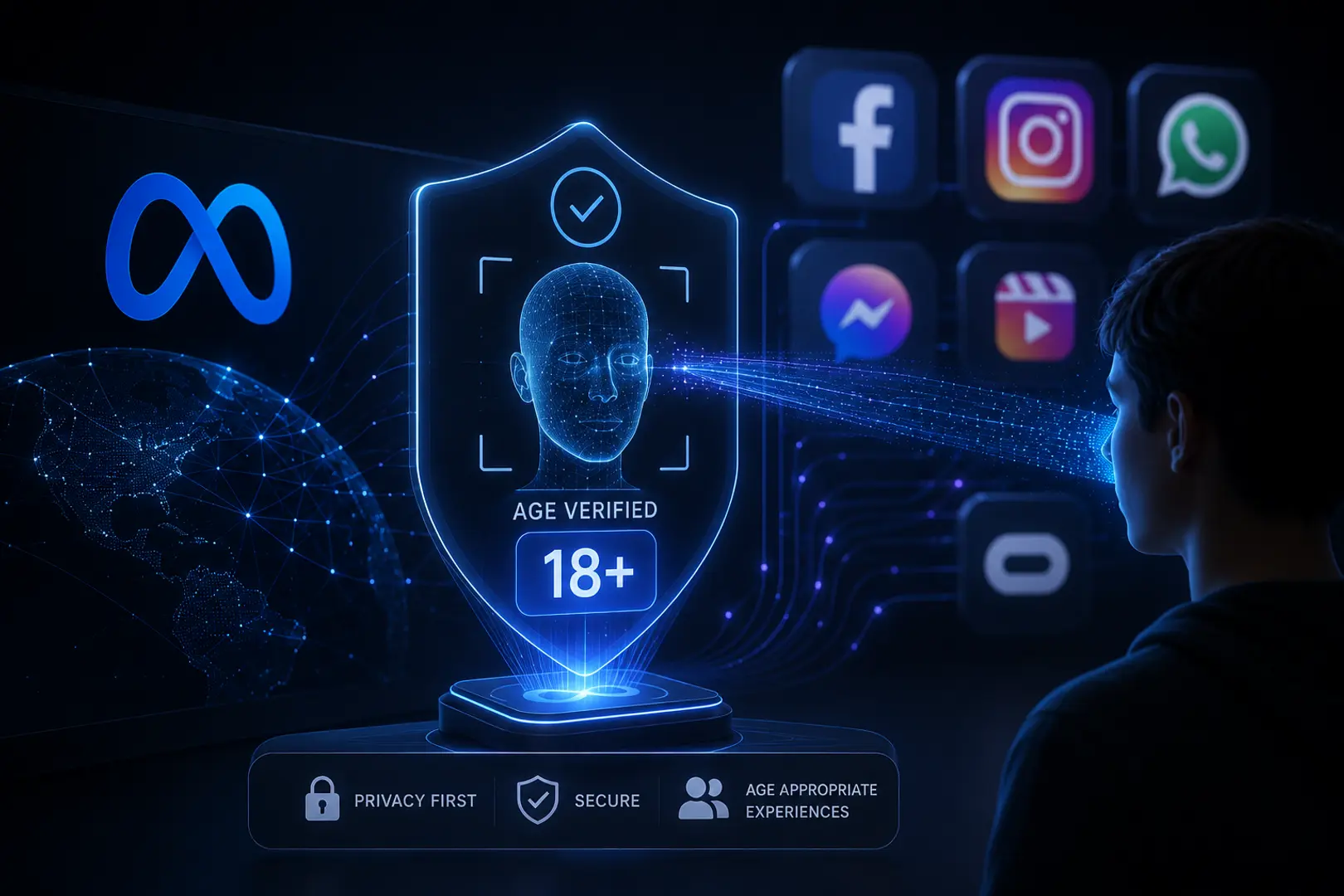

Meta is expanding its AI-powered age assurance systems across Instagram and Facebook, positioning artificial intelligence as a key tool for identifying underage users and automatically placing them into safer online experiences. The update was announced on 5 May 2026 as part of the company’s broader push to strengthen protections for teenagers across its apps.
Meta expands AI age assurance systems
According to Meta, the company is widening the use of AI systems that estimate whether someone may actually be a teenager, even if the account lists an adult birthdate. The technology, which was already active in some markets, is now being expanded to Instagram users in Brazil and across all 27 European Union countries, along with Facebook users in the United States.
Meta says the AI analyses behavioural and contextual signals across accounts to determine whether a user may be underage. If the system believes someone is likely a teen, the account can automatically be placed into Teen Account protections with stricter default safety settings.
Teen protections become more automated
Teen Accounts are designed to provide additional safeguards for younger users. According to Meta, these protections limit who can contact teens, reduce exposure to sensitive content, and introduce stricter controls around notifications and interactions.
The company said users under 16 generally require parental permission to loosen many of these restrictions. Meta also noted that the latest AI systems are intended to work in the background so that younger users are automatically placed into safer experiences even if they entered an inaccurate birthdate during sign-up.
AI will analyse visual and behavioural signals
Meta says the updated system uses a combination of signals to estimate age. These include account activity patterns, interactions, and visual analysis of shared content. The company stated that the visual analysis technology is “not facial recognition” and is not used to identify specific people.
Instead, Meta says the system estimates whether someone may fall into a certain age range based on broader visual indicators. The company positioned the technology as part of its effort to improve age assurance without relying entirely on uploaded identity documents.
Why Meta is focusing on age verification
The move comes as governments and regulators continue increasing pressure on social media platforms to improve protections for minors online. Meta said it believes AI can help platforms more accurately identify younger users and apply age-appropriate safeguards at scale.
According to the company, AI-based age assurance is intended to complement existing tools rather than replace them entirely. Meta also said it is continuing to develop parental supervision features and additional safety controls for teenagers across Instagram and Facebook.

What this means for users
For users, the update signals a broader shift in how social platforms handle age verification. Instead of relying only on self-reported birthdays, platforms are increasingly using AI systems to estimate age through patterns, activity, and content signals.
Meta says the expanded rollout will continue over time as the company refines the technology and gathers feedback. The company also indicated that the systems are part of a larger long-term effort to create safer experiences for younger audiences across its apps.