



Is Microsoft falling behind in the AI race?
Microsoft’s AI strategy is under pressure, but it’s still a top player. Here’s why Copilot struggles don’t tell the full story.

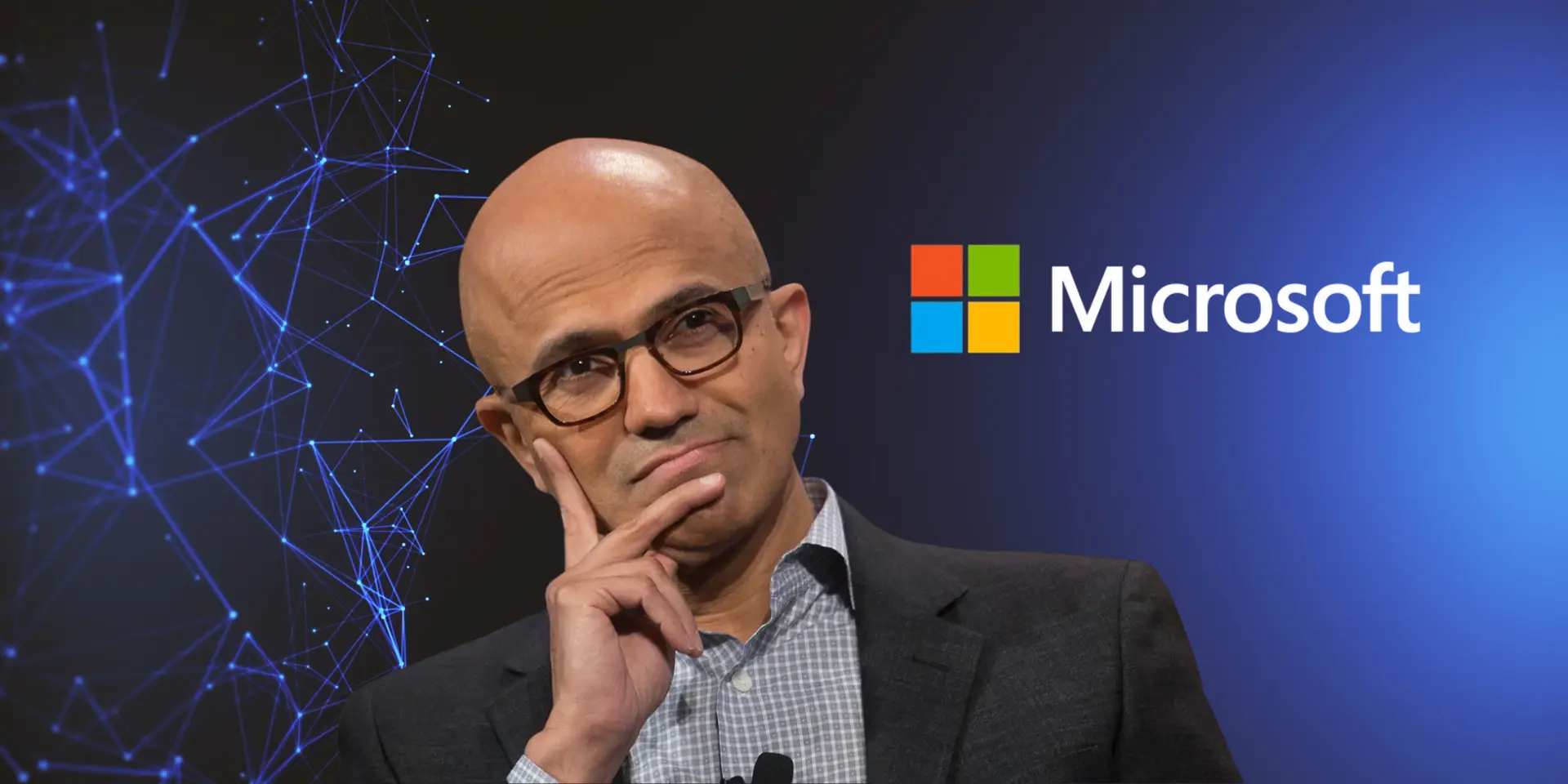

AI was supposed to be Microsoft’s next growth engine. Instead, it is turning into a stress test.
A report by Futurism suggests that Microsoft’s aggressive push into artificial intelligence is facing a reality check, with Copilot seeing uneven adoption and users pushing back against AI-heavy Windows features.
But that's not the entire picture. Microsoft is not losing the AI race, but is facing tough competition. Let's uncover this in detail!
Strong numbers, shifting expectations

Microsoft’s fundamentals remain solid. Revenue has grown nearly 17% year-on-year, supported by cloud demand and early AI monetisation. The company also continues to sit among the world’s most valuable firms, with its AI strategy contributing to a massive surge in valuation over the past two years.
Yet markets are reacting differently. According to recent coverage, Microsoft’s stock has dropped over 20% in early 2026, wiping out a significant portion of gains linked to its OpenAI-led AI momentum.
The shift signals a broader change.
Investors are now demanding profitable returns.
Copilot is useful, but not yet essential
At the centre of this entire debate is Copilot. While Microsoft has embedded it across products like Office, Azure, and Windows, real-world usage is still evolving. Many enterprises are experimenting rather than committing fully, raising questions about pricing versus measurable productivity gains.
Moreover, the company has released a statement claiming that "Copilot should be used for entertainment purposes" rather than work-related tasks. This, in particular, has taken many aback since the tool was marketed as the productivity coworker.
In a sea of AI tools today, only a few move from "demos” to “daily usage”, and that transition takes time, a trend that the tech giant is realising now.
On the consumer side, Microsoft’s AI-first approach inside Windows has triggered resistance. Users have criticised features that feel intrusive or unnecessary, especially when they are not clearly opt-in. The backlash is on how much control is handed over to AI entirely, which is a valid privacy concern.
The hidden pressure: Infrastructure and costs
Behind the scenes, Microsoft is making one of the largest infrastructure bets in tech. Billions are being invested in data centres, chips, and model operations. Azure capacity is now being split between enterprise customers and internal AI services like Copilot, creating operational strain.
At the same time, Microsoft’s own AI leadership has acknowledged that it still lacks the compute scale required to compete at the absolute frontier, positioning itself more strategically in a “mid-range” balance of cost and performance. This is where competition intensifies.
The AI race is getting crowded
Microsoft is no longer alone at the front. Rivals powered by NVIDIA-heavy infrastructure and cloud-native stacks are pushing ahead on compute, while Google is advancing its Gemini ecosystem.
Even its relationship with OpenAI is evolving, shifting from exclusive partnership to a more competitive dynamic as Microsoft builds its own in-house models. The result is a more complex battlefield.

How much is too much? Navigating the AI privacy debate on personalisation
A broader reset across software
The pressure on Microsoft reflects a wider shift across SaaS. Some investors are questioning whether AI could reduce reliance on expensive software subscriptions, as companies begin building custom solutions internally.
This does not mean SaaS is disappearing; it just means the rules are changing. Despite short-term challenges, Microsoft is doubling down. The company, led by Satya Nadella, is investing in in-house models, custom chips, and deeper AI integration across its ecosystem.
It is betting on AI not as a feature, but as a platform. That strategy has already paid off in valuation and market positioning. Now what will matter is the execution.
The bottom line
Microsoft is not falling behind but is being pushed to prove itself. This situation is similar to Google's position after ChatGPT's launch, which they regained soon. Right now, the AI race is entering a new phase, one where hype is fading, and outcomes matter.
For Microsoft, success will depend on turning Copilot into a clear productivity driver, managing infrastructure costs, and maintaining its edge in an increasingly competitive landscape.