



NVIDIA’s strong results, forecast help ease AI bubble fears
NVIDIA posted a robust third quarter, with revenue up 62% to $57 billion and net income increasing 65% to $31.9 billion.

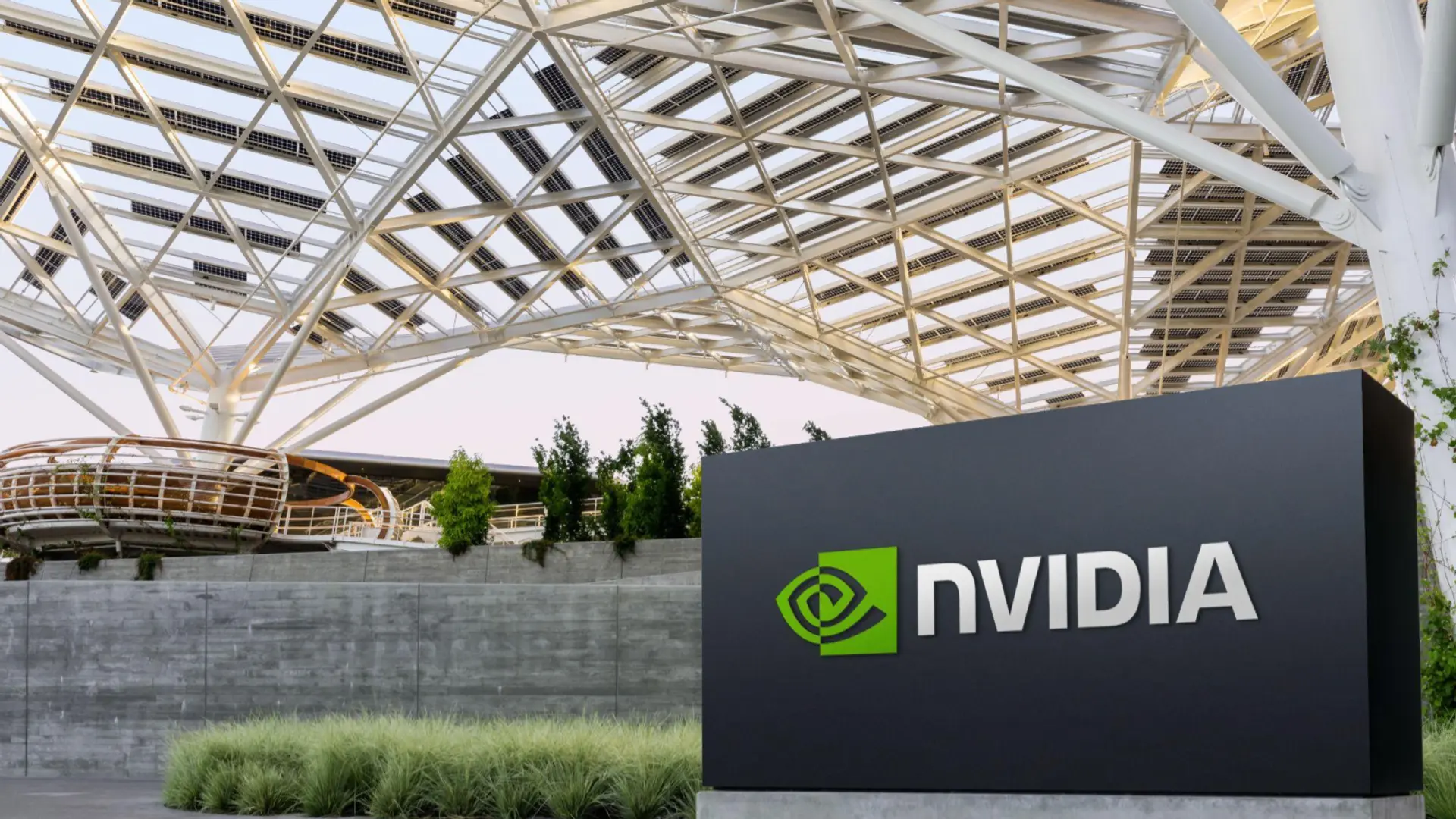

Tech giant NVIDIA struck a confident tone about the durability of the artificial intelligence (AI) cycle, helping to ease recent bubble concerns.
“There’s been a lot of talk about an AI bubble,” Jensen Huang, Founder and Chief Executive Officer (CEO) of NVIDIA, said on the earnings call. “From our vantage point, we see something very different.”
The reassurance set the stage for the third quarter results that pointed to solid underlying demand and renewed investor interest.
The company reported revenue of $57 billion, up 62% from a year earlier in the third quarter ended October 26, 2025. Net income rose 65% to $31.9 billion.
NVIDIA’s shares climbed more than 5% in after-hours trading, offering a contrast to the broader market unease that had dominated recent weeks. NVIDIA’s heavy weight in the S&P 500 and its influence across hundreds of exchange-traded funds meant the results carried wider significance, particularly as equity volatility and valuation worries had intensified.
Institutional trading has also contributed to volatility, with SoftBank and funds linked to Peter Thiel reducing positions, and Michael Burry’s short bet briefly attracting attention before his fund closed.
NVIDIA had fallen more than 12% from its late-October peak, when it became the first company in history to reach a market capitalisation of $5 trillion. Even large AI partnerships failed to lift sentiment. Most recently, NVIDIA committed up to $10 billion to AI startup Anthropic.
There has been growing caution around circular AI deals, with some experts questioning whether parts of the sector had overheated.
The results offered a clearer picture of the current momentum behind AI spending. The data centre division remained the core driver, with revenue reaching $51.2 billion, up 66% year on year.
This growth reflected intense demand for advanced GPUs and supporting software, as well as higher networking shipments required for large-scale training clusters. Cloud providers continued to expand capacity to handle increasingly complex workloads, and the company said order visibility remained healthy despite ongoing shifts in architecture and supply patterns.
Geopolitics remained a source of uncertainty. Proposed export restrictions on high-performance AI hardware to China weighed on sentiment.
“Sizable purchase orders never materialised in the quarter due to geopolitical issues and the increasingly competitive market in China,” said Colette Kress, Chief Financial Officer of NVIDIA.
The gaming division produced $4.3 billion in revenue, around 30% higher than a year ago. While no longer central to the company’s overall trajectory, it remained a useful indicator of PC-market health, with NVIDIA noting more balanced channel inventory.
Operating expenses rose 36% to $5.8 billion, driven by continued investment in research and software platforms.
NVIDIA guided fourth-quarter revenue to $65 billion ±2%, pointing to sustained growth into next year.
Meanwhile, experts remain watchful for signs that the pace of AI spending might moderate, although recent commentary from Huang had suggested substantial long-term demand. He had said the company holds roughly $500 billion in cumulative orders for 2025 and 2026.
In his prepared remarks, Huang said, “Blackwell sales are off the charts, and cloud GPUs are sold out.”
“Compute demand keeps accelerating and compounding across training and inference — each growing exponentially. We’ve entered the virtuous cycle of AI. The AI ecosystem is scaling fast — with more new foundation model makers, more AI startups, across more industries, and in more countries. AI is going everywhere, doing everything, all at once,” he added.
NVIDIA’s reach across the AI economy remains broad. Its chips power AI development at firms like Amazon, Google, Meta, and Microsoft. These customers recently lifted their investment plans, together expecting to spend nearly $400 billion this year on AI-related infrastructure. Their spending underscores the depth of the cycle that NVIDIA is helping to drive as it remains a central pillar of accelerated computing.
Edited by Megha Reddy